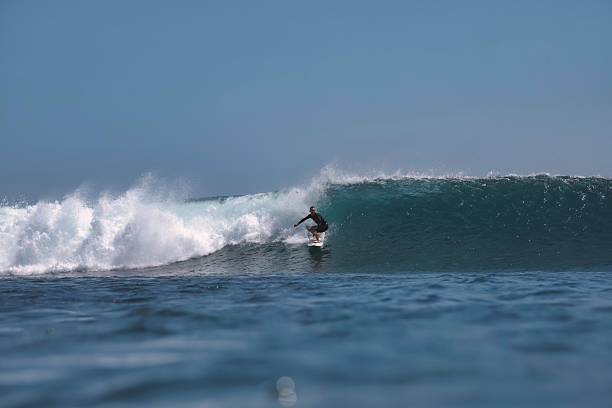
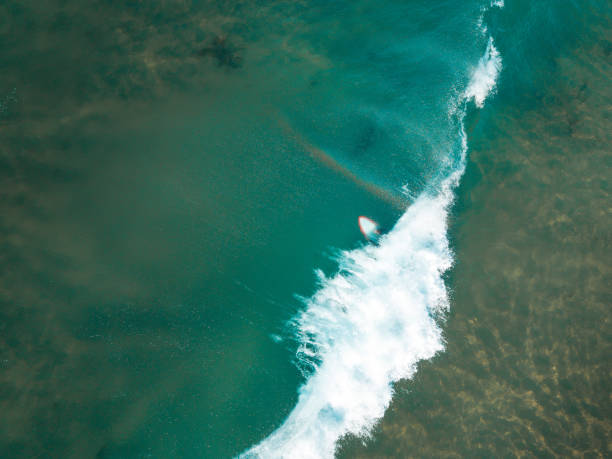
There’s a moment that happens out in the water that nobody talks about, not in the magazines, not in the forums, not even over a cold beer after a long session. It’s the silent dance between the surf photographer and the surfer they’re tracking. You feel it in the way a local drops in a little deeper just when you’ve found your pocket behind the peak, or how they flash a shaka mid-turning before pulling into a hollow, throaty barrel. It’s not just about getting the shot. It’s about being part of the rhythm of the ocean, a shared trust that runs deeper than any lens or leash. When you paddle out with a housing clamped to your face and a fisheye beading up with saltwater, you’re not an outsider anymore. You’re a piece of the lineup itself, floating in the pulse of the swell.
Growing up, I thought surf photography was all about the hero shot—the full-rail carve, the aerosol spray shimmering like a slow-motion explosion, the free-fall drop from a slab that makes your stomach lurch just by looking at it. But after years of spending dawn patrols bobbing in the impact zone, I’ve learned that the real stoke lives in the in-between. It’s the wipeout where the surfer comes up laughing, the goggle-eyed stare after a late takeoff, the exhausted grin as they paddle back out with arms trembling. Those are the frames that actually tell the story of our culture. The action is just the surface. The soul is in the reaction, in the way a surfer looks at the horizon after a set rolls through, in the silent nod between strangers who just traded waves. That’s community.
You can’t force that kind of moment. You just have to be there, floating in the right spot, with your shutter speed low enough to capture the chaos but your heart open enough to see the calm. The best surf photographers I know are the ones who paddle first and shoot second. They understand that you can’t photograph a wave from a boat or a cliff and call yourself part of the crew. You have to get wet. You have to eat a few foamies, get rag-dolled by a set, and fetch your board from the rocks just like everyone else. Then, and only then, do the surfers let you into their world. It’s a respect thing. They know you’re not just there for the glory. You’re there for the stoke, and that changes everything.
There’s a special kind of magic that happens when the sun drops low and the water goes glassy, when the offshore wind smooths the face into a mirror and every surfer out there feels like they’re riding liquid light. That’s when a photographer becomes a painter, chasing that perfect angle where the spray turns into gold and the surfer’s silhouette cuts through the haze like a god of the sea. In those moments, you forget about the autofocus hunt, the leaking housing, the fin that just sliced your ankle. You’re not documenting a sport anymore. You’re preserving a feeling that has existed since the first human stood on a board and felt the ocean answer back. That feeling is why we all paddle out, why we spend hours staring at open water, why we sacrifice sleep and warm beds for the cold bite of the dawn patrol.
And for the photographer? It’s even more intense. You’re not just riding the wave. You’re witnessing it. You’re the only one who gets to see it twice—once as it happens, and again through the viewfinder, forever frozen in a frame that will hang in a surf shop or pop up on a feed and make some kid on a skateboard wonder what it feels like to fly. That’s the gift. That’s the responsibility. Every photo we take is a love letter to the ocean, a thank you card from the community to the endless stretch of blue that gives us our identity. So next time you see a photographer paddling out with a giant housing on their camera, give them a wave. They’re not just capturing waves. They’re capturing us.