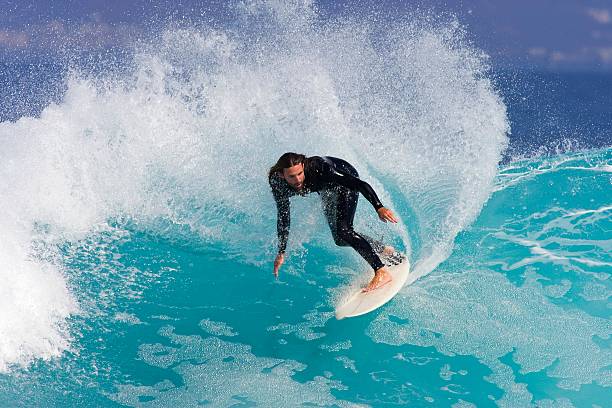
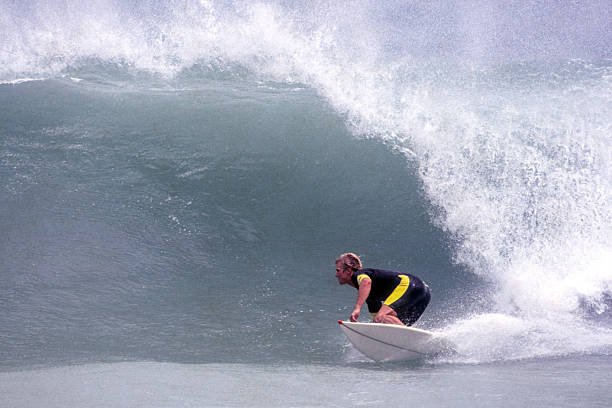
You ever paddle out on a glassy morning, the water like black silk, and feel that little moment of doubt as you pop up? Your front foot lands perfect, but your back foot slides just a hair too far forward. Suddenly you’re fighting for trim, your rail catches, and you eat foam. More often than not, the culprit isn’t your timing or your wave selection. It’s that neglected piece of foam and adhesive on your deck: your traction pad. We talk endlessly about fins, boards, and wetsuits, but the humble traction pad is the unsung hero of every turn, every barrel exit, and every drop-in. It is the silent partner in your dance with the ocean, and getting it right can change everything about how you surf.
A good traction pad is more than just a place to stick your back foot. It is the anchor for your entire performance. The tail kick, that stepped-up section at the very back, serves as a positive stop for your heel. When you’re trying to sink the tail for a vertical snap or a deep bottom turn, that kick gives you the tactile feedback your body needs. Without it, your foot wanders. You lose that precise connection between your weight and the board’s rail. Imagine trying to throw a fastball without feeling the rubber under your cleat. That’s what surfing without a proper pad feels like. The best pads have a 3D hexagonal pattern and a full-length arch bar that cradles the sole of your foot. That arch support is crucial. When you’re driving hard off the top, your foot is pushing against that pad, and you need every ounce of that energy transferred directly into the stringer.
The material matters too. EVA foam has come a long way from the cheap, squishy blocks of the nineties. Modern pads use high-density, closed-cell EVA that doesn’t get waterlogged or turn into a slippery mess after a few sessions. You want a pad that has a bit of give for comfort when you’re sitting in the lineup but is firm enough to provide that immediate response. The best pads on the market now use a “mushroom” or “diamond groove” pattern in the top layer. This isn’t just for looks. Those grooves channel water out from under your foot, preventing that terrifying hydroplaning sensation when you take a late drop on a steep face. Check the adhesive as well. A quality 3M backing is non-negotiable. A pad that peels up at the nose or the tail after a week of hot sun is a lesson in frustration you only need to learn once.
Now, think about your travel bag. If you’re chasing the endless summer, if you’re hopping planes to Indo, to the Mentawais, to mainland Mexico, your traction pad is doing double duty. On the reef, when you scramble for a clean exit and your board grinds across a sharp chunk of coral, the pad is often the first point of impact. A thick pad absorbs a lot of that abuse, protecting your board’s sensitive tail section. I’ve seen thick, diamond-grooved pads save a brand new custom shape from a reef-shaving that would have otherwise gone straight through the glass. It’s a sacrificial layer you can replace after a heavy trip. But here’s the travel secret: lighter is better. Some of the beefier “all-mountain” pads weigh a ton, and when you’re already carrying a quiver of three boards, every ounce counts. Look for a minimalist tail pad that covers only the essential area. A full-deck pad looks cool, but in the airplane baggage line, that extra weight is just dead foam.
Don’t sleep on the placement. Most surfers slap a pad on right where the previous owner’s sticker marks were, but your stance is your own. A pad set too far forward will make you feel like you’re riding a longboard, unable to sink the tail for a quick pivot. Set too far back, and you’ll be fighting to keep the nose down on a takeoff. A good rule of thumb is to stand on the board on the carpet. Place your back foot exactly where it lands naturally when you’re surfing. Mark that spot. Then align the back edge of the tail pad so your heel sits right against the kick. That is your sweet spot. It takes thirty seconds to adjust, but it will change your board feel overnight.
A traction pad is a consumable, just like wax and fins. It gets hit with UV rays, salt, and the occasional flop onto a hot parking lot. When the grooves start to wear smooth, when the kick becomes soft and spongy, replace it. A worn-out pad is a liability. It’s the same as riding with dull fins. You are losing horsepower. In the lineup, where one slip can mean a tombstoning session in the wash, you need to trust that your connection to the board is solid. So next time you’re waxing your stick, give that pad a proper look. Feel the arch, check the kick, test the grip. It’s the foundation of every turn you’ll make today. And when you find that perfect pad, the one that feels like an extension of your own foot, you’ll wonder how you ever surfed without it. That’s the secret of the extras. They aren’t extras at all. They are the core.