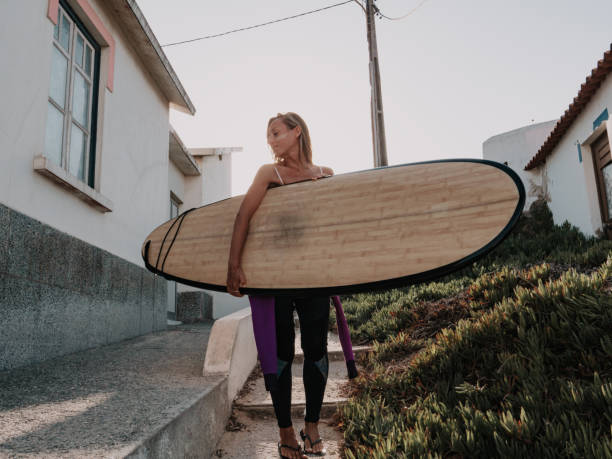
Back in the day, before the dawn of the modern wetsuit, surfing in cold water was a battle of pure will. Guys were paddling out in wool sweaters, leather jackets, and sometimes just raw skin, accepting that their session would end the moment their limbs went numb. Then came Jack O’Neill, a visionary who understood that to chase the endless summer, you had to find a way to bring summer with you. He started gluing foam neoprene together in a tiny Santa Cruz shop, and the whole game changed. But let’s be real, those early suits were like wearing a steam pipe. You were warm, sure, but you were fighting a full-body cramp just to bend your arms over the nose of your board.
Fast forward a few decades, and the wetsuit has undergone more transformations than a wave on a reef. The search for that perfect balance between staying toasty and staying loose is the holy grail of surf gear today. It is no longer just about slapping on a layer of rubber. It is about engineering a second skin that moves with you, breathes like your own pores, and still keeps the arctic chill from stealing your stoke.
The biggest leap came with the material science behind the neoprene itself. For years, we were stuck with petroleum-based limestone neoprene. It worked, but it was heavy, dense, and had a memory like a grumpy old man. If you folded it wrong, it stayed folded. Then the companies started playing with super-stretch nylon jersey linings on the inside. That was the first real taste of flexibility. Suddenly, you could actually reach for a late drop without feeling like you were wearing a suit of armor. Brands like Rip Curl pushed the envelope with their E5 and later E6 neoprene, which used a combination of limestone and magnesium to create a lighter, more buoyant foam that stretched across the grain. You could literally feel the difference the first time you pulled one on. It was like removing a weight vest you didn’t know you were wearing.
But flexibility is only half the story. Warmth is what keeps you out there for the third, fourth, or fifth hour of the session. The real magic happens in how the suit seals out the water. In the old days, you’d get a flush of ice water down your spine on your first duck dive, and your whole session was just a countdown to hypothermia. Now, we have liquid-taped seams, blind-stitched overlays, and internal chest zips that turn the whole suit into a waterproof fortress. Xcel came through with their Drylock technology, which uses a double-sealed zipper and a super-stretchy, watertight neck and wrist closure. When you zip up one of those suits, you feel that vacuum seal. That is the feeling of security. That is knowing that the only thing entering your suit is your own body heat, recycled and locked in.
Then there is the rubber itself. Patagonia changed the industry by moving toward Yulex natural rubber, sourced from sustainable plantations. It was a big step for the planet, but the real surprise was the performance. Yulex stretches differently than petroleum neoprene. It has a more organic, forgiving flex that doesn’t fight your paddling stroke. It feels warmer because the material itself has better thermal conductivity properties. You’re not just wearing a wetsuit; you’re wearing a regenerative insulation system.
The groms today don’t know how good they have it. I remember wrestling into a thick, three-millimeter farmer john that had more seams than a quilt, spending half my energy just getting the thing on, and losing the other half trying to paddle against its stiffness. Now you walk into a shop, grab a Hyperfreak from O’Neill, which is basically woven nylon that feels like spandex, and you are out the door in sixty seconds. The flexibility is so extreme that you can do a full yoga forward fold on the sand before you even hit the water. That is the dream. That is what allows you to keep your flow, to stay connected to the wave rather than fighting your own gear.
At the end of the day, the wetsuit is the unsung hero of cold-water surfing. It is the barrier between you and the raw elements. But a good one doesn’t feel like a barrier at all. It feels like an extension of your own skin, warming you, protecting you, and letting you move like you’re surfing a tropical lineup, even when the water is fifty degrees. So next time you peel yourself out of a clammy suit after a dawn patrol, take a second to appreciate the rubber. You stay warm, you stay flexible, and you stay in the water longer. And longer sessions are exactly what the endless summer is all about.