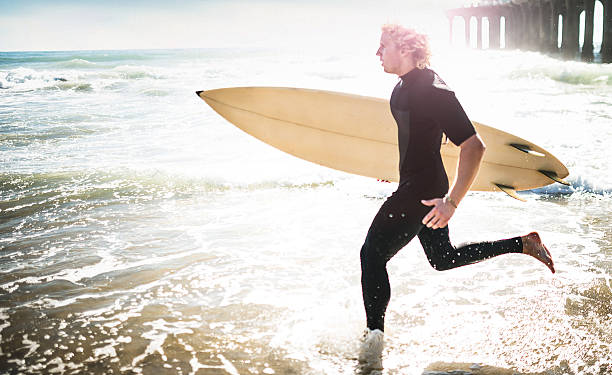
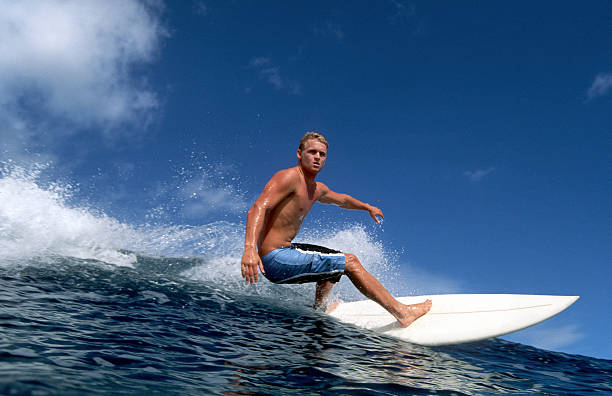
You paddle out at dawn, the sky bleeding gold into a clean northwest swell. Your stick is waxed, your wetsuit zipped, and for a moment, you feel like a ghost walking on water. But beneath the fiberglass and epoxy, there is an invisible connection holding it all together. It is not just the leash wrapped around your ankle. It is the whole system—the urethane cord, the swivel, the rail saver, and the traction pad under your back foot. This is the unsung poetry of modern surfing. Without a solid leash and the right traction, you are just a guy with a board, hoping the ocean does not take it away from you. The bond between surfer, leash, and pad is as sacred as the wave itself.
Let’s talk about the leash first. Before the late sixties, if you fell on a big day, you swam. End of story. You paddled back to shore, swallowed some salt, and hoped your board washed up before it got smashed against the rocks. Then Pat O’Neill, son of wetsuit legend Jack O’Neill, tied a surgical cord to his board and his ankle. The other surfers called him a kook. They said it would kill the soul of the sport. But what Pat understood was simple: a leash is freedom. It means you can take a risk. You can go for the closeout barrel at Pipeline, get pitched over the falls, and still have your board waiting for you when you surface. Today, brands like Creatures of Leisure, Dakine, and FCS have turned that surgical cord into a high-performance instrument. A good leash has a comfortable cuff that does not chafe your ankle after a three-hour session. It has a swivel that keeps the cord from twisting into a tangled mess. And it has a rail saver—a wide piece of fabric that wraps around the stringer of your board so the leash pull does not crack the glassing.
Now, step onto the board. Your front foot is loose, feeling for the sweet spot. Your back foot lands on the traction pad, and that is where the magic happens. A traction pad is not just a piece of foam with a kick. It is your anchor. When you bottom turn off the lip, your back foot needs to be locked in. When you try to float a floater, you need that tail kick to push against. Without a pad, your foot slips. You lose the line. And on a steep, hollow wave, that slip is the difference between a ride and a wipeout. The best traction brands, like Sex Wax’s Gumby pad, Octopus, Astrodeck, and the classic FCS traction kits, design these pads with arch bars and double-kick tails that give you that extra bite. The texture matters too. Some guys like a diamond groove pattern. Others want a smooth center with raised edges. It is all about feel. In the lineup, you see old salts with worn-out pads held together by surfboard wax and faith, and you see groms with fresh, bright pads that still smell like the factory. Neither is wrong. It is just a different philosophy of grip.
What ties these two pieces of gear together is the concept of survival in the water. A leash keeps you connected to your board. A traction pad keeps you connected to the wave. When the swell jumps from chest-high to double overhead, your leash is your lifeline. It is the thing that stops you from swimming a half mile back to the takeoff zone. And your pad is the thing that lets you drive hard through a turn without blowing out the tail. Some surfers swear by a loose leash, one that trails behind the board without pulling on the stringer. Others want it tight, so the board stays close when they get worked. That is a personal choice, like whether you like a thick, heavy pad or a thin, minimalist one. But the important thing is that both the leash and the traction pad are more than accessories. They are extensions of your body in the ocean.
Think about the moment you drop in. Your weight shifts. Your toes curl over the rail. The leash is slack, humming behind you. The pad is underfoot, ready to catch the heel pressure from your first bottom turn. In that split second, you are not thinking about the brand on the cuff or the rubber on the deck. You are just surfing. That is the ultimate test of gear. When it works perfectly, you do not notice it at all. It becomes invisible. The leash is just a ghost line, and the pad is just part of the board. That is what the best brands are chasing. They are not trying to make the coolest looking gear. They are trying to make gear that disappears into the ride.
So next time you get a new stick, do not just grab any leash off the hook. Think about the conditions you surf most often. Beachbreak slop or reef ledge barrels? Look at the traction pad. Do you need a big kick for heavy, vertical surfing, or a flat pad for a more longboard-style glide? Take your time. Stand on it in the parking lot. Feel the arch support. Then go out and let the ocean test it for you. Because at the end of the day, the leash and the traction pad are the silent partners in the endless summer. They are the things that let you chase the sun without losing your board along the way.