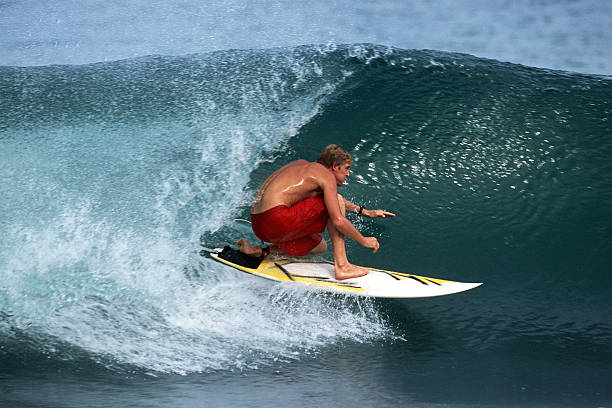
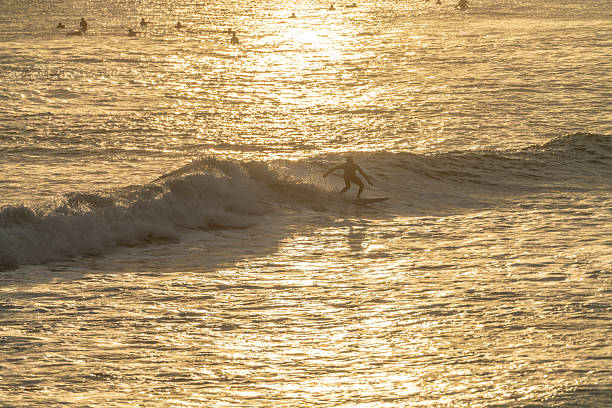
Some days at surf camp you paddle out and feel like you’ve never touched a board in your life. Your pop-up stalls, your bottom turn hooks too late, and that wave you’ve been eyeing all morning rolls under you while you’re still fumbling with your leash. It happens. Every surfer, from a first-timer paddling a foamie to a seasoned charger threading double overhead barrels, goes through those sessions where the ocean makes you feel small. But here’s the thing about surf camps—they offer something the solo surfer rarely finds: a structure that catches you before you spiral into frustration. The trick lies in knowing when to lean into that structure and when to paddle away from it.
A good camp instructor watches you ride and spots the micro-adjustments you can’t feel yourself. Maybe you’re looking down at your feet, or your back hand is dragging through the face instead of reaching for the rail. A coach with an eye for detail will pick up on that stuff within two waves. But there’s a danger here, and it’s one I’ve seen trip up a lot of eager surfers. You can get so caught up in fixing the mechanics that you forget why you paddled out in the first place. Surfing isn’t a checklist. You can’t drill your way into a perfect trim or hack your way into flow. The most dramatic leaps in ability happen when you stop thinking about the steps and let your body do the remembering.
The best camps I’ve ever visited strike a balance. Morning sessions are all business—drills on the beach, video analysis, focused stretches in the sand. You break down the kinks in your pop-up until it feels natural, even boring. You practice reading waves from the channel, picking the peak, understanding how the swell wraps around the point. This is the hard work, the kind that builds muscle memory you can’t conjure from watching YouTube tutorials. But after lunch, good camps send you back out with one simple instruction: go be a kid again. No coaching. No watchful eyes on the beach. Just you and the ocean and a chance to forget everything you learned that morning.
That afternoon freedom is where the alchemy happens. When you’re not obsessing over your rail-to-rail transitions or your duck dive timing, your subconscious takes over. You catch a wave and suddenly your hips rotate naturally. You find a pocket of speed you didn’t know existed. You drop in on a bigger set wave than you planned because the moment felt right. These are the breakthroughs that stick with you. They’re not born from repetition alone; they come from allowing the chaos of the ocean to teach you something your coach can’t.
There’s a reason the old-school surfers from The Endless Summer era talked about chasing the sun instead of chasing perfect form. They understood that progression isn’t a straight line. You improve in spirals, circling back around to the same mistakes only to find you’ve got a better grip on them this time. The surfer who fixes everything before it breaks usually misses the joy of the ride. The surfer who lets a few waves crash over them, who accepts the nose-dives and the wipeouts as tuition paid to the sea, ends up with a deeper relationship with the water.
A good surf camp gives you the tools to build that relationship. A great surf camp shows you when to put the tools down. If you find yourself nodding along to every correction, chasing perfection with a furrowed brow, maybe it’s time to paddle away from the pack and ride a few waves for the pure dumb fun of it. The ocean doesn’t care about your form. It cares about your presence. Let the coaching sharpen your edges, but let the chaos fill your sails.