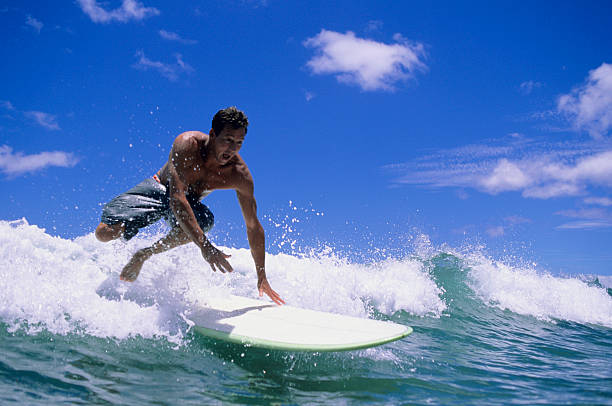
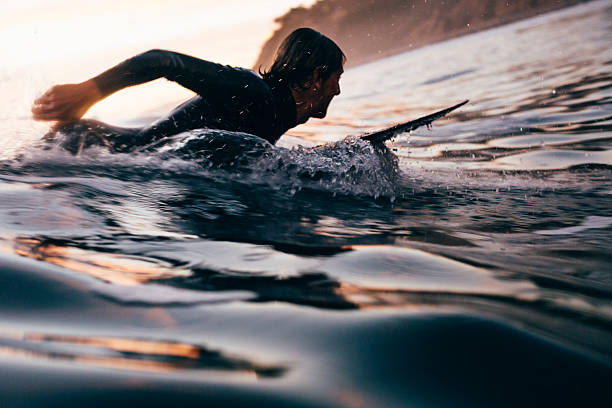
You ever get that feeling when you’re paddling out, the dawn patrol glass is still holding, and you take a deep breath of that salt air? You feel the wax under your chest, the flex of the foam, and that little bit of extra confidence that comes from knowing your board isn’t going to ditch you. That confidence isn’t just from the shape of the hull. It comes from the two most overlooked pieces of gear in your quiver: the leash and the traction pad. We spend our whole lives obsessing over fins and rocker, but the umbilical cord on the back of your board and the grid under your back foot? That’s the soul of the setup.
Let’s talk about the leash first. Back in the day, before Tom Blake started messing around with a bit of rubber surgical tubing, losing a board meant a long, cold swim. It meant dinging up your prized pintail on the rocks, or worse, taking that thing to the head. The modern urethane leash, really perfected by brands like Dakine and Creatures of Leisure, is a marvel of engineering that gets zero respect. It’s not just a piece of cordage. When you’re getting rag-dolled in a wash cycle at The Banzai Pipeline, that single 7mm cord is your ticket back to the surface. It keeps your board close, which is good for you, but also good for the grom next to you. The old school thought it was kooky, that you should swim for your stick. But the modern surfer knows better. A quality leash—one with a thick rail saver, a swivel that doesn’t seize up, and a cuff that won’t cut off circulation—is the difference between a session and a survival mission.
But even a great leash isn’t worth much if you can’t stay glued to the deck when the wave stands up. That’s where the traction pad saved our collective backs. Before the pad, we were slaves to the wax. You’d be in the parking lot, scraping off old wax with a comb, reapplying a fresh coat of Cold Water or Tropical, depending on the swell direction. It worked, but it was messy. It melted in the sun, got sand in the top of your wetsuit, and on a steep drop at a fast reef break, your back foot could slide right off the tail. Enter the traction pad. Brands like FCS, Evol, and Octopus started sticking these slabs of EVA foam on the tails of the high-performance shortboards, and it changed the game. Suddenly, you had a solid anchor. You could feel the edge of the pad under your heel, a tactile reminder of where you stood on the rail. You could push off that pad for a bottom turn, feel the arch support, and trust that when you put the hammer down for a cutback, your foot wasn’t going anywhere.
The beauty of modern traction is the evolution. It’s gone from a simple block of sticky foam to a piece of art. You’ve got the multi-piece setups, like the FCS II Merrick, that let you customize the kick ramp. You can run a single drop-knee pad for a twin fin, or a full tail pad with a diamond groove pattern that feels like a secret grip tape. The kick ramp itself is a subtopic worth discussing. That little wedge of foam at the bottom of the pad isn’t just for looks; it’s a literal hook. When you’re flying down the line and the face gets critical, that ramp gives your toes something to bite into. It’s the micro-ledge that keeps you from sliding over the nose when you’re doing a heavy fade.
And don’t sleep on the wax, either. Even with a pad, high-end wax is still crucial for the front foot. Brands like Sex Wax and Sticky Bumps have been the go-to for decades for a reason. They soften at the right temperature to create a micro-suction cup effect against your skin. It’s a partnership: the pad for the back foot, the wax for the front. Without the right combo, you’re just a kook on a rocket.
So next time you’re suiting up, give a little nod to that leash stringer and that tacky pad. They’re not just accessories. They’re the pieces of gear that let you chase the endless summer without ever losing your ride.