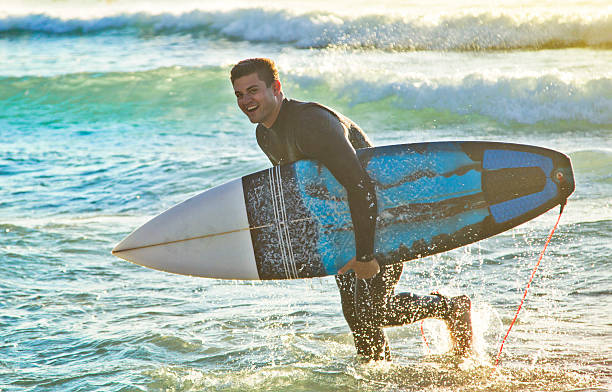
You paddle out at your local break, the dawn patrol crew bobbing around like a pod of seals. You’re on a brand new stick, a shiny spray job that cost you a month’s rent, and you feel like you’re gonna rip. But something’s off. You’re sinking on the takeoff, struggling to get into waves that your buddy on his beat-up nine-footer is catching with a casual backstroke. Or maybe you’re on a wave and the board feels twitchy, skittering across the face like a startled crab. The problem ain’t your pop-up or your lack of commitment—it’s volume, man. That’s the invisible secret sauce that can make or break your session, and too many surfers sleep on it.
Volume, measured in liters, is simply how much space your board takes up. But in the water, it’s everything. It’s the buoyancy that lifts you from a dead stop, the float that keeps you planing through flat sections, the stability that lets you drop in without that stomach-lurching wobble. Think of it as your paddle horsepower. A board with high volume—like a longboard or a fat hybrid—gives you easy entry, early takeoffs, and a forgiving platform for noserides or just hanging ten on a mellow day. Low volume, the kind you find on a high-performance shortboard or a toothpick of a fish, demands more paddling strength, better timing, and a willingness to surf deeper in the pocket. It’s for when you want to really carve, throw buckets of spray, and feel every ounce of the wave’s energy through your rails.
The tricky part? Volume ain’t one-size-fits-all. What’s perfect for a 180-pound charger from Oahu’s North Shore is pure misery for a 140-pound weekend warrior sloshing around in waist-high beach break. The old chart—weight times some magic number—gets you in the ballpark, but it ignores your fitness, your wave knowledge, and the kind of surf you’re chasing. A lot of groms and even seasoned surfers get hung up on length, thinking a shorter board automatically means more shredding. But two boards with the exact same length can feel totally different if one is thick as a cooler and the other is thin as a prayer. That thickness—the foam distribution under your chest—determines how quickly you get into waves and how easy it is to duck dive. Too much foam and you’re battling to get under a clean-up set. Too little and you’re a human anchor, watching waves roll by while you’re still struggling to catch the ripple.
Here’s where the rubber meets the road—or the wax meets the deck. Let’s say you’re a intermediate surfer, charging on a standard shortboard around 5’10” with 28 liters. You’ve got a decent pop-up, you can trim down the line, but you’re missing a lot of waves on mushy days. You think about going shorter to get more performance, but maybe what you actually need is more volume, not less. Push that liter count up to 30 or 32, and suddenly you’re catching waves earlier, you’ve got more time to set your feet, and your confidence skyrockets. You’re still riding a shortboard shape, but the extra float makes you feel like a local charger. Conversely, if you’re a big-wave hellman paddling into twenty-foot bombs, you want a gun with low volume relative to its length—enough foam to stay afloat in the channel but not so much that you can’t get a deep duck dive in the impact zone. Volume is the silent conversation between you and the ocean about what you want out of every session.
And don’t even get me started on the way volume interacts with your fins and rocker. A high-volume board with a flat rocker and a big single fin will glide like a magic carpet—perfect for point breaks and soulful carves. A low-volume thruster with a steep rocker will respond to the smallest weight shift, letting you snap tight arcs but requiring constant engagement. When you’re shopping for a new board, don’t just stare at the length on the sticker. Ask the shaper about the volume. Better yet, get in the water and swap boards with a buddy for a few waves. Feel the difference between 28 and 30 liters. That little bit of extra foam might feel like a boat at first, but give it a session or two and you’ll realize it’s the key to catching more waves and having way more fun.
The ocean doesn’t care about your ego. It doesn’t care if you’re riding a seven-foot log or a five-foot potato chip. What matters is whether you’re in the right spot at the right time, and that starts with a board that floats you into the wave. Volume is the unsung hero of every single surfboard—the hidden dimension that turns a piece of foam into your ultimate ride. So next time you’re pondering a new stick, stop obsessing over the length and ask yourself: How many liters do I need to catch this wave? Then go out, paddle hard, and feel the difference. The wave will thank you.