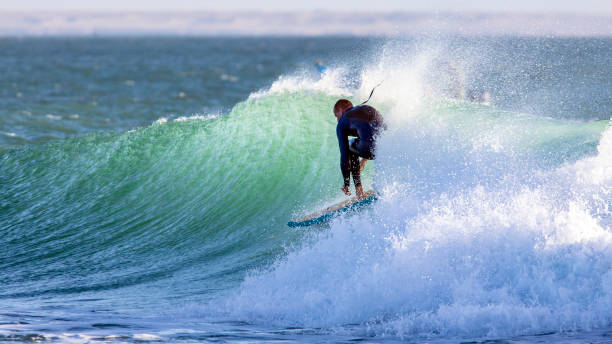
There you are, three days into a two-week surf trip down the coast, and you’ve just found a pressure ding on the deck of your favorite thruster. It’s not a blowout, not even a crack you can feel with your fingernail, but that little star burst of white glass is a promise of a wet core if you don’t get on it soon. In the old days, this meant a hunt for a shady spot, a bottle of stinky polyester resin, a tube of catalyst that always seemed to have gone bad, and a whole afternoon of breathing fumes while your board healed. The vibe was heavy, the disposal of leftover goop a total drag, and the time commitment often meant you just taped it, surfed it, and hoped for the best. But the lineup has changed, and so has the fix. The real game-changer for the road warrior, the guy or gal chasing that endless summer, is suncured resin.
This stuff is pure stoke. Suncured, or UV-cured, resin is a single-component system—often a polyester or epoxy blend with a photoinitiator already mixed in—that turns from a liquid to a hard, sandable repair when you hit it with direct sunlight or a strong UV lamp. No measuring little bottles of catalyst and hoping you mixed it right. No panic about a batch kicking off too fast because the board is hot or the air is humid. You just squeeze it out of the tube or dab it from the bottle, wet out your piece of fiberglass cloth, and let the big yellow ball in the sky do the work for you.
For the traveling surfer, this is the difference between a session killer and a minor pit stop. Imagine scoring a remote point in Mexico, only to find a fin gash that goes right through the glass. Back in the day, you’d have to bring a whole chemistry set or find a local shaper who spoke your language. With suncured resin, you pull out your repair kit, clean the ding with a little acetone or fresh water, cut a small patch of cloth or fiberglass mat, saturate it with the goop, and lay it down. Then you just point the board at the sun. Fifteen to twenty minutes in direct, strong sunlight, depending on how thick you slathered it, and you have a cure as hard as if you had used a full catalyzed batch. You can sand it smooth, wax over it, and be back in the water before sunset.
Now, a lot of surfers think suncured is just for minor nicks and scratches, but that’s a myth. Modern suncured resins have impressive strength. They are perfect for deck dents, rail cracks, fin boxes that need a little backup, and even small blowouts on the bottom. The key is proper prep. You still need to chamfer the edge of the ding with sandpaper or a rasp, dry the foam out completely (a hair dryer works wonders), and make sure the area is clean of wax and salt. But the resin itself? It flows like honey, wets out cloth beautifully, and won’t kick off until you want it to. You can take your time, finesse the glass, get your swirls right. And because there’s no separate catalyst, you never get that toxic styrene smell that clings to your hands and car for days. It’s a much more mellow process for the home shaper or the nomad.
The biggest pro tip from the surf shed is to keep a little UV flashlight in your kit. Not all sunlight is equal, especially if you’re traveling in winter or at a foggy break. A cheap 40-watt UV floodlight, or even a UV nail lamp from the drugstore, will cure the resin in about the same time as direct sun, just without the heat. This is critical for doing repairs at night in the van or on a cloudy day. You set the board down, shine the light on it, and walk away for a beer. Come back, and it’s rock solid. No more waiting for dawn to finish a fix.
There is one thing to watch: the shelf life of suncured resin is shorter than the standard stuff. Once opened, the tube or bottle has a UV inhibitor that protects it, but over long periods and with heat exposure, it can start to thicken or even spontaneously polymerize in the bottle. The golden rule is to buy fresh for each big trip and store it cool in a dark backpack. A fresh tube is fluid and clear; an old one is thick like honey. If you squeeze it out and it’s already goopy, don’t use it for a structural repair.
For the die-hard traditionalist who swears by laminating resin and hot coat, suncured might feel like a shortcut. But for the rest of us, it’s a revolution. It lets you spend less time in the repair bay and more time in the barrel. It keeps the stoke alive when a board gets trashed far from home. It means your quiver stays full and your waves don’t end because of a little bad luck. So next time you pack that travel bag full of leashes, fins, and wax, carve out a small slot for a tube of the sunshine stuff. It’s the difference between a ding being the end of your day or just a brief interlude before the next set rolls in. Surf on.