There’s a sneaky kind of sunburn that doesn’t show up on your skin, doesn’t peel, and doesn’t hurt until the damage is already done. It happens to your board. You leave it leaning against the truck while you paddle out for a long session, or you forget to throw the towel over it while you’re dicking around on the beach. The sun, that golden orb we chase from dawn patrol to sunset glass, is also the single most destructive force your stick will ever face. We talk about dings from reef, from the car rack, from your buddy’s fin, but the sun? That’s the quiet killer. That’s the rot that turns a sweet, responsive shortboard into a waterlogged sponge with the flex of a wet newspaper.
It’s called sun rot or, in the hardcore repair shops, resin cancer. UV radiation breaks down the molecular bonds in the polyester or epoxy resin that seals your foam. It gets brittle. It starts to cloud up, yellow, lose that mirror shine you loved when you peeled the plastic off. Then come the microscopic cracks, the crazing that looks like a spiderweb on a cheap windshield. Once those cracks are there, water finds its way in. Just a drop, then another, seeping into the polystyrene or polyurethane core. That foam doesn’t dry out. It stays wet, heavy, and dead. Your board starts to feel sluggish, like you’re dragging a log. Pop that used to be crisp turns to a thud. Next thing you know, the glass is delaminating, peeling off in sheets, and you’re shopping for a new stick way before your bank account said it was cool.
This is especially brutal on the older, classic shapes. Those beautiful single-fin logs and pintail guns, often glassed with heavier, less flexible resin, are like old men in the sun. They get stiff and cranky. The resin on the deck, the part that takes the most UV exposure when you’re lying on it waiting for a set, turns into a chalky, dried-out crust. I’ve seen boards from the sixties that were stored in a garage with a window. The top half of the board was a cracked, yellow mess, and the bottom half, which was in the shade, looked mint. That’s the sun’s work. It doesn’t discriminate. Your brand new, custom-shaped thruster? It’ll look like a well-loved jalopy in a year if you treat it like a beach towel.
So what’s the fix? You can’t stop the sun from shining, and you shouldn’t want to. That’s the whole point of this lifestyle—chasing it. But you can outsmart it. The number one rule, the mantra of any salty old shaper or grom who has learned the hard way, is rinse and dry in the shade. Always. After every session, even if you’re just paddling out for a quick one before work, give your board a freshwater rinse. Get the salt off, the sand off, and then put it in the shade to dry. Never, ever leave it in a hot car with the windows up. That’s a solar oven. The glue holding your fins, the resin on the stringer, everything is cooking. A board bag is the best piece of gear you didn’t know you needed. Get a thermal bag. It reflects the heat and the UV. It’s like a sunscreen with an SPF of fifty for your foam. A cheap one works better than nothing. A good one is cheaper than a new board.
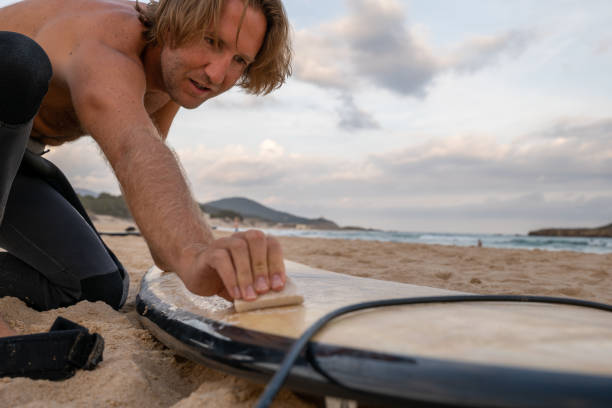
And don’t forget the sunblock for your board. Not the zinc you put on your nose, but a layer of protective wax. The wax you use on the top deck to keep your feet sticky actually creates a thin barrier that takes some of the UV hit. When that wax gets old and dark and full of sand, scrape it off and put on a fresh, clean layer. That old wax is like dead skin. It traps heat. A fresh coat is a fresh shield. And if you see a blister—a little bubble in the resin under the hot coat—pop it. Yes, it’s scary. But that bubble is full of trapped moisture or gas. If you leave it, it will peel. Take a razor blade, slice a tiny cross into it, squeeze out any gunk, and dab on some suncure resin. Let it harden in the sun (ironic, right?). That one tiny fix can save the whole deck.
Respect the board. It’s not just fiberglass and foam. It’s a piece of your soul shaped by a craftsman. It rides the face of the wave for you. It deserves a little shade by the truck, a fresh coat of wax, and a rinse after the salt dries. Treat it right, and you’ll be chasing that endless summer for many more sessions. Let it bake, and you’ll be chasing a credit card bill. The choice is yours, brother. Keep it fresh, keep it in the shade, and keep surfing.