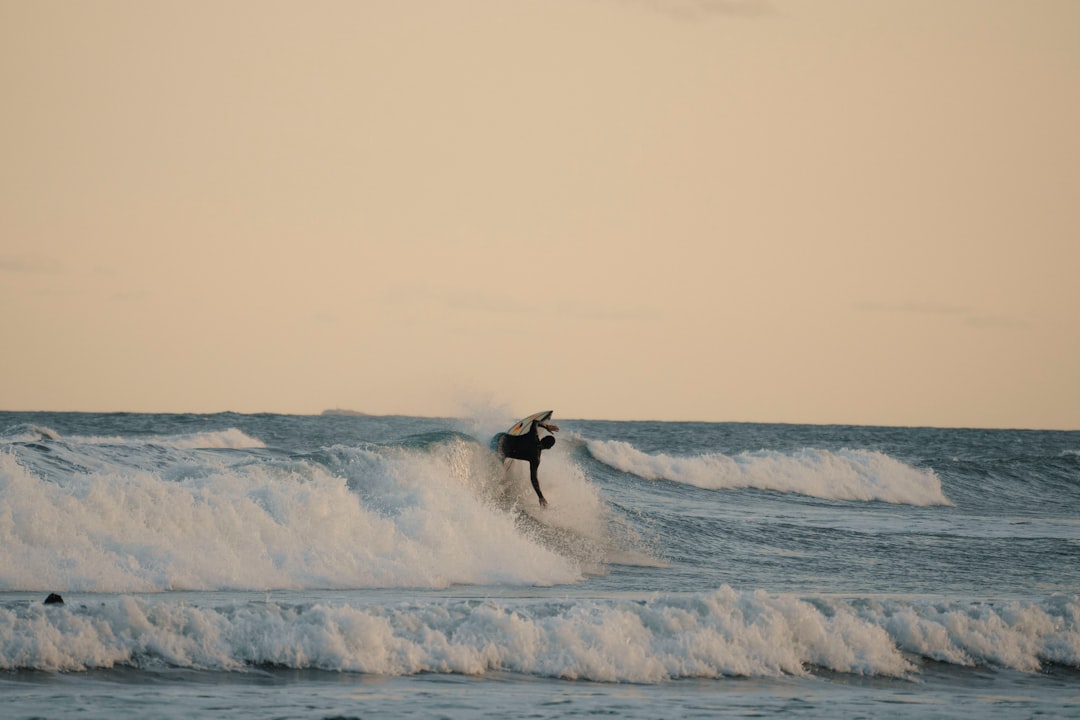
There’s a moment every surfer knows. You paddle out on a junky, two-foot day, the kind where the swell is more of a suggestion than a promise, and the ocean looks like a plate of lumpy oatmeal. Your shortboard feels like a toy boat, sinking in all the wrong places. You’re hunting for a wave that just isn’t there, feeling the stoke drain out of you with every paddle. Then, a buddy on a tiny, wide, incredibly flat little board glides past you, catches a ripple you didn’t even see, and immediately slots into a wall of water that shouldn’t exist. He’s flying, making sections you’d have to hack at, and he’s doing it with a grin so wide it almost touches his ears. He’s on a Mini-Simmons.
The Mini-Simmons is the ultimate fun shape, the quintessential answer to the question of how to have a good time on any given day. It’s a modern reinterpretation of Bob Simmons’ original hydroplane-inspired designs from the late 1940s and early 50s, but it’s been taken to a glorious, counter-culture extreme. Where Simmons was a mad scientist trying to unlock speed and efficiency with hard, planing rails and a diamond tail, the Mini-Simmons takes his foundational ideas and softens them, widens them, and makes them laugh out loud. It’s the anti-performance shortboard, built not for radical, vertical maneuvers on a six-foot barrel, but for effortless glide, ridiculous paddle power, and pure, unadulterated fun on the kind of summer slop that makes lesser boards feel like anchors.
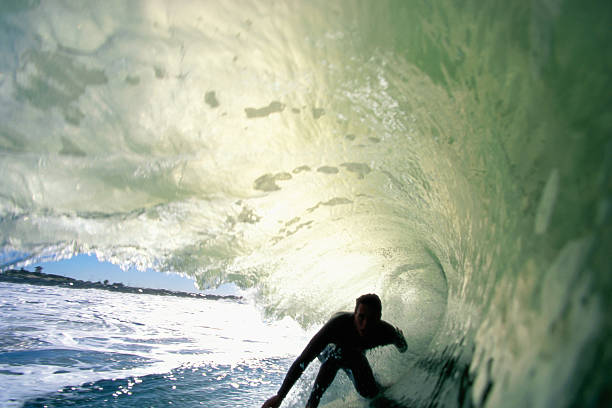
At its core, the Mini-Simmons is defined by its radical width, its extreme flatness, and its minimal rocker. We’re talking a board that might be 5’6” long but 22 inches wide, with a nearly straight, flat deck and a belly that’s about as curved as a parking lot. This isn’t a design flaw; it’s the whole point. That massive planing surface allows the Mini-Simmons to generate speed from almost nothing. It paddles like a duck, catching waves so easily that even a beginner can feel like a local on a crowded peak. Once you’re up, the board sits incredibly high on the water, skimming over the chop and fat sections that would swallow a normal shortboard. You don’t sit in the wave; you float on top of it, and the drag is so minimal that you just coast into the most unlikely barrels.
The fin setup is crucial. Most Mini-Simmonses run a twin-fin configuration, with the fins placed surprisingly far forward, near the center of the board. This is the secret sauce. That forward fin placement, combined with the wide tail, creates a loose, pivot-heavy feel that’s totally different from a normal twinny. The board doesn’t want to track; it wants to slide. You can whip the tail around with the slightest pressure on your back foot, performing tight, carvey turns that feel more like skidding on a skateboard than cutting through water. It’s a rail-to-rail slide that’s incredibly forgiving and a blast on weak, crumbling waves. You don’t need a steep, critical section to gouge a turn; you can just lay it on its rail and slide it through the fat parts of the wave, generating speed and momentum where other boards would stall out.
The foil is everything. A poorly foiled Mini-Simmons will feel like a barge, waterlogged and sluggish. But a good one, with a thin, subtly domed deck and a tucked, foiled rail, feels alive. The rails are soft and forgiving, which means you can sink them in without fear of pearling. The tail is wide and squashed, usually a squash or a rounded pin, giving you plenty of foam to push against. The board’s volume is concentrated right under your chest, making pop-ups effortless. It’s a board that demands you surf with your whole body, using your hips and your core to initiate turns, rather than just relying on your feet to stomp on the tail.
The beauty of the Mini-Simmons is that it forces you to surf differently. You can’t just go down the line and hack at the lip. You have to use the entire wave, pumping for speed, gliding across flat sections, and using the board’s slide to set up for a late, wrap-around cutback. It teaches you to read the wave’s energy, to look for the path of least resistance, and to find speed in the slowest parts of the ocean. It’s pure, primal surfing, focused on the feeling of gliding rather than the performance of an aerial.
In the world of fun shapes, the Mini-Simmons is the king of the small-wave party. It’s the board you grab when you want to forget about the contest, the camera, and the judgment. It’s the board that brings the stoke back on a flat, wind-chopped afternoon. It’s a testament to the idea that the best surfer is the one having the most fun, and that sometimes, the most radical thing you can do is go slow, slide sideways, and laugh your way down the line. So next time the forecast looks grim, don’t grab your step-up. Grab a Mini-Simmons. Paddle out. And remember why you started surfing in the first place.