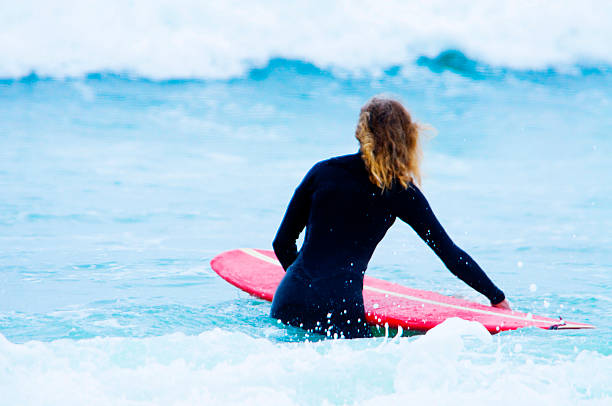
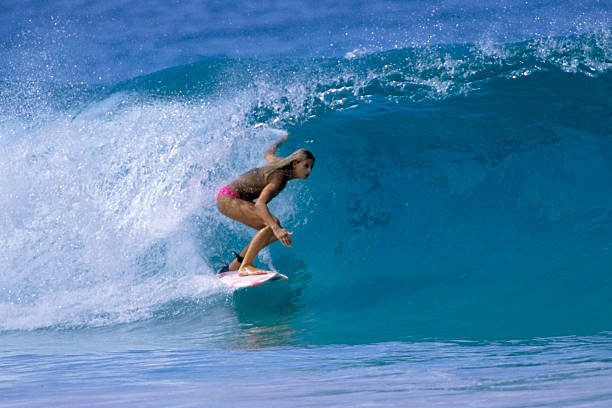
There’s a moment every surfer knows, the one that happens just before the drop. You’re sitting on your board, bobbin’ in the channel, when the horizon swells and the ocean starts to breathe. The set line forms, and you pivot, paddle hard, and slide over the ledge. The world goes quiet for a split second. Then everything is spray and speed, a blur of salt and adrenaline. In that moment, you’re completely alone. But if you look to the shoulder, just beyond the foam ball, you might catch a glimpse of a wetsuit-clad figure bobbing with a camera the size of a small seal. That’s the surf photographer. And he or she is the silent partner in the water, the one who turns your fleeting ride into a lifelong memory.
Surf photography ain’t just about pointing a long lens at a wave and hoping for the best. It’s a dance, a negotiation, and a relationship built on trust and respect. The best shooters don’t just show up at the beach and fire away like they’re at a car show. They become part of the lineup. They learn the break’s rhythm, the sandbar shifts, the backwash quirks. They know that the peak belongs to the surfer, not the shutterbug. A true water photographer earns the wave by being anonymous, by sitting out of the critical zone, by reading the ocean like a fellow surfer would. That’s how you get those golden frames of a barrel spitting or a bottom turn carving a rooster tail. The photographer is not an intruder. They’re a local, a regular, a friend who happens to carry a waterproof housing.
There’s an unspoken code in the water. You never drop in on a surfer, and you never foul their line. Same goes for a photog. You see a surfer stroking into a big one, you don’t paddle across their face to get the money shot. You hold your position in the channel, maybe even duck under the wave’s lip as it passes, just to stay out of the way. That’s the stoke of it, the mutual respect that turns a photo session into a shared adventure. I’ve seen photographers get more stoked than the surfer when they nail a sequence of a closeout tube ride. They’re hooting and hollering from the channel, because they know what it took. They felt the same energy, the same pulse of the ocean.
The thing about surf photography is that it’s a chase for something that never repeats. No two waves are ever identical, no two turns have the same angle, no two sunsets throw the same light. A surfer might ride a thousand waves in a year, but that one wave, that one moment when your rail locked into the lip and the spray exploded like a fireworks show, is gone forever. Unless someone was there to catch it. That’s what makes the craft so rad. It’s not just a picture. It’s a proof of existence, a little rectangle of light and color that says, “Yes, this happened. I was here, and I did this.” For the surfer, that photo is a trophy. For the photographer, it’s a gift. And for the culture, it’s how legends get made.
Think about the iconic shots that have shaped our world. The grainy black-and-white snapshots of Greg Noll charging Waimea in the sixties. The vivid tropical barrels from the North Shore in the Vans Triple Crown. The raw, jittery footage of the Eddie that makes you want to paddle out right now. Those images are more than just documentation. They write the history book of our obsession. They pass down the language of the swell from one generation to the next. A kid in Ohio sees a photo of a slab barrel and suddenly knows what the word “heavy” really means. That’s the power of the lens. It travels beyond the shoreline, carrying the feeling of salt and sun and sand to anyone willing to look.
But here’s the underrated truth: surf photography is also about patience and failure. Most sessions produce nothing. The light is flat, the wind switches onshore, the surfer wipes out before the pocket. You burn a thousand frames and end up with one keeper. That’s okay. Because the stoke isn’t in the final image. It’s in the process. It’s in the early morning paddle with the mist still hugging the water. It’s in the shared nods between photographers and surfers when the sets finally arrive. It’s in the salt that crusts your eyelashes and the sun that stings your neck. The camera is just an excuse to be in the lineup, to be part of the ocean’s endless rhythm. And when you finally capture that perfect junkyard barrel, with the surfer tucked deep inside and the spray peeling off the lip like a clean sheet of glass, you forget every shivery, spent session. You just hoot, slap the water, and paddle back out for more.
That’s the soul of surf photography. It’s not about gear or technique. It’s about being present, being humble, and being part of the community. We’re all out there chasing the same thing, whether we’re on a board or behind a lens. The ocean doesn’t care how you ride it, as long as you respect it. And the best photographs are the ones that show that respect, frame by frame, wave by wave.