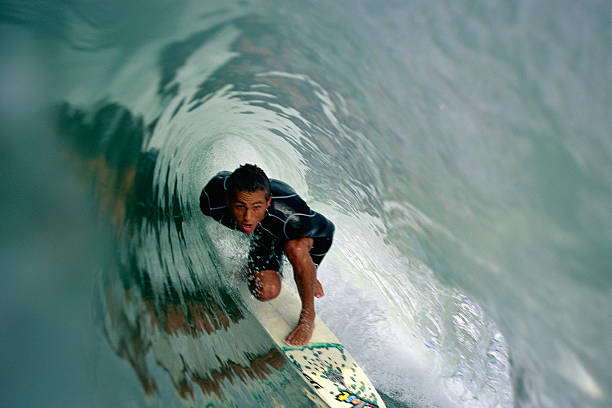
You paddle out, drop in on a good one, and right away something feels off. Maybe the tail wants to slide out too early on your bottom turn. Maybe you can’t get the board to pivot off the lip when you go vertical. Or maybe you’ve got that annoying, vague feeling like your ride is just sort of wandering beneath you, like a car with misaligned wheels. Before you go blaming your rails or your rocker or the fact that the swell is a little fat, take a long hard look at your fin setup. Specifically, take a look at that little guy back there—your trailer fin.
In the world of quad setups, everyone loves to talk about the front fins. Those big templates do the heavy lifting. They’re your drive, your speed, and your initial bite. But the trailer fin, that smaller fin positioned way back near the tail, is the unsung hero of the quad setup. It’s the component that transforms a skaty, loose machine into a tuned, high-performance surf craft. Think of your board as a jukebox: the front fins pick the song, but the trailer fin makes it sound good.
When you run a quad, the original idea was pure acceleration and release. The founders of the quad revolution, guys like Adam Jensen and Rusty Preisendorfer, figured out that by adding a second set of fins on the rail, you could drive your board through a turn with way more speed than a thruster. But that setup also came with a tendency to spin out if you pushed too hard. The front fins could only hold so much. The trailer fin changes that completely. It sits right off the back of your rear foot, acting as a stabilizer that prevents the tail from sliding out sideways during the most critical part of a turn. It’s basically a gatekeeper for your rear rail.
Here’s the secret that most weekend warriors miss: the size and sweep of your trailer fin dictates your entire turning radius. Run a big, upright trailer and you get a board that feels locked into a tight, pivoty turn, almost like a thruster with extra drive. Run a smaller, more flexible trailer with less area and you get a slidey, skateboard feel where you can whip the tail around in a heartbeat. That’s the tuning part. You’re not just buying fins for the brand or the color. You’re buying a specific mechanical behavior.
I’ve seen guys put a massive AM-style trailer on their quad and wonder why they can’t get the rail to release on a backhand snap. They’re fighting the fin. The board wants to go straight when they want to slide. Conversely, a pro longboarder might run a tiny trailer on a mid-length for the exact opposite reason: they want that ability to slide the tail out on a cutback and keep the momentum going forward. The trailer fin is your trim control. It’s the difference between a board that feels twitchy and a board that feels predictable.
Material matters too. A fiberglass trailer has some flex, which gives you a springy release out of a turn. A honeycomb or composite trailer is stiff and unforgiving, giving you immediate drive but less forgiveness when you’re out of position. If you’re surfing a lot of steep, hollow waves, you want a stiffer trailer to hold that edge when the wave pitches over. If you’re cruisin’ mushy points on a sunny afternoon, a flexy fiberglass fin lets you feel the wave more and gives you a smoother ride.
The real aha moment comes when you start mixing and matching. Don’t just buy a full set. Experiment. Put a smaller trailer on your normal front fins and feel how the board becomes a slide machine. Swap in a bigger trailer and feel how the board wants to carve a steel line. That’s the beauty of fin companies like Futures and FCS offering so many templates. They’ve given us the ability to dial in our ride with surgical precision. The trailer fin is the main dial.
So next time you’re staring at a rack of new fins, don’t just grab the one with the coolest graphic. Think about what kind of wave you’re chasing. Think about how you want to turn. Do you want to pivot hard off the bottom and throw vertical spray, or do you want to drive a long, sweeping cutback that uses the whole face? The answer is in that little fin tucked way back there behind your heel. Tune it right, and every wave feels like you’re riding on rails carved just for you. Tune it wrong, and you’ll be kicking your board around for the whole session wondering why everyone else is having more fun. That little fin is the key to unlocking the full potential of your ride. Don’t ignore it.