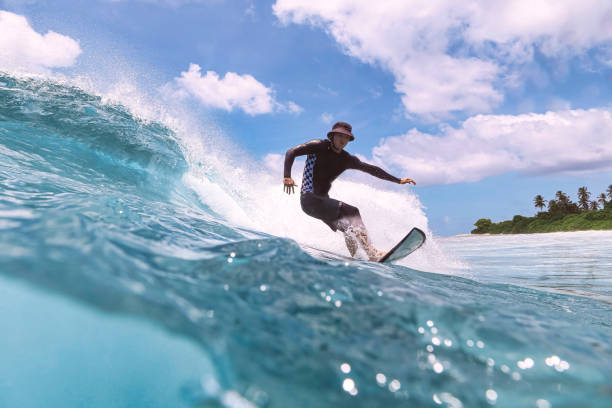
The ocean doesn’t care about rankings. It just pushes through the reef. For years, I chased the numbers. The jersey, the heat scores, the grind of the Championship Tour. Then I spent two months with a free surfer in a remote corner of Sumatra, and everything changed. That’s not a story I tell often, but it’s the one that matters. The news isn’t about who won the last WSL event. It’s about who walked away from it.
I’m talking about a guy I know - call him Kai. He was a fixture on the CT for nearly a decade, with busted boards and a highlight reel that made the magazines. But last season, after a string of early exits, he made a call that baffled the commentators. He dropped off the tour, sold his contest boards, and moved to a bungalow on the Mentawai islands. No sponsors, no heat clocks. Just the daily ritual of paddling out at dawn, dodging the peaks, and seeing how many times he could get barreled before the tide swallowed the sandbar.
Some called it a nervous breakdown. Others said he copped out. But when we finally sat down on a weathered deck chair, drinking coconut water and watching a south swell pulse through the horizon, Kai laughed. “The weirdest thing is, I’ve never been more in love with surfing,“ he said. “And I’m surfing better than I ever did with a contest vest on.“ That’s the kind of pro surfer news you don’t see on the official feeds. It’s a quiet revolution - not just for Kai, but for a whole generation of athletes rewriting the definition of a career on the waves.
The shift is real. The ultimate scoreboard isn’t a trophy shelf - it’s time spent with salt in your hair and no commentary in your ear. Tech with its AI judging and live heat analytics has made competition more precise, but also more robotic. Kai summed it up perfectly: “You can measure every turn, every splash. But you can’t measure the stoke when you’re completely buttoned down in a green room that wants to kill you.“ That stoke - that raw, unquantifiable connection - is what pulls people into the water. It’s what these new-era professionals are fighting to preserve.
This isn’t an anti-competition manifesto. The CT still pumps out great performances, and the young groms charging Pipeline or Teahupoo are inspiring. But pro surfers who have been around long enough are asking tougher questions. What does success really look like? Is it a world title, or is it a decade of sessions without losing the childlike wonder that brought you to the beach? For Kai, the answer came during a heat at Sunset Beach. He watched a 12-year-old local on a borrowed board paddle into a monster set with sheer joy. “I realized that kid had something I’d lost,“ he said. “I was so busy calculating priority that I forgot to smile.“
So Kai dropped out. Not from surfing - from the circus. He still charges waves that would snap a lesser spirit. He just does it on his own terms, chasing swells across the planet like a modern-day Endless Summer. His only deadlines are tide charts and his own burnout meter. The surfing community is taking notice. Aspiring pros now ask how to build a lifestyle that lasts, not just a highlight that goes viral. Brands are adapting too, sponsoring freesurfers who produce soulful films over forgettable heat summaries. The narrative flips from “who’s number one” to “who’s having the most profound relationship with the ocean.“ That’s a headline worth catching.
Then Kai’s eyes lit up. He pulled on his wetsuit, grabbed his quiver, and jogged down the sand path. I watched him paddle over the reef as the first wave jacked up. He dropped in, bottom turned hard, and disappeared behind a liquid curtain. A whistle came from inside the tube, then a roar as he flew out, arms raised like a kid with a dollar on the boardwalk. That’s the real news. Pro surfers are coming home - not to contest trophies, but to that same feeling they had on their first foamie.