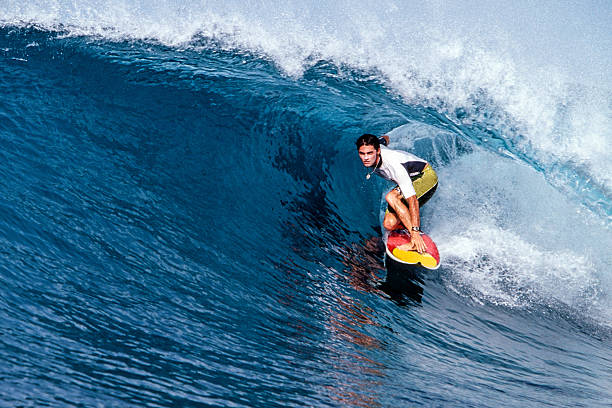
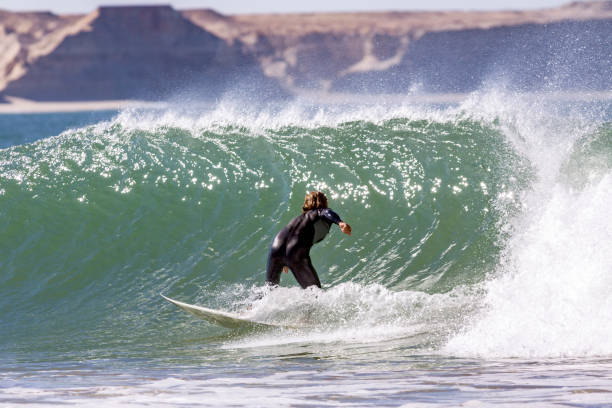
There’s a moment in every surfer’s evolution when the ocean stops being just a wall to ride and starts becoming a ramp to launch off. That’s the day you start looking at the lip not as a barrier to turn off, but as a springboard for flight. But here’s the thing about aerials that most people don’t talk about until you’ve eaten a few too many fins to the back of the head: there are two distinct souls to every air, and they require completely different approaches. You’ve got your punts, and you’ve got your pops. Understanding the difference is the difference between chucking a desperate hail mary and landing smooth with your feet under you.
The punt is the original aerial DNA. It’s raw, it’s vertical, and it relies entirely on speed and a wedge of wave face that wants to launch you. Think of the classic straight air, the kind of move that John John Florence or Kelly Slater would throw when they were boosting on a slabby, pitching section. The punt is about commitment. You approach with a line that is already aiming high, you compress deep into your bottom turn, and you drive straight up the face with your weight stacked over your back foot. The release happens when the lip throws out and you let your board’s tail follow the vertical arc of the wave. There is no fancy rotation here, no grab-and-spin. You just let the wave do the work, keep your shoulders square to the beach, and spot your landing before you ever leave the lip. The key to a good punt is patience. If you try to force the board away from the wave, you stall out and fall back into the whitewash. If you’re too passive, you get launched into the flats without control. The sweet spot is letting the wave’s energy propell you out, with your body staying tight and your back arm acting like a rudder. It’s an aerial that feels like a skateboard ollie, but with a whole lot more water moving underneath you.
Then you’ve got the pop. This is the modern aerial, the domain of the full rotation, the air reverse, and the tweaked-out grabs. While the punt is a vertical blast, the pop is a snap followed by a release. You don’t just ride up the face; you slash the tail into the lip, using the rebound of your fins releasing from the water to generate spin. Think of an air reverse. You approach with a bit more angle, you load your fins deep into a hard cutback motion, and then at the apex, you unwrap your upper body hard. Your back hand goes across your chest, your head looks over your shoulder, and the board follows. The pop happens because you are creating a fulcrum. Your fins catch, they hold tension, and then they release with a snap that flicks the tail around. This is where the grab becomes crucial. Grabbing rail stabilizes your rotation and keeps the board glued to your feet. Without the grab, the pop can turn into a wild, uncontrollable spin that ends in a face-plant. The pop requires a different kind of timing. You have to feel the tension building in your back foot, and then you have to commit to the rotation before you’ve even left the water. You are essentially spinning your board while it’s still in contact with the lip, and the pop launches you into the air already in motion.
For the everyday surfer looking to dial in either approach, the takeaway is simple. If you want to learn aerials, start with the punt. Find a wave that has a good wedge, a section that throws out a bit, and commit to driving straight up. Keep your eyes on the landing zone, not on your board. The punt teaches you to trust the wave’s energy. Once you can land a straight air two out of three times, then you start working the pop. Start with a simple 180, a backside or frontside rotation that is a half turn and a drop back in. Feel the fins release. Feel the way your shoulders lead the spin. The wave is there to launch you, but you have to learn to guide that launch. There is no shortcut. You’ll eat foam. You’ll get pitched over the falls. But when you finally stick one, flying for a split second over the ocean with the sun hitting your back, you’ll understand why the soul of surfing has always been about trying to touch the sky, even for just a heartbeat.