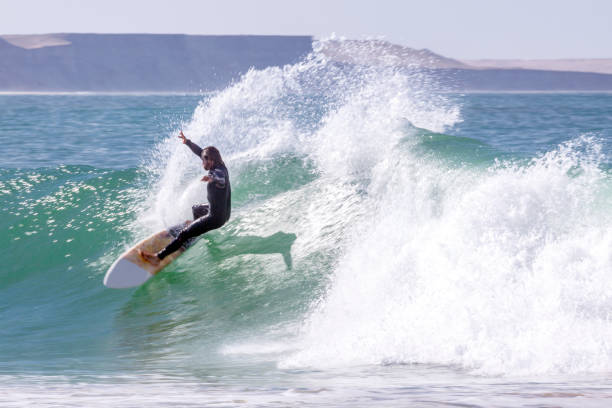
You feel it before you see it – that sudden softening of the rail, the way the wave’s face starts to breathe out from underneath you. The lip is pitching, but it’s not throwing. It’s folding back on itself like a slow-motion exhale, and that’s your cue. The cutback isn’t just a turn. It’s a conversation with the wave’s energy, a way of saying, “I’m not done here yet,” and then proving it by carving a full circle back into the power source. Most surfers think of the cutback as a finishing move, a little stylish flourish before the ride fizzles out. But the real deep dive here is that the cutback is a rebound move, a way to keep the session alive when the wave gives you too much speed and no open face to use it on. The best cutbacks don’t happen on perfect, peeling walls. They happen on soft, fat shoulders, on crumbling inside sections, on waves that are trying to die before you’re ready to let them go.
The first thing to understand is the pocket. Not the foam ball, not the whitewash, but that shimmering, steepest part of the wave just ahead of the curl. When you’re racing along the shoulder, your board is humming at trim speed, and the wave is telling you that it’s about to close out or flatten into nothing. That’s when you commit to the pivot. The cutback is a two-beat move: first you push against the wave’s face with your back foot, driving the tail through the turn, then you release that pressure and let the nose come around as you shift your weight forward. The common mistake is trying to do it all with the arms or the shoulders. You see guys throwing their whole upper body into the turn, and the board just skids sideways like a dropped pizza. No. The power originates in the hips, those low, anchored stabilizers that every good surfer rides from. You lead with your back hip, that’s the secret. The back hip goes toward the wave, the front shoulder stays low, and the board follows like it’s on a string.
Reading the wave’s rebound zone is where the style comes in. A true cutback isn’t just a 180-degree turn. It’s a return to the pocket with enough speed and angle to set up your next maneuver. If you crank it too hard, you stall out and sink into the flats. If you under-rotate, you end up in the whitewater, fighting for recovery. The trick is to time your turn so that you hit the apex of the turn just as the wave’s face starts to lift again – that little hump of energy that forms when the lip rebounds off the trough. That’s the “pocket pivot,” and it’s where the magic happens. On soft waves, you wait a beat longer, letting the board settle into the turn before you release the tail. On hollow waves, you have to be quicker, almost violent with your back foot, because the wave is giving you less time to make the adjustment. The style factor, the thing that makes a cutback look effortless versus forced, is all in the fluidity of that weight transfer. You don’t stomp the tail. You lean into it, like you’re pushing a heavy door open with your back hip, and then you let the door swing back.
Some surfers love the top-turn cutback, where they smack the lip first and then ride the rebound down the face. Others prefer the roundhouse, which is a deeper, more horizontal carve that takes you all the way back to the pocket and out the other side. But the basic cutback, the one that every grom learns on a foamie, is the foundation for all of it. The key is to keep your eyes on the spot where you want to go, not on the water directly in front of your board. Your head leads, your shoulders follow, and your hips finish the job. If you look at the whitewater, you’ll end up in it. If you look back at the pocket, you’ll come around clean. And here’s a fun little tip from the old-school guys: keep your inside hand trailing near the water’s surface during the turn. It’s not just for balance. It gives you a proprioceptive anchor, a feeling of the wave’s texture, so you know exactly when the rail has dug in enough to release.
At the end of the day, the cutback is about respecting the wave’s energy. You don’t fight it. You harness it. You set your line, feel the speed build, and then you pivot back into the source, ready to do it all over again. That’s the endless summer of surfing technique – every wave is a new conversation, and the cutback is your favorite phrase.