Every surfer who has ever paddled out with a little stoke in their heart knows the allure of the empty, hollow wave. The barrel is the holy grail, the endgame, the reason a lot of us get out of bed before the sun cracks the horizon. But here’s the thing that separates the groms from the gnarled veterans: riding inside the tube isn’t just about getting pitted. It’s about reading the language of the wave, recognizing the subtle shifts in energy, and knowing exactly where to place yourself in that moving, breathing cathedral of water. We talk about getting “shacked” or “sucking the green room,“ but the real magic lies in the nuanced terminology that describes the split-second decisions that happen between the drop and the glorious, sun-soaked exit.
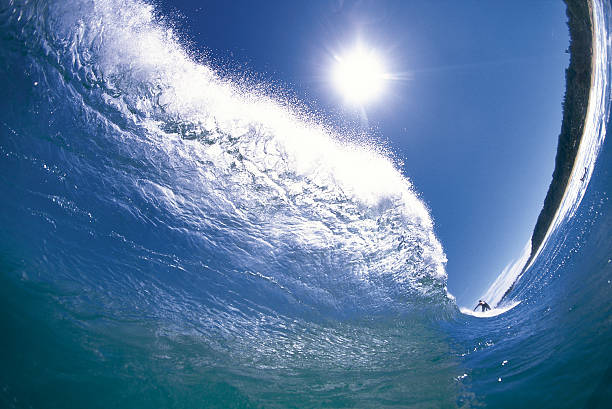
When you first find yourself inside a tube, you aren’t just sitting in a hole. You are in “the pit.“ That is the deepest, darkest part of the wave, where the lip is throwing far over your head and the roar of the water is the only sound you can hear. Getting deep is a choice. Some of us get swallowed, stuck in what we call the “belly,“ a place where the wave has you pinned, where the exit is a distant dream and the world is just white noise. That’s not a ride; that’s a washing machine cycle. The pros know the difference between a deep pit and a clean pit. A clean pit gives you a little bit of a light at the end of the tunnel, a sliver of blue sky that tells your brain, you can make it out. The moment you see that light start to shrink, you feel the squeeze. That’s the “shutdown.“ If you don’t accelerate, you’re gonna eat the curtain.
That’s where the “line” comes into play. The line is your path through the tube. It’s not a straight line. It’s a dance. You are constantly adjusting your angle, your weight, your speed. You are using the “fade” to stall and get deeper, or you are bottom-turning hard to match the “camber” of the wave’s bend. The line is determined by the “exit.“ You always surf to the exit. If you look at the walls of the tube, you are lost. You have to look through the barrel, past the churning spit, to the open face waiting for you. The best tube riders have this Zen thing going on where they are hyper-aware of the “section.“ They know that a section is just a piece of the wave that is about to throw. A “racing section” is a quick, fast barrel that you have to outrun. A “battering ram” section is a heavy, steep chunk of water that wants to pound you into the reef.
Then there is the “free-fall.“ You see a wave that is pitching so fast that the lip throws out horizontally before the rest of the wave has even finished rising. That is the ultimate test of nerve. You take the drop, and suddenly you are not on the face; you are falling through the air inside the tube. That is “getting barreled” in its purest, most terrifying form. The feeling of the “pipeline” is this. You are in a free-fall, but you are also in a tube. The water is shaking around you, and you have to stay calm. You have to keep your hand in the water, feeling for the “pressure” that tells you whether the wave is going to open up or close out.
The language of the barrel is all about geometry and flow. You have the “shallow end” and the “deep end.“ You have the “door” and the “window.“ The door is where you go in. The window is the tiny hole you try to fly out of. When you are in there, you are “threading the needle.“ If you are too low, you stall and get sucked over the falls. If you are too high, you hit the “soup,“ the whitewater that is cascading down the face, and you get rag-dolled. The most satisfying sound in surfing is the “hiss” of the exit. That moment when you tuck, slide, and spit out of the tube with the water blowing out behind you. That’s the “spit,“ the air and foam that gets forced out of the barrel by the wave’s energy.
And make no mistake, the barrel changes you. It’s why we chase the swell forecasts, why we drive hours on a whim, why we leave jobs and relationships just for one more south swell. Because inside that tube, for a split second, time stops. The chaos of the ocean becomes a room you inhabit. You are not fighting the wave; you are moving with its most intimate energy. You are reading its language, speaking in angles and speed, and when you come flying out, shooting a “rooster tail” of spray off your fins, you aren’t just a surfer anymore. You are a part of the wave’s story. You got pitted, brah. So pitted.