You hear about it in the pubs of Dingle town, usually after a few pints of Guinness when the peat fire is glowing and the wind is howling outside. Some grizzled local with salt-stained hair and eyes that have seen too many grey dawns will lean in and mutter about a wave that only breaks a handful of times a year. They call it the Phantom Peak. No one maps it. No one posts it on Surfline. It’s the kind of slab that sits out there in the wild North Atlantic, a freight train of cold emerald water that pitches up off a ledge of ancient limestone on the northern side of the Dingle Peninsula, and if you aren’t ready for it, it will eat you whole.
The Dingle Peninsula ain’t Hawaii. It ain’t even France. But when the stars align and the low-pressure systems march in from the southwest with a particular angle, this place becomes the real deal. The Phantom Peak isn’t a beach break you can find with Google Maps. It’s a setup that requires a serious northwesterly swell, a window of clean offshore wind that funnels off Mount Brandon, and a tide that is exactly right. Too much tide and the reef is too deep, the wave turns into a mushy lump. Too little tide and the slab is dry, spitting you onto barnacles that will shred a wetsuit and skin alike. The window is maybe two hours, three tops, and often it comes in the dead of winter when daylight is a fleeting luxury.
Getting there is half the stoke and half the headache. You park your van somewhere along the Slea Head drive, where the road hugs the cliffs so tight you can taste the salt spray. You hike across boggy, sheep-cropped headland, stepping over crumbling stone walls that have stood for centuries. The ground is usually wet, squelching under your booties, and the air smells of peat, sea wrack, and something ancient. You carry your step-up board, the one with the extra rail thickness and glassed-in fins, because the Phantom Peak demands a board that can handle heavy, jacking waves and still hold a line in a howling gale. A standard shortboard will just get bucked. A log will get you killed.
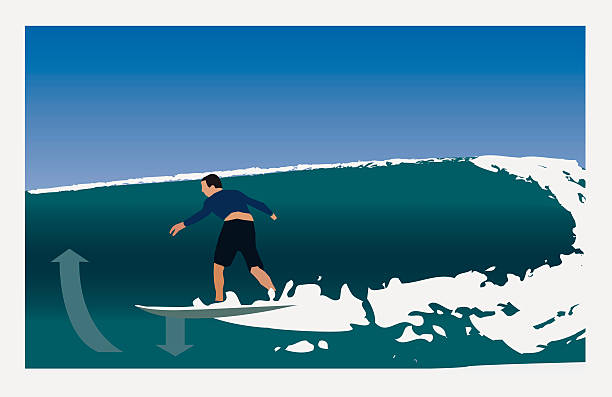
When it’s on, it’s a thing of raw beauty. The horizon churns with lumps that look like moving hills. The first set of the day rolls in and you see the whole face stand up, dark green with veins of white, before the lip thickens and throws a curtain that’s as hollow as anything you’d find in the Pacific. The takeoff is steep, a vertical drop onto a face that is moving fast. You have to commit, bottom turn hard, and then you are flying through a tube that is freezing cold and roaring like a freight train. The light inside that barrel is different. It’s pale and milky, filtered through the Irish overcast, and for a second you are completely alone in the world. Then you get spat out, the wave closes out, and you paddle like a maniac to get back outside before the next set lands on your head.
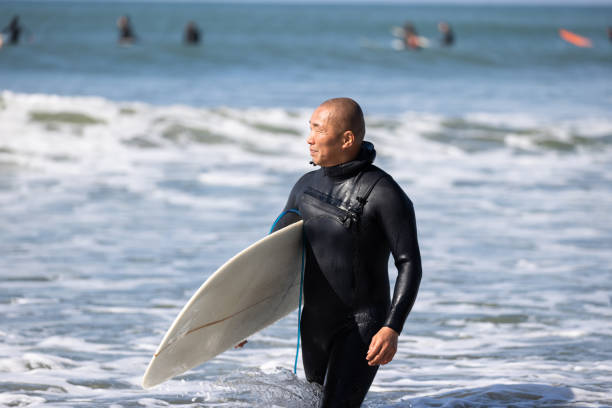
The vibe out there is respectful, not crowded. You might see five, maybe six other surfers on a good day. Everyone knows the drill. Paddle for the inside and you lose the respect of the lineup. Drop in on someone and you might as well head back to the pub immediately. There are no lifeguards, no jet skis, only the cold blue silence and the cackle of gulls. The locals earned their place through years of freezing dawn patrols and broken leashes. They surf in hooded 5/4 wetsuits with gloves and booties, looking like seals waiting for a scrap of fish. They don’t talk much. They watch the swell interval and grunt when a good one swings their way.
The Phantom Peak is the kind of wave that makes you stop and think about what you are doing with your life. It represents the core of the endless summer philosophy, not because it’s warm and sunny, but because the chase itself is the point. You go through the misery of the cold, the long drive, the guessing game of the weather forecasts. You pull on a wet wetsuit in a car park while horizontal rain tries to tear the board off your roof rack. And then you paddle out, and the ocean gives you one wave, one perfect wave, that makes it all worthwhile. That is the stoke of the Emerald Isle.
In the end, the Dingle Peninsula isn’t about epic points or perfect barrels that last for three hundred meters. It’s about the commitment. The Phantom Peak reminds you that surfing isn’t about convenience. It’s about finding a wild piece of coast, sliding down a face that has seen a thousand storms, and feeling the pulse of the planet beneath your feet. When you are sitting out there in the deep green water, the mountains of Kerry rising behind you, the cold biting your cheeks, you understand why surfers came to this place before it was on any map. They came for the phantom. They came for the real thing.