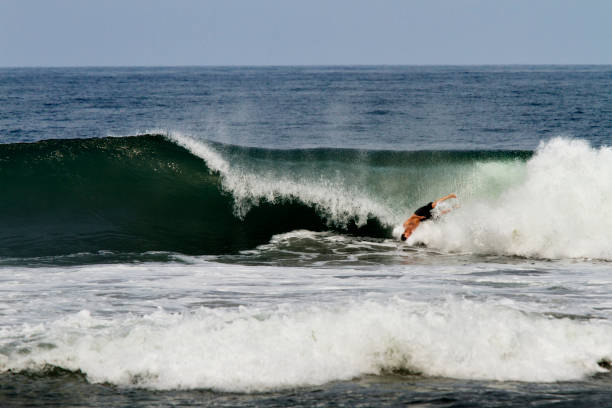
There is a moment just before the sun cracks the horizon, when the sky bleeds from deep indigo into a bruised shade of violet, and the water goes flat and glassy like a mirror someone forgot to clean. That is the time when the real surfers paddle out. The dawn patrol is not just a session, it’s a sacrament. It is the quietest, most honest part of the day, when the wind is asleep and the waves have been resting all night, building up a clean, unbroken memory of the swell. But if you look closely, you will notice that we are not the only ones out here. We never are.
The pelican is the true master of the dawn patrol. He has been out here long before you pulled the wetsuit over your goosebumps, long before you stumbled through the sand with your board under one arm and a thermos of coffee under the other. He sits on the channel buoy, a feathered philosopher with a prehistoric beak, watching the sets roll in with an ancient patience that humbles every surfer who thinks they own the ocean. He doesn’t check the forecast. He doesn’t need Surfline. He just knows.
If you watch a pelican hunt at sunrise, you will learn more about reading the ocean than any YouTube tutorial could ever teach you. He flies low and slow, his wingtips nearly brushing the glassy face of the water, scanning for the telltale shadow of a fish beneath the surface. He does not thrash or panic. He glides. And when he sees his moment, he folds those massive wings, tucks his body into a tight arrow, and plunges straight into the sea like a missile wrapped in feathers. The splash is clean and violent, and when he comes back up, he shakes his head, blinks his yellow eyes, and swallows his breakfast in one gulp. That is the essence of good surfing: patience, observation, and a decisive, committed drop.
There is a reason you see pelicans in the lineup more often than seagulls. Seagulls are surface feeders, scrappy and loud, always squabbling over scraps. They are the kooks of the bird world, dropping in on each other and paddling for waves they have no business catching. But the pelican is a deep-water hunter. He goes in deep, takes the full force of the impact, and comes up with something real. Sound familiar? That is the difference between a surfer who just wants to stand up and a surfer who wants to feel the wave from its belly.
I remember one particular morning at a left point break in Baja, where the dawn patrol was so empty you could hear your own heartbeat in the water. A big old pelican sat on the rock at the end of the point, watching me paddle out. He did not move. He just turned his head slowly, one eye fixed on me, then on the horizon, then back to me. It felt like a judgment. I sat in the channel for twenty minutes, waiting for a clean set, and every time I looked over, that pelican was still there, unmoved, unimpressed. Finally a set came through—shoulder-high, peeling perfectly down the point—and I took off, got a smooth bottom turn, and rode it all the way to the inside. When I paddled back out, the pelican was gone. He had given me his blessing and moved on to the next spot.
That is the thing about the dawn patrol. It is a conversation between you and the ocean, and sometimes the ocean talks through its other inhabitants. The pelican is a reminder that we are not the main character here. We are just visitors, borrowing a wave or two before the sun gets high and the wind picks up. The pelican has no ego. He does not care if he gets barreled or if he does a cutback. He cares about the rhythm of the tide, the light hitting the water at just the right angle, and the timing of the baitfish. If you want to surf better, surf like a pelican. Be patient. Watch the water. Wait for the right moment. And when you go, go all in.
The best part of the dawn patrol is not the waves themselves, although the waves are almost always cleaner than any other time of day. The best part is the stillness before the world wakes up. It is the slap of your fins hitting the water, the hiss of your board sliding across the glass, the sound of your own breath echoing inside your hood. And it is the company of the pelicans, who have been doing this dance long before any of us ever stood on a surfboard. They are the elders of the break, the ones who remember what the coast looked like before the condos went up, before the parking lots filled with rental vans. They do not judge you for your pop-up or your wipeout. They just watch, and if you are lucky, they teach you something.
So next time you paddle out for a dawn session, take a moment to look at the bird on the buoy. He is not just a piece of the scenery. He is the original dawn patroller, the one who has been reading the swell since before humans learned to walk upright. If you can surf with the patience of a pelican, you will never have a bad session. And you will understand why the best time to surf is not just before the sun comes up. It is the time when you are quiet enough to learn from the ones who were here first.