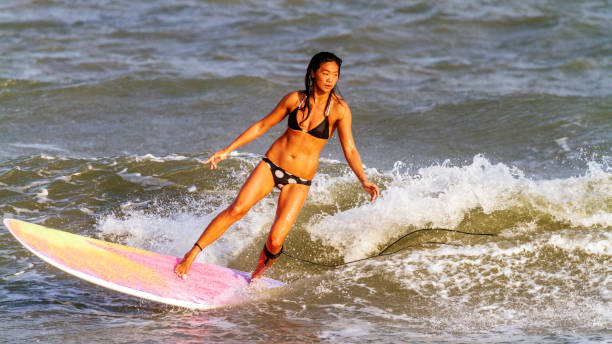
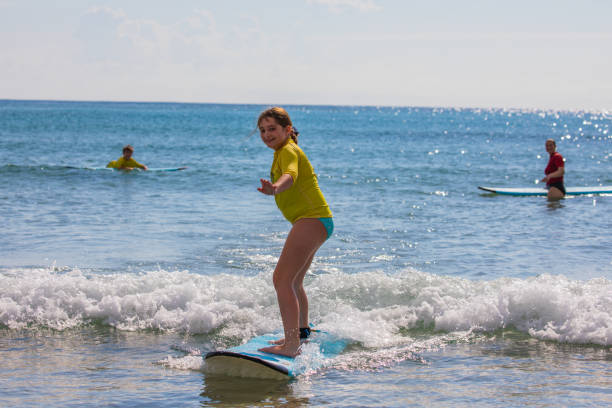
Any surfer who has sat out the back on a properly pumping day knows the truth that separates the weekend warriors from the locals: paddling ain’t just about getting from the beach to the break. It is the whole damn dance. You can have the nicest cutback in the world, a deep bottom turn that would make Rob Machado weep, but if you cannot paddle yourself into position, you are just a spectator with a pretty board. The paddle battle is where waves are won and lost before you even put a hand on the rail.
When you first start out, you think paddling is about brute force. You see a wave, you spin around, you flail like a toddler having a tantrum, and maybe, just maybe, you catch the whitewater. But as you graduate to the peak, you realize there is a whole layer of strategy that nobody talks about in the beginner books. It is a chess game played with your shoulders and lungs. The best paddlers in the water are not always the strongest; they are the ones who read the ocean like a map they have memorized since childhood.
Let’s talk about the battle for the inside position. You paddle out, you see a nice lull, and you think you have the spot wired. But the guy who has been sitting there for the last three sets has studied the swell interval. He knows that after that big set, there is a sneaky shoulder that reforms off the inside rock. He lets you take the deep paddle for the big one, knowing you will miss it or get stuck behind the curtain, and then he casually strokes into the reform while you are still trying to catch your breath. That is not luck. That is ocean literacy, and it is the highest form of paddle mastery.
Then there is the question of how you paddle for the wave itself. A lot of guys burn out their arms before the wave even arrives. They start paddling too early, frantic, splashing, and by the time the wave lifts them, they have no gas left. The real technique is a kind of patient power. You wait for the wave to do its work. You angle slightly, you take three or four deep, deliberate strokes, and you let the momentum build. The best paddlers make it look effortless because they are not fighting the water; they are using it. They dig the blade of the hand deep, not just splashing the surface, and they breathe rhythmically, keeping their body low and the energy in the core, not just the shoulders.
And of course, there is the etiquette of it all. You cannot talk about paddling without talking about the drop-in. It is the cardinal sin. If you are paddling for a wave and you see somebody deeper, with priority, you pull out. That is the rule. But there is a subtle art to holding your ground. You do not want to be a kook who snakes every wave, but you also do not want to be a pushover. Good paddlers learn to communicate without words. A look, a nod, a slight shift of the board. The lineup has its own language, and paddling is the first sentence you speak.
Paddling also wears you down in ways that standing up never does. Your lower back gets tight, your shoulders scream, and if you are not using the right stroke, you are just wasting precious energy. The pros swim constantly, not just when they are in the water. They build that endurance so that when the heat is on, they can out-paddle the competition. For the everyday surfer, the key is consistency. Paddle every day you can. Do not just sit there. Move around. Read the bumps. Get a feel for how the swell bends around the point.
Ultimately, the paddle battle is a meditation. You sit out there, arms burning, eyes scanning the horizon, and you learn patience. You learn that the wave that looks perfect from the beach is often a closeout, and the wave that looks small can be your ride of the day if you hit it at the right angle. The paddle is not the warm-up. It is the main event. Master it, and the waves will open up like doors. Ignore it, and you will always be fighting an uphill battle, chasing sets that leave you in the shorebreak, watching the real surfers glide past you on the outside. So next time you wax up, spend ten minutes just feeling the water. Paddle with purpose. And remember, the guy who gets the wave is not always the fastest; he is the one who knows where to be.