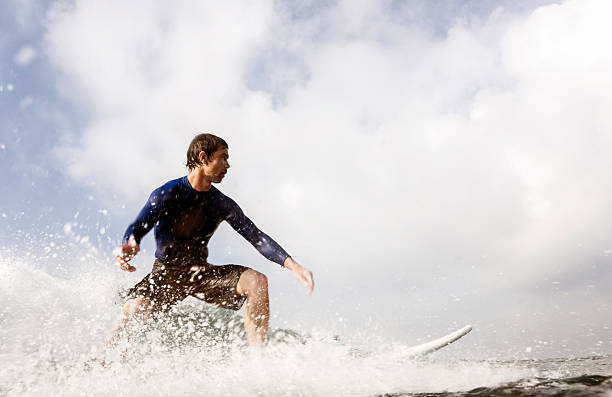
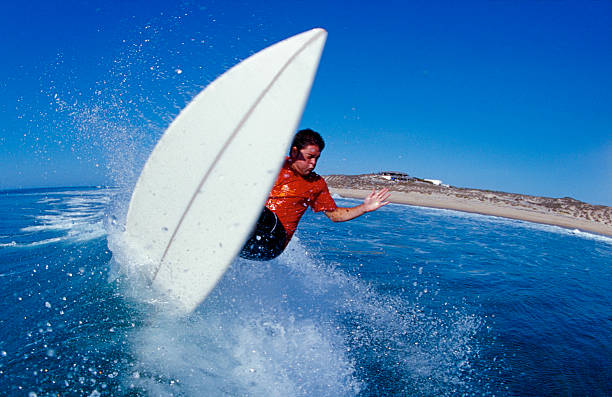
You drop in. That split second of freefall ends as your fins bite into the face. The wall stands up in front of you, steep and demanding. Everything hangs on what happens next. This is where most surfers get it wrong. They think the bottom turn is just a turn, a simple change of direction. But the real ones know it is a storage unit. You are not just turning the board. You are loading a spring. You are banking energy into the fiberglass, into the rails, into your own legs, so that a moment later you can unleash it all into a vertical snap or a carving cutback that sends a sheet of spray into the trade winds.
The compression is everything. Without it, you are just steering. Steering is for parking lots. Compression is for the green room. When you come off the drop and start to lean into that bottom turn arc, your body has to squat deeper than you think. Get low. Get your hips below your knees. Drive your weight through the heelside rail as if you are trying to push the board through the water instead of across it. The water is dense, heavy, alive. It resists. That resistance is your friend. You want to fight it, not avoid it. The more you push against the face, the more the wave pushes back, and that tension is where the speed hides. You are making a deposit into the bank of the turn.
A lot of guys ride too tall and too stiff. They stand up like they are waiting for a bus, then try to whip the board around with an arm swing or a head snap. That looks bad and feels worse. The bottom turn is a leg movement, not a shoulder movement. Your upper body stays quiet, coiled, waiting. The power starts in the ankles, builds through the knees, and transfers through the hips into the deck. Think of a cat about to pounce. That stillness before the explosion is the secret. You set the rail, you feel the water hooking into the fins, you let the board find its groove, and only then do you unload.
The timing of that unload is what separates the shredders from the sledders. If you decompress too early, you slide out. You lose the rail, the tail kicks, and you are eating foam. If you wait too long, you bottom turn all the way to the flats and the wave closes out on your head. The sweet spot is just as the board reaches the bottom of the arc and the face is about to throw over you. That is the moment. Feel the pressure against the side of your back foot. Feel the board want to release. Then stand up. Straighten those legs. Drive your front hand toward the lip like you are reaching for a high shelf. The energy you stored in that deep squat turns into upward momentum. You project off the bottom and into the pocket.
Good bottom turns are patient. The best ones look slow. Watch Kelly Slater or John John Florence in slow motion. They do not rush the turn. They settle into it. They let the board do the work while they just manage the pressure. The bottom turn is not a move you do to the wave. It is a move you do with the wave. You are listening to the wave tell you where it wants to go, and you are just helping it get there with a little extra punch from your legs.
Set your line by your feet. Where you place your weight on the stringer changes everything. Too much weight on the inside rail and you hook too hard, spinning out. Too much weight on the outside rail and you slide sideways, losing all that stored energy. Find the middle. Keep your chest facing the wave as long as you can. If you open your shoulders and look at the beach too early, you break the connection. Stay locked in. Stay compressed. Feel the water.
The best part about mastering compression is that it makes every other move easier. A good bottom turn fixes almost everything. If your snaps are weak, fix your bottom turn. If your cutbacks stall, fix your bottom turn. If you cannot make a section, fix your bottom turn. It is the foundation. Build it right, and the rest of the ride just flows. Spend time on it. Paddle out on a waist-high day and just do bottom turns over and over. Play with the depth of your squat. Feel how shifting an inch of weight changes the radius of the arc. That feel will carry you through bigger, heavier waves. It will carry you into barrels. It will carry you through an endless summer.
So next time you drop in, remember you are not just turning. You are loading. And when you unload, go ahead and let it rip.