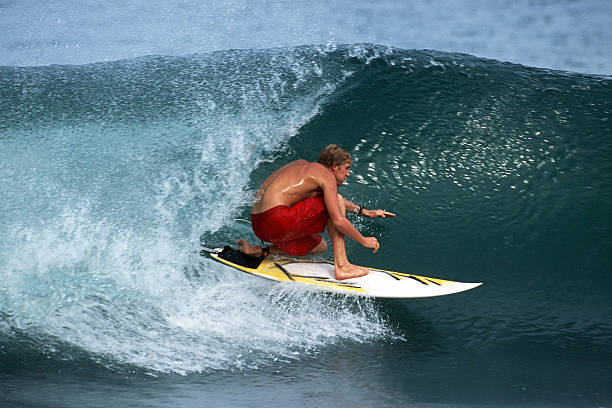
There is a quiet revolution happening in the lineup, and it isn’t coming from the sun-drenched points of Hawaii or the perfect pits of Indo. It is coming from places where the wind bites hard, where the sun barely clears the horizon in winter, and where a good session means peeling off a wetsuit that has turned your skin the color of a lobster. The next generation of talent is not just chasing warm water anymore. They are chasing the wave, wherever it breaks, and they are doing it in some of the most inhospitable conditions on the planet. This is the story of the cold-water groms, the kids who grew up on the rocky, wind-whipped coasts of Scotland, Norway, Iceland, and even the Great Lakes of North America, and how they are injecting a raw, hungry energy into a sport that sometimes gets too polished for its own good.
Think about it. The classic surf narrative has always been about the tropical escape, the endless summer, the search for that perfect peeling barrel under a golden sun. The Endless Summer painted a picture of chasing the sun around the globe. But the modern surfer, particularly the emerging talent, has a different kind of stoke. They are not waiting for the conditions to be perfect. They are learning to surf waves that would make a Pipeline veteran wince, but for entirely different reasons. The challenge is not just the height of the wave, but the sheer brutality of the environment. An iceberg floating past your takeoff zone. A windchill that makes your face feel like sandpaper. A dawn patrol where the air is so cold that your hair freezes into icicles before you even paddle out. That is the classroom for these next-gen shredders.
Take, for example, the burgeoning scene in the Scottish Highlands. Spots like Thurso East, Thor’s Hammer, and the countless reef breaks that pulse with North Atlantic groundswells are not just novelty waves anymore. They are proving grounds. A grom who learns to surf here cannot rely on perfect, forgiving waves. They learn to read a shifting, frigid, angry ocean. They learn to paddle hard without a wetsuit that flexes like a second skin, because in those temperatures, a five-millimeter suit turns into a straightjacket the moment you fall. They learn to handle a board that is bigger, heavier, and less forgiving, because you need that extra foam to get into waves that are moving fast and breaking with a deceptive, slab-like aggression. The result is a surfer with an incredible amount of grit. They have no choice but to be tough. And that toughness translates into a fearlessness in the water that is rare to see.
These kids are not just charging. They are innovating. Because the waves are different, the approach has to be different. A cold-water barrel requires a different kind of tube riding. The wave is often fast, hollow, and sectiony, pushed by a stiff offshore wind that seems to blow right through you. You do not drift into the barrel. You have to earn it with a late drop, a hard bottom turn, and a compressed, almost defensive body position to stay inside the spit. The air is thinner, the water is heavier, and the consequences of a wipeout are not just a beating, but a serious risk of hypothermia. It breeds a style that is efficient, powerful, and less about flashy spins and more about raw, committed carves. There is no time for showmanship when you are fighting for your life in the cold. The wave demands respect, and these emerging talents give it, but they also take from it.
What is fascinating is the community that is forming around this new frontier. It is not a contrived, commercialized scene. It is a brotherhood and sisterhood of the cold. They share tips on booties that don’t leak, on hoods that fit under a helmet, on the best way to warm your hands between sets. They hold competitions in places that used to be laughable to the surf world. And social media has been the great equalizer. A kid from Shetland can post a clip of a deep, icy barrel and have it seen by a shaper in California or a sponsor in Australia. The world is suddenly a lot smaller, and the cold water is no longer a liability. It is a badge of honor.
These next-gen shredders are proving that the soul of surfing is not about the place, but about the stoke. It is about the feeling of being in the right spot at the right time, even if that spot is under a grey sky and the time is three minutes before your fingers go numb. They are the inheritors of the spirit of The Endless Summer, but they have rewritten the map. The sun is not the only source of warmth. The fire of the wave, the adrenaline of the drop, and the pride of surviving a session in the frozen lineup—that is a warmth that stays with you long after you peel off the rubber. They are the future, and they are freezing their butts off to get there. Keep an eye on the cold. The next big thing might just be shivering.