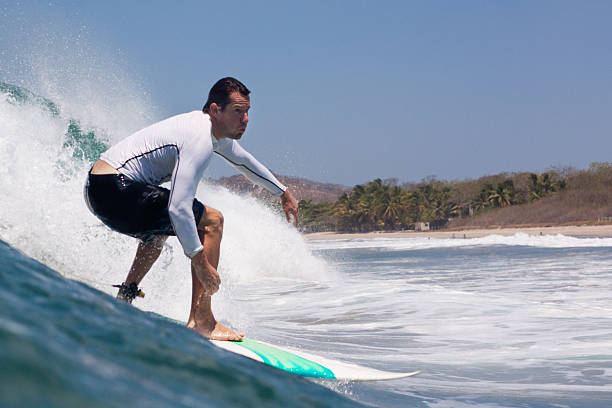
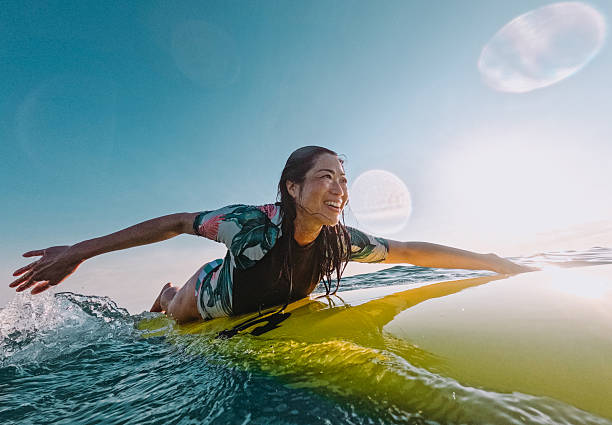
It’s a funny thing about the ocean. It doesn’t care about your Instagram followers or the logo on your board. All it cares about is the energy you bring, the balance you keep, and the respect you show. And right now, out on the fringes, a whole new crew of groms and rippers is figuring that out. They ain’t riding the hype train of the Championship Tour, at least not yet. They’re out on the Lost Coast, in places where the roads end and the real stoke begins. These are the next-gen shredders who are rewriting the playbook not with flashy airs, but with raw, unpolished soul.
We came up on the legends of the seventies and eighties. Guys like Gerry Lopez, who made the Pipeline look like a living room, and Tom Curren, who made a turn look like a jazz solo. But the game has changed. The cookie-cutter approach of the modern pro factory spat out a lot of kids who could do a backflip before they could drive, but they often forgot the first rule of surfing: feel the wave. The new crop, the ones you have to look for, are the ones who turned down the big money board sponsorships to sleep in a van and hunt down a left-hand reef break that only works on a specific tide under a full moon. That’s dedication, brother.
Take a kid I met down in Baja, name of Leo. Maybe seventeen. He’s got a quiver of three boards, all hand-shaped by a local guy who’s been on the sand since before Leo’s dad was born. Leo doesn’t tour. He doesn’t have a coach. He has a tide chart, a bag of beans, and an eye for a line that most guys would paddle right over. He watches the swell like a hawk watches a field mouse. When the sets roll in, he doesn’t just rip the lip for a spray shot. He gets deep. He finds the barrel where the light gets weird and the sound goes quiet. He ain’t surfing for the clip; he’s surfing for the feeling. That’s the energy shift.
These kids are bringing back the craft of reading a wave. They are not robots. They are students of the sea. They know that the same wave that dished out a perfect tube at dawn will turn into a closeout close to shore by noon. They adapt. They flow. They are less concerned with the numbers—the scores, the rankings—and more concerned with the narrative. The story of a session. The story of the one wave that changed your insides for a few seconds. That is the core of the endless summer, and these next-gen shredders are finding it on the dirty roads of the Lost Coast, not the crowded lineups of the tour.
And the technology? It’s helping them, sure, but in a different way. They use the drone shots and the GoPro not to build a brand, but to study their own flow. They watch the footage to see if their hips were open enough, if their head was looking where the board was going. It’s a tool for meditation, not marketing. They know that a good surfer can do a cutback. A great surfer makes the cutback look like a conversation with the wave. This new breed is having that conversation in Portuguese, in Japanese, in the old Hawaiian, under the radar of the big leagues.
They are the keepers of the flame. In an era of hyper-commercialization, where the sport has become a backdrop for energy drinks and headphones, these kids are the reason the soul of surfing isn’t dead. They are the ones who will remember that the first rule of the lineup is aloha, not competition. They share waves with the old guys who have been surfing the same point for forty years. They learn the local lore. They know that every reef has a name and every swell has a memory.
So keep your eyes peeled. Don’t look at the main break. Look at the shadow. Look at the kid paddling out alone at sunset, or the girl dragging a heavy board down a cliff trail because she saw a satellite image of a promising sandbank. These rippers are the future. They are hungry, but not for a trophy. They are hungry for that split second of perfection, that moment where the surfer and the sea become one entity. That is the legacy of the Lost Coast, and these next-gen shredders are its new guardians. The stoke is safe. It’s just moved further down the coast.