When the Duke paddled out at Waikiki back in the early 1900s, he wasn’t just catching waves—he was rewriting the rules of the ocean. Every surfer alive today, whether you’re ripping a high-performance shortboard on a reef break or cruising a funky foamie with your kid, owes a debt to that big Hawaiian with the massive koa plank. Duke Kahanamoku didn’t invent surfing, but he sure as hell gave it a heartbeat that’s still pounding through every lineup on the planet.
Back in his day, the boards were beasts. Solid koa, hand-carved, shaped with stone adzes and a ton of patience. Duke’s favorite stick was around sixteen feet long and weighed upwards of a hundred pounds. You hear that? A hundred pounds. Try paddling that thing out through a shore break without getting pounded into the sand. Most modern surfers would straight-up quit after one session. But Duke didn’t just manage it—he made it look like poetry. He’d lie prone on that massive slab of wood, stroking into a wave way before it broke, then push himself up with an unhurried grace that boggled the mind. No leashes, no fins (at least none that mattered), no wetsuit. Just raw skill, total waterman instincts, and balls of brass.
The technique he developed on that koa canoe-shaped ride was something else entirely. Duke rode with his feet parallel, his weight dead centered, his hands hanging loose at his sides like he was just walking down the street. That stance—tall, relaxed, absolutely in control—became known as the Duke stance. It’s the same stance you see on every classic log rider today, the kind of look that says, “Yeah, the wave might be screamin’ and the lip might be pitching, but I’ve got this.“ He’d trim along the face with his full body engaged, not twitchy or reactive, just smooth. When he wanted to turn, he’d shift his weight ever so subtly, and that giant board would respond with a carve so clean it would make a modern hybrid feel clunky in comparison.
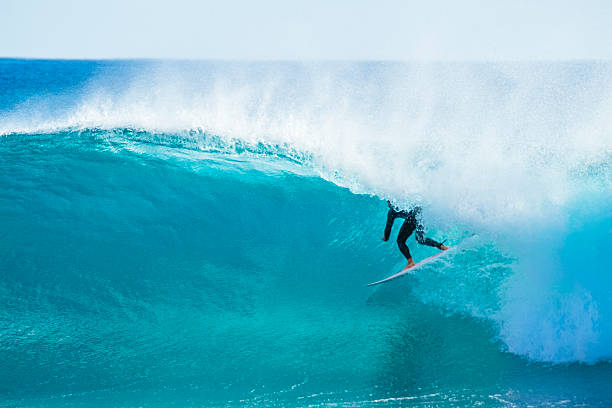
What’s wild is how far we’ve come from that koa monster, yet how much we still mimic its vibe. The longboard revolution of the 60s and the whole modern revival of logging and noseriding all trace their DNA straight back to Duke’s ocean ballet. Sure, today’s boards are glassed with epoxy, strung with carbon fiber, and fitted with keel fins that let you drive hard off the tail. But the essence—the pure, unhurried glide, the joy of trimming along an open face with the spray kicking off your rail—that’s pure Duke. When you see someone cross-stepping to the nose and hanging ten with a grin ear to ear, they’re channeling a spirit that Duke tapped into over a century ago.
But Duke’s legacy isn’t just in the shape of the board under your feet. It’s in the way the whole surfing world treats the water. This man was the original ambassador, the one who spread aloha to every beach he touched. He didn’t hoard waves or chase secret spots. He invited people in. When visitors to Hawaii wanted to try surfing, Duke was right there, helping them paddle out, giving them a push, hooting them into their first wave. He understood that surfing isn’t about owning the ocean—it’s about sharing the ocean. That’s a lesson a lot of locals and pros today could stand to relearn.
Then there’s the sheer waterman stuff that’ll blow your mind. Duke was a lifeguard in the truest sense. He saved dozens of lives off the California and Hawaiian coasts, famously rescuing eight dudes in a single boat wreck with his trusty rescue board. That same board, a modified surfboard, became the prototype for modern rescue craft. He could hold his breath for minutes, paddle faster than any human should, and ride waves that would shake the fillings out of a lesser soul. He took those skills to the Olympics, winning gold and silver in swimming, but he never let fame twist his soul. He stayed humble, warm, and always stoked to share the stoke.
When you wax up your board today, whether it’s a nine-foot noserider or a five-foot fish, take a moment to thank the Duke. He showed the world that surfing isn’t just a sport—it’s a way of moving through life with grace and gratitude. He proved that catching a wave can change your whole vibration, and that the ocean, when approached with respect, gives back everything you put in. His koa plank might be resting in a museum now, but its spirit rides on in every drop-in, every fade, every glassy morning session. The Duke may have passed long ago, but his wave never stopped rolling. And as long as there’s salt in the air and a line to the horizon, his aloha will keep carrying us all.