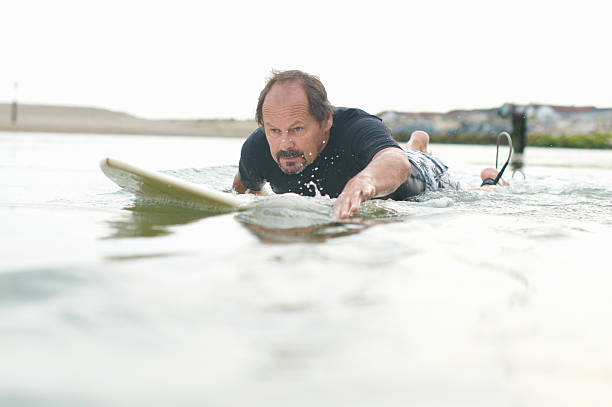
Imagine paddling out without a leash. You drop into a clean chest-high wave, hit a bump, and your board launches like a catapult, tumbling toward the rocks while you tread water, watching your stick get pounded into driftwood. That’s every surfer’s nightmare before 1971, when Pat O’Neill, son of wetsuit pioneer Jack O’Neill, attached a piece of surgical tubing to his board and ankle. Locals laughed and called it a kook cord, but that rubber line changed surfing forever, turning wipeouts into minor setbacks instead of death sentences for your board, your body, or some poor bystander.
Early leashes were crude, just a urethane cord tied to the fin, and they snapped constantly. Then came the revolution of the late seventies, with manufacturers adding ankle cuffs, swivels, and a rail saver to protect your board’s rail from chafing. Modern leashes are high-tech, with varying thicknesses and lengths for every condition. A 6mm leash with a heavy cuff is your best friend in XXL surf, while a thin 4mm leash keeps drag down on mellow summer days. The length matters too: a longer leash reduces the painful recoil snap that happens when your board springs back after a fall. That snap is no joke, a well-aimed whip can welt your calf like a lightning bolt and sting like a man-o-war. You also get options like coil leashes for reduced drag and double swivels to prevent tangling. The best leashes have a stainless-steel swivel that spins freely, stopping the cord from twisting into a bird’s nest. And a good cuff should fit snugly but not cut off circulation, with a quick-release strap for those moments you need to ditch your board in an emergency. Choosing the right leash is as personal as choosing a board, and you learn to trust it like a solid friend in the lineup.
But why do we hate this essential gear so much? Because leashes are the ultimate love-hate relationship. They drag behind you when paddling, a constant tug like a stubborn sea turtle. They tangle around your legs in the lineup, and God forbid you duck dive with a leash that wraps around your board, turning your dive into underwater ballet. And when the leash snaps, it always happens at the worst moment, just as a grinding closeout feasts on your head. But then you see your board bobbing safely at the end of that cord, and you forgive everything. The leash is a lifeline, literally.
The leash keeps you connected to your freedom. It lets you send it on slabs and reefs without fear of swimming a mile. You can bail on a critical section and trust your board won’t become a missile for the crew inside. In heavy waves, without a leash, your board would vanish in seconds, leaving you to swim a marathon with your heart pounding. With a leash, you get dragged a little, come up gasping, and see it still there, riding the foam like a loyal dog waiting for you. That connection is everything. It allows you to push the limits of your surfing, to take more chances on late drops and pull into tubes that would otherwise be unthinkable. The leash is your safety net, your insurance policy, and your best buddy all rolled into one stretchy cord. Every surfer knows the feeling of a clean leash release, that perfect moment when the cord stretches and pulls you back to your board without a fight.
The leash also demands respect. When you snap your board back, you check your surroundings. A flying board to the face can break a nose or crack a skull. Seasoned surfers manage their leashes like pros, reeling in the cord to avoid tangles and keeping it coil-free when sitting. It’s a small skill that keeps the lineup friendly and prevents fights. The motto is simple: respect the leash, and it will respect you.
So the humble leash has come a long way from surgical tubing. It’s the unsung hero of surf gear, the quiet partner in every sunset session and every triple-overhead bomb. We curse it, love it, and cannot live without it. Next time you slide the ankle cuff on, give a nod to the leash gods. Stay connected, stay safe, and keep that stoke eternal.