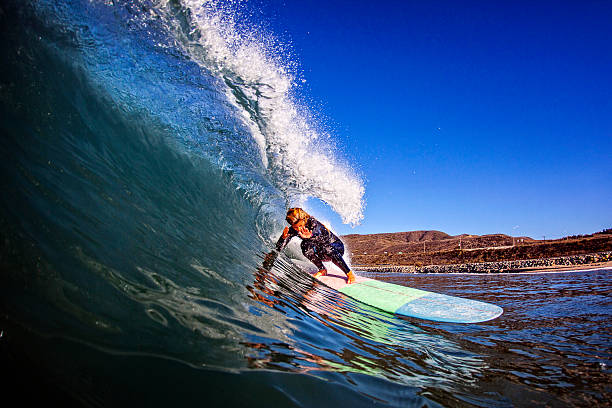
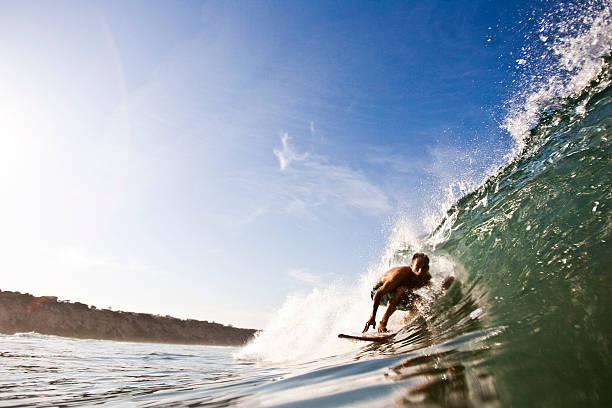
When you paddle out at a break that’s heaving with consequence, you feel the weight of the ocean and the chatter in your head. The doubt, the fear, the what-ifs—they’re like a riptide pulling you away from your potential. But there’s one surfer who didn’t just learn to swim against that current; she turned it into her superpower. Layne Beachley, the seven-time world champion and undisputed Queen of the Waves, didn’t dominate the women’s tour purely through raw talent or physical strength. She rewrote the rulebook by making the mental game her board, her wax, and her wave of choice. The stoke she carried wasn’t just about scoring barrels; it was about finding clarity in chaos. And that’s the lesson every surfer—from grom to old salt—can take from her story.
Think about it. Surfing is as much a head trip as it is a physical dance. When you’re sitting in the lineup, waiting for a set, your mind can either be your best friend or your worst kook. Layne knew this better than anyone. She grew up on the Northern Beaches of Sydney, where the waves are consistent but the competition is cutthroat. By the time she won her first world title in 1993, she’d already faced more than just spinning lips and closeouts. Her father died when she was seven, and that loss forged a steely independence early on. She didn’t have a silver spoon; she had a sense of purpose. And when chronic fatigue syndrome hit her in the prime of her career, most athletes would have called it a day. But Layne didn’t just survive that biological closeout—she used it as a training ground for resilience. She learned to read the wave of her own body, respecting the lulls while charging the sets. That’s the essence of her mental blueprint: surfing isn’t about avoiding wipeouts; it’s about how you pop back up, leash intact, ready for the next wave.
One of the most radical things Layne did was visualize success like it was already in the rearview mirror. Before a heat, she’d spend time alone, eyes closed, running through every scenario in her head. She’d see herself taking off deep, carving face, threading the tube, and kicking out with a roar. She called it “creating the reality” before it happened. For the everyday surfer, that translates to paddling out with intention. Instead of worrying about dropping in on a local charger, you picture yourself nailing that bottom turn, feeling the spray, and laughing in the channel. Layne proved that the mind can shape the ocean you encounter. She also embraced affirmations, repeating phrases like “I am powerful, I am worthy, I am a champion” until they became as natural as popping up on a green wave. Some might call that woo-woo, but you can’t argue with seven world titles and a string of wins that reads like a hurricane track.
Her mental game didn’t stop at visualization. She mastered the art of letting go. In surfing, you can’t control the swell, the wind, or the crowd. You can only control your response. Layne faced some of the most intimidating women in the water—from Lisa Andersen to Stephanie Gilmore—but she never let the fear of losing dictate her wave selection. She’d go left when everyone went right, take off on bombs that others thought were too sketchy, and embrace the wipeout as part of the ride. That’s the kind of courage that doesn’t come from a gym or a surf coach. It comes from staring into the abyss of your own ego and choosing to paddle anyway. She even surfed against men in the early days at the Eddie Aikau Big Wave Invitational, showing that the lineup doesn’t care about gender—it cares about conviction. Her nickname, the Iron Lady, wasn’t just about physical durability; it was about a mind that refused to crack when the sets turned ugly.
And let’s talk about the ego. In a sport where trophies and magazine covers can inflate your head like a blow-up board, Layne stayed grounded by remembering why she started surfing in the first place—the pure stoke of gliding across water. After she hung up the competitive jersey, she poured her energy into mentoring young surfers, especially women. She co-founded the Beachley Foundation to help girls find their own confidence in the water and beyond. That legacy is perhaps the most important part of her contribution to surfing culture. She showed that true power isn’t about being the best in the world; it’s about being the best version of yourself, every single time you paddle out. Her documentary “360” laid it all bare—the highs, the lows, the tears, and the screams of joy. It was raw, and it resonated because every surfer has felt that exact mix of terror and love when a set looms on the horizon.
Every surfer who’s ever felt the thrill of a hollow ride or the disappointment of a blown section can learn from Layne’s approach. The next time you’re caught inside, or the sets are big, or you’re in a competitive heat with your buddies, remember her mantra: “It’s not the waves that shape you—it’s how you choose to ride them.” The ocean is a mirror of your mind. Layne Beachley polished that mirror until it shone like glass, and she invited everyone to look into it and find their own wave of greatness. So grab your board, wax up, and paddle out with the knowledge that the best surfer out there is the one having the most fun—and that starts between your ears. Keep the stoke alive, and never let the chatter drown out your own rhythm.