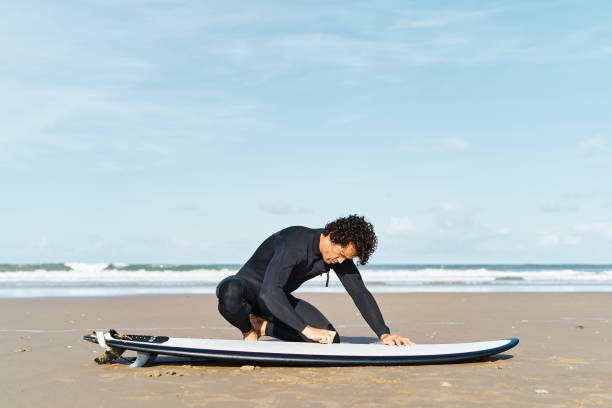
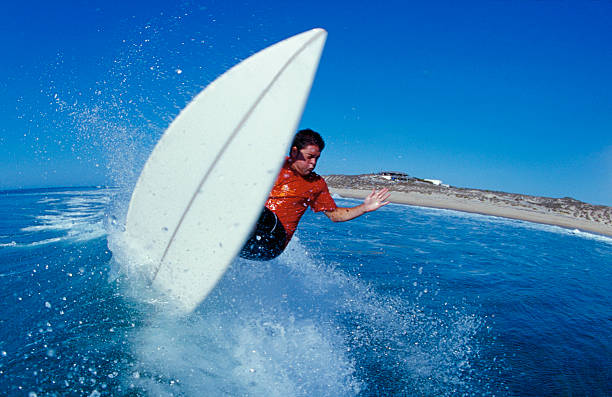
There comes a time in every surfer’s journey when the familiar sand and swell of home just don’t cut it anymore. You start staring at maps, wondering what the water feels like on the other side of the country. That itch to load up the van, throw a board on the roof, and just drive is a rite of passage. The United States has this wild, sprawling coastline that offers two completely different oceans, two different vibes, and a whole lot of weird weather in between. For the true wave chaser, a coast-to-coast road trip is the ultimate pilgrimage. It’s not about finding the perfect wave every single day; it’s about the search itself, the feeling of salt and dust mixing together as you rack up the miles.
The East Coast gets a bad rap from the boys out west, and that’s just kook talk. Sure, it’s fickle. The Atlantic can be flat for weeks, then turn into a freight train when a hurricane spins up from the south. But that unpredictability builds character. You learn to appreciate the small, glassy days when you and your buddies have the lineup to yourselves. Riding the East Coast means paddling out in Cape Hatteras when the wind is howling offshore, or scoring a soft, peeling left in New Jersey on a fall morning when the water is still warm enough for a spring suit. The vibe is hungry. There’s a grittiness to it. Nobody is out there for the lifestyle instagram; they’re out there because they genuinely love the stoke of a drop, even if the wave only lasts a few seconds. You’ll find boneyards and jetties, sandbars that shift overnight, and local breaks where the crew knows every rip and riprap. It’s a different kind of beauty, raw and honest.
Then you drive west. The geography changes, the air dries out, and the first glimpse of the Pacific is like seeing an old friend. The West Coast is the big leagues. From the cold, powerful slabs of Northern California to the long, hypnotic point breaks of Southern California, the Pacific has a consistency that the Atlantic just can’t match. The water might be colder, the crowds thicker, and the vibe can get territorial if you don’t show respect. But when you paddle out at a place like Malibu or Rincon on a clean swell, you understand why people spend their whole lives trying to dial it in. The waves have shape, power, and a rhythm that feels almost orchestrated. You get longer rides, you find sections to hit a pocket, and you can truly flow down the line.
But the trip isn’t just about the water. It’s about the in-between. It’s about sleeping in the back of the truck in a dusty rest stop, making coffee on a camp stove at dawn, and hitting a dive bar with a jukebox in some forgotten town. You meet characters from every walk of life who all share the same stoke. A grom from San Diego who just wants to talk about fins, a retired carpenter from Maine who shapes his own logs, a lady from Oregon who only surfs in a full hood even in July. There’s a brotherhood that transcends the break. You learn that the deep stoke isn’t just in the barrel; it’s in the decision to go, the willingness to be uncomfortable, and the promise of the next swell. It’s a lifestyle born out of motion. You don’t find the Endless Summer by staying put. You find it by keeping the tank full, the wax soft, and the eyes on the horizon. The search never ends, and that’s exactly why we keep driving.