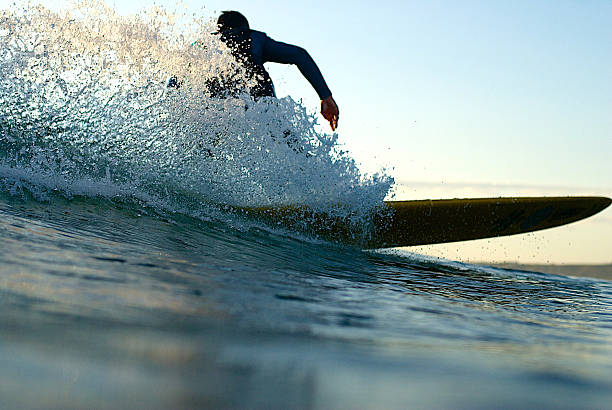
You know that feeling when you paddle out on a waist-high morning, the tide is pushing just right, and every little bump seems to have a face begging to be ridden? That’s the moment the egg surfboard comes alive. While most folks chase the latest thrusters or drop down to a fish when the waves get fat, the egg sits quietly in the corner of the shaping bay, waiting for a surfer who values flow over flash. It’s a board that doesn’t scream for attention, but once you’ve ridden one on a slow, peeling day, you’ll wonder why you ever left it behind.
The egg is one of those alternative shapes that emerged from the golden era of surfboard evolution, when shapers started experimenting with blending the best of longboards and shortboards. Think of it as the missing link between the classic 60s single-fin log and the high-performance shortboard revolution of the 70s. The outline is what gives it its name: a rounded, egg-like silhouette that’s fuller in the nose and tail than a typical pintail or squash tail, but not as wide and blobby as a traditional funboard. That curve creates a board that paddles like a dream, catches waves early, and glides through turns with a smooth, forgiving pivot.
What makes the egg truly special is its versatility. On a knee-high dribbler, it’ll trim along the shoulder with a soulful hum, letting you hang five or ten without feeling like you’re balancing on a log. When the swell picks up and the faces get steeper, that same rounded outline allows you to drop in late, carve off the top, and wrap a cutback that feels like butter. The egg doesn’t force you to muscle it around like a high-performance potato chip; it invites you to dance with the wave, using your weight shifts and subtle rail pressure to change direction. This is the board for those sessions when you want to feel every bump and roll, not just blast down the line.
Now, don’t think the egg is just a beginner’s crutch. Sure, it’s forgiving enough for someone learning to link bottom turns to top turns, but it’s also the choice of seasoned surfers who crave that old-school flow. Tom Curren was known to ride an egg when the waves were small and gutless, because it allowed him to find speed where others stalled. The egg rewards finesse over force. You can pump it down the line with a gentle wiggle, or sink a rail and project through a roundhouse that feels like you’re drawing a perfect arc in the water. The single-fin version offers that classic pivot, while a twin- or quad-fin setup can add a little more drive and looseness for modern maneuvers.
One of the hidden beauties of the egg is how it handles different fin configurations. Stick a single 8-inch pivot fin in there and you’ve got a board that turns on a dime, with that sweet release coming off the tail as you slide through the foam. Throw in a pair of small side bites or go full quad, and the egg transforms into a small-wave weapon that still holds a carve when the wave steepens. The fuller template gives you stability underfoot, so you can experiment with fin placement without the board getting twitchy. That’s the kind of flexibility that keeps shapers coming back to the egg when they want to build something that’s just plain fun.
Let’s talk about the paddle. If you’ve ever tried to catch a slow, mushy wave on a toothpick thruster, you know the frustration of bogging down. The egg’s volume is distributed evenly, with a generous nose that doesn’t pearl easily and a tail that lifts when you need to release. You can sit deeper, paddle earlier, and slide into waves that other shapes would let slip by. That extra wave count adds up, especially on those afternoons when the swell is inconsistent and you’re jockeying for position with a pack of shortboarders. The egg gives you a leg up, both literally and figuratively.
The culture around the egg is also a trip. It’s the board you see hanging on the wall of a vintage surf shop, or leaned against a beach shack at a mellow point break. It doesn’t have the hype of a retro fish or the tech of a modern high-performance model, but the people who ride eggs are often the ones who surf for the sheer stoke, not the instagram clip. They’re the crew who paddle out for the sunrise glass, laugh at closeouts, and take the time to admire a long, drawn-out cutback over a quick hack. The egg embodies that laid-back, soulful side of surfing that sometimes gets lost in the chase for airs and barrels.
If you’re looking to round out your quiver with something that can handle everything from ankle-biters to chest-high peelers, consider sliding an egg under your arm next time you hit the beach. It might not look as aggressive as a step-up or as trendy as a mini-Simmons, but once you feel how it smooths out the bumps, catches waves with ease, and lets you surf with a smile, you’ll understand why this fun shape has been sneaking into the lineups of discerning wave riders for decades. The egg is a reminder that sometimes the best board isn’t the one that goes fastest—it’s the one that makes you feel like you’re floating.