Every surfer who has ever stood on a beach and watched the sun paint the ocean gold has felt it. That subtle, gnawing itch in the back of the mind. The one that whispers, “This wave would feel different on a board that was made for you.“ It’s not just about wiggling your toes over a fresh coat of resin and checking out the stringer. It’s about a connection that goes deeper than the stringer itself. When you step into a custom surfboard, you are stepping into a dialogue between you and the shaper, a conversation that has been happening since Tom Blake first started fiddling with hollow planks. And if you are truly chasing that endless summer vibe, the kind of everyday session where the sun climbs and sets with you on the water, there is nothing—and I mean nothing—as personal as a sled that was born from a single conversation.
You don’t just walk into a shaping bay and point at a stock model off the rack. That is for tourists. Real custom work starts with a sit-down. Maybe it is a chat over a cup of coffee in a dusty shed with resin dust floating in the morning light, or maybe it is a long voicemail you leave after a session where you felt like you were fighting the glass the whole time. You talk about your weight, sure, but more importantly, you talk about your soul. You talk about the waves you grew up on. Are you a mushy beach break wanderer, a reef connoisseur seeking that perfect tube, or a point break cruiser who loves to draw out long, flowing cutbacks? The shaper listens. He is watching your hands move as you describe that one wave you caught last week. He is seeing the rail dig in your mind’s eye.
From that chat, the magic happens. The shaper starts thinking in volumes, in rocker, in rail thickness. He is not just cutting a block of polyurethane or epoxy. He is chiseling a response to your soul. He might ask you about your stance. “Are you a heavy toe-side surfer?“ “Do you feel the drive coming from your back foot or your front?“ These are the questions that separate a board that works from a board that sings. The subtle changes in the bottom contour, the slight Vee out the tail, the way the beak nose pulls into a drop—these are not just technical specs. They are the secret language of a board that knows where you want to go before you even do.
And here is the real kicker. When you paddle out on a custom stick, you are paddling out on a piece of radical history. Think about all the legends who never touched a stock board. Mark Richards on his twin fins, Gerry Lopez on his “thinking man’s” round pins, or even later with the experimental shortboards of Tom Carroll. They all worked with shapers who translated their body’s feedback into foam. Your custom board is carrying that same torch. It is a living, breathing piece of the lineage. It might not be destined for Pipeline, but it is destined for your spot. And that is just as sacred.
The process of waiting is part of the vibe too. You cannot rush a good glass job. The resin has to cure, the fin boxes need to be set just right, and the air bubbles have to be coaxed out like ghosts. There is a respectful patience to it. You check your email maybe once a day, dreaming of that first paddle out. And when you finally see it in the flesh, leaning against the wall of the shop, it feels like meeting an old friend you never knew you had. The gloss coat is a mirror, the rails look like they were pulled from a perfect wave face, and the stringer—whether it is western red cedar or just plain ol’ timber—is the spine of your new freedom.
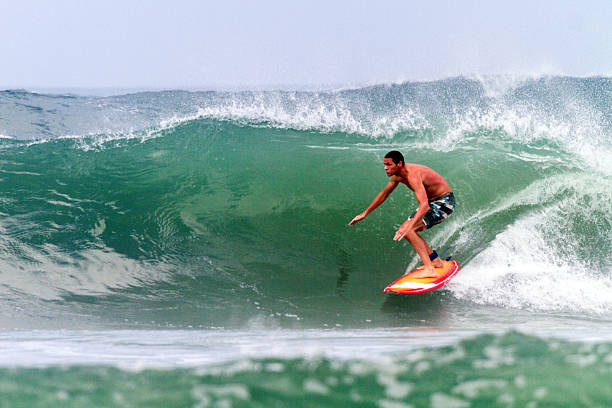
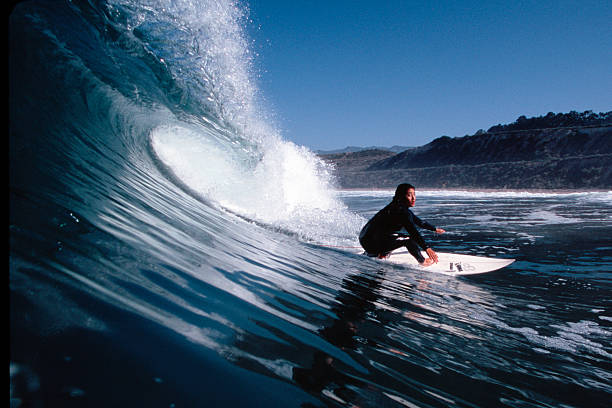
But the real test comes in the water. The first wave you catch on a custom board is a moment of pure, unadulterated stoke. If the shaper did his job, your body will recognize the board instantly. The entry is smooth, the rail holds through the bottom turn, and the release off the top feels like an exhale you have been holding for years. You are not thinking about the board anymore. You are just thinking about the wave. And that is the whole point, brah. The board disappears. It becomes an extension of your legs, your hips, your joy.
Sure, it costs a bit more than a pop-out from the big factory down in Asia. There is usually a waitlist. But that board is not a commodity. It is a relationship. It is a record of your surfing life at this specific moment. A couple years down the line, maybe you will go back to that same shaper and say, “Hey man, I have been surfing bigger waves. Can you pull a little volume out of the nose and give me a little more rocker?“ And he will remember the last board. He will nod, smile, and start drawing. That is the cycle. That is the endless summer. It is not just about the sun. It is about the soul of the ride.