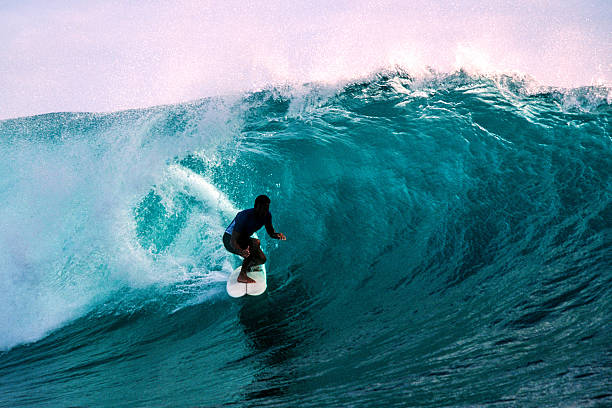
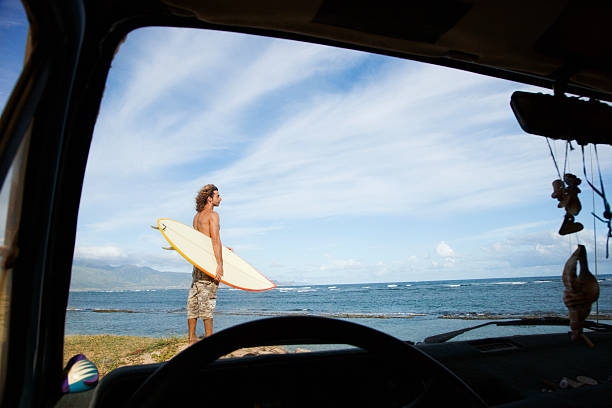
There’s something sacred about a pair of baggies. You know the feeling—the way they sway with the swell, the freedom they give when you’re kicking out of a barrel, the sheer comfort of not having your thighs squeezed like tuna cans. We surfers didn’t always have it this easy, brah. Back in the day, the old-school legends were paddling out in cut-off Levi’s and wool trunks that would sag heavy as lead once they soaked through. It took a whole movement of salty innovators to finally set our legs loose, and ever since, the baggie has been the undisputed king of the beach.
The story starts in the late 1960s and early 70s, when surf culture was exploding out of Hawaii and California. Guys like the “Brat Pack” of Malibu were tired of wearing restrictive speedos and tight swim trunks that bunched up and chafed on long paddle-outs. They wanted something that moved with them, something that gave their hips and knees the full rotational freedom needed for trimming along a peeling wall. That’s when the first true board shorts hit the scene—flat-waisted, no zipper, minimal seams, and a simple drawstring. But they weren’t baggy enough for the hardcore crew. It took the creative genius of surfboard shapers and beach freaks to realize that more fabric meant more flow. Looseness wasn’t just a look; it was a technological advantage.
Enter the big brands. Quiksilver, Billabong, and Rip Curl all started carving their names into the scene in the late 70s and 80s, and they quickly figured out that the baggie was the way to go. These companies didn’t just stitch together some random cloth—they studied every rip, every drop, every barrel roll. They came up with the velcro fly that wouldn’t pop open when you got slammed by a closeout. They added a key pocket hidden inside the waistband so you could stash your car key without losing it in the shorebreak. They made the inseams longer, the legs wider, and the side vents deeper so water could drain on the fly. The result? A pair of trunks that didn’t balloon like parachutes, didn’t creep up your crack, and didn’t weigh you down when you were paddling for a set.
But baggies are more than just technical gear. They’re a vibe, a statement, a way of moving through the world with stoke and ease. When you slip into a baggy pair of boardshorts, you’re not just getting dressed—you’re joining a tribe. The loose silhouette says, “I don’t need to impress anyone,“ while the bold prints and colorways scream, “But I’m still gonna flash some style.“ From floral patterns that hark back to the old Hawaiian prints to minimalist solid blacks that look clean in the water and at the taco stand, baggies have got a line for every taste. The brands know this, so they’ve turned the baggie into a canvas for self-expression. Some are covered in palm fronds, others have vintage checkers, and a few feature subtle embroidered logos that only the true surf heads notice.
What’s truly rad is how the modern baggie has evolved without losing its soul. Those early boardshorts were heavy and stiff, but today’s materials are a whole different animal. Four-way stretch nylon and recycled polyester blends give you that soft, lived-in feel from the first wear, yet they still hold their shape session after session. You can drop in on a double-overhead bomb, get worked through the foam pile, and come up with your shorts still snug around your waist and free around your knees. And the eco-conscious wave has hit the market hard—many of the classic brands now offer baggies made from recovered ocean plastic, fishing nets, and discarded fabric. That means you can chase that endless summer with a clean conscience, knowing your gear is helping keep the water rippable for future groms.
Of course, the best part about baggies is the lifestyle they enable. You can dawn patrol and go straight to the breakfast spot without changing, because baggies dry ridiculously fast and don’t stick to your skin. You can swing through the boardwalk, grab a smoothie, and watch the sunset without feeling like you’re wearing a wetsuit for a lower half. On any beach around the globe, from Bells Beach to Bali, you’ll see a lineup of guys and gals in baggies of every length and pattern, all sharing that same easygoing ethos. It’s a symbol that connects the grom at his first lesson with the pro pulling into massive pits at Teahupo’o.
So next time you reach for a pair of stiff, tight trunks that look like they belong in a swimming pool, stop and think. The ocean is wild and unpredictable, and your boardshorts should match that energy. Go loose, go light, go free. Find a pair of baggies that let your legs do their thing, and you’ll understand why the original surfer spirit never dies. The wave may close out, but the baggie will always be there, ready for the next session.