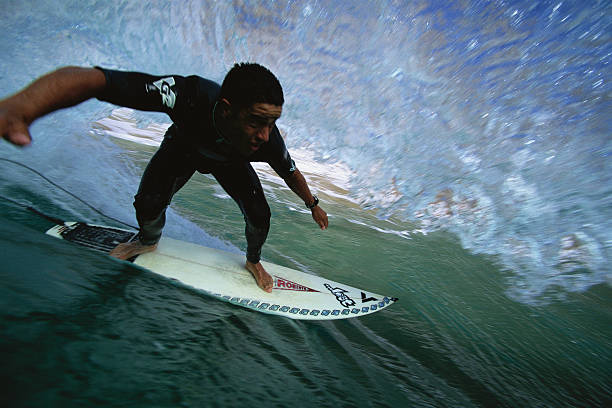
There’s a moment every surfer knows, whether you’re a grom paddling out on a foamie or a salty old soul who’s been charging big waves for decades. You’ve made it past the breakers, the foam is behind you, and you’re sitting on your board, looking out at the deep blue horizon. The ocean breathes, the sets roll in, and suddenly it’s not just you and the waves anymore. There are other surfers. And right there, floating in a loose huddle off the point, you find yourself inside the lineup — the sacred space where all the rules of surfing etiquette come alive. No lifeguard whistles, no lane markers, just an unwritten code that has been passed down from generation to generation. This code is everything, and nothing teaches it better than the simple act of waiting.
In the lineup, patience is not a passive state. It’s an active, breathing practice that separates the ripper from the snake, the local from the kook. It’s the art of reading not just the waves but the people around you. You sit there, legs dangling, board bobbing, and you learn to feel the rhythm of the peak. Who’s been sitting deepest the longest? Who paddled past you to claim that inside position? Is that guy on the shoulder just hoping for a crumb, or is he ready to drop in on your wave? You watch how the swell pulses, how the tide pushes and pulls, how the wind feathers the faces. And you wait. Not because you have to, but because the ocean rewards those who respect the lineup’s natural order.
The heart of lineup etiquette is simple: the surfer closest to the peak — the steepest, most critical part of the wave where it first breaks — has right of way. This is the cardinal rule, the one that prevents collisions, broken boards, and shredded friendships. But knowing the rule is easy. Living it is hard. Because out there, the peaks shift. A set comes in, and suddenly the surfer who was deepest ten seconds ago finds themselves on the shoulder. Another wave rolls through, and a goofy-foot drops in from the opposite side, claiming a different peak altogether. You have to be present, to recalibrate constantly, and to accept that sometimes your wave is not your wave. That’s where patience becomes humility. You let a wave go because someone else earned it. You hold your line because dropping in on them is not just rude — it’s dangerous.
There’s a particular dance that happens when a wave stands up and you’re in the rotation. You see the peak start to feather, you feel the sudden lift of the ocean floor, and you dig your arms in with a few decisive strokes. But then you hear a “go!” from behind, or you sense a shadow sliding past you. That’s the moment of truth. Do you pull back, or do you jam your rail in and fight for the wave? In a crowded lineup, the smart surfer pulls back. Not because they’re scared, but because they know that fighting a drop-in usually ends with both surfers missing the wave, or worse, colliding head-on. Respecting the lineup means knowing when to say “yours” with a nod, even if your ego is screaming “mine.” That small act builds trust and keeps the vibe mellow.
Another piece of the waiting game is positioning yourself without snaking. Snaking — paddling around someone who already has position so you can cut them off — is the fastest way to earn a cold shoulder in the water. It’s a form of theft, and regulars will call you out, sometimes with a stern word, sometimes with a glare that says more than words ever could. Instead, you learn to sit wide, to watch where the pack is huddled, and to take the waves that peel off on the shoulder. There’s no shame in a clean shoulder ride. In fact, some of the best surfing happens away from the crowd, where you have time to carve turns and feel the wave breathe beneath you.
And then there’s the quiet patience of communicating, even without words. A smile, a nod, a simple hand gesture — these are the currencies of the lineup. You learn to read the body language of other surfers. The one who sits with their board pointed toward the horizon is probably waiting for a set. The one who keeps looking over their shoulder is hunting for the bomb. If you see someone staring you down, that’s a gentle reminder that you might be drifting into their spot. So you adjust, you paddle a few feet down the line, and you give them space. Nobody wants a tense session. We’re all out there for the same reason: to catch a buzz from a wave’s energy, to feel that brief, weightless moment when you’re sliding across the face of the ocean.
In the end, the lineup is a living classroom. Every session teaches you something new about patience, respect, and the delicate balance of sharing something precious. The waves don’t care about your reputation or your board’s price tag. They just roll in, indifferent to human drama. What matters is how you treat the people around you while you wait for the next set. So paddle out, sit in the lineup, and be still. Watch, listen, and wait. The best waves come to those who know how to share the ocean.