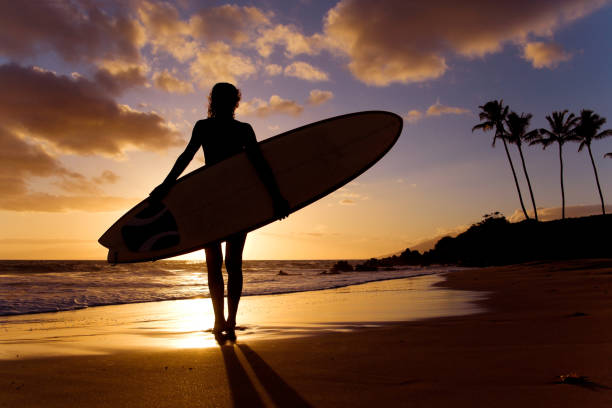
Every surfer knows the heart-pumping thrill of a hollow, pitching barrel, but the real test of ocean intelligence often comes on those soft, crumbly days when the swell seems to have lost its nerve. These are the waves that unfold with all the urgency of a lazy Sunday afternoon, the face mushy, the lip barely curling before it dissolves into a whitewater soup. For the uninitiated, these conditions feel like a bore, but for the seasoned soul who has learned to read the rhythm of the ocean, a soft wave is a canvas begging for the smoothest stroke known to the lineup: the cross-step.
The cross-step is not just a nostalgic nod to the longboard renaissance; it is the purest expression of trimming, the art of moving your weight along the board to match the changing energy of a wave. On a steep, hollow wave, you can get away with being a static animal—plant your back foot, pivot, and let the wave do the heavy lifting. But on a soft, crumbly peak, where the power is spread thin like morning fog, you need to become fluid. You need to walk.
The first mistake most surfers make on these mushy shoulders is trying to generate speed through violent pumping—throwing their weight up and down like a jackhammer on a trampoline. This is a failed tactic because a soft wave has no vertical face to rebound off of. The energy is horizontal, rolling forward with a slow, deliberate pulse. To match it, you must move your body laterally along the rail, not vertically into the board. This is where the cross-step shines.
As you catch the wave, your pop-up should land you in a neutral stance, feet roughly shoulder-width apart, knees bent, eyes fixed on the section ahead. The wave begins to fatten, the face losing its angle. This is your cue to initiate the walk. Bring your back foot forward, crossing it in front of your front foot, then bring the new back foot to the tail. This classic shuffle is not just about getting to the nose for style points; it is about shifting your center of gravity forward to engage the narrower, more responsive part of the board as the wave’s energy pushes toward the flats.
But the cross-step on a crumbly wave demands more nuance than a simple nose-ride. You have to feel the wave breathing beneath you. When the section ahead looks like it’s going to fatten into a whitewater mush, stay a little lower on the board, keep your weight over the midsection, and use the subtle release of your hips to let the board glide. The key is to pump not with your legs, but with your feet—small, rapid adjustments of the rail, applying more pressure to the inside rail of the turn, then quickly transferring to the outside rail as you angle back down the face. This is called “pumping for distance,“ and it is the bread and butter of soft-wave mastery.
Timing, of course, is everything. A soft wave often has multiple mini-sections that offer a brief pulse of steepness before crumbling again. Watch the water ahead. When you see a slight darkening in the face—an indication of a bump of energy—that’s your moment. Push off the tail, drive your front foot down the board, and cross-step with a sense of urgency. As the bump releases, you’ll feel the board accelerate, and the wave will seem to hug you. Then, as the mush returns, walk back to center, sink your weight into the fins, and carve a long, drawn-out cutback that uses the wave’s own momentum to pull you back into the pocket.
The most beautiful thing about this dance is how it changes your perception of the wave. A crumbly wave is not a punishment; it is a teacher. It forces you to slow down, to listen to the ocean’s whisper instead of shouting at it. When you finally nail a cross-step that takes you across three distinct energy shifts, from the whitewater to the shoulder and back again, you will understand what the old Hawaiians meant when they called surfing “he’e nalu” – wave sliding, not wave fighting.
So next time the forecast calls for weak, slopey surf, resist the urge to grab the shortboard and grumble. Pull out a fish or a longboard, paddle out with a smile, and treat each soft wave like a song. The cross-step is your voice, and the wave is just a gentle melody waiting for you to harmonize. Once you learn to walk on water, no wave ever feels flat again.