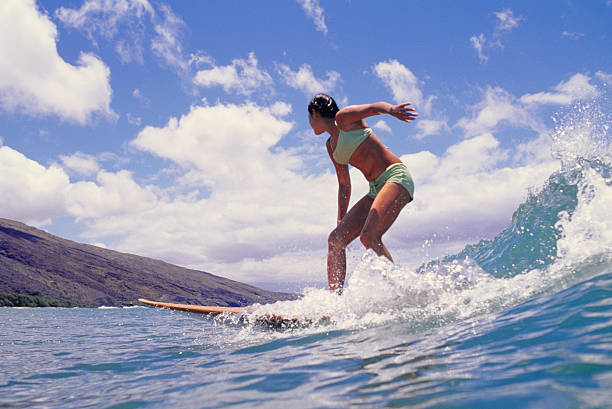
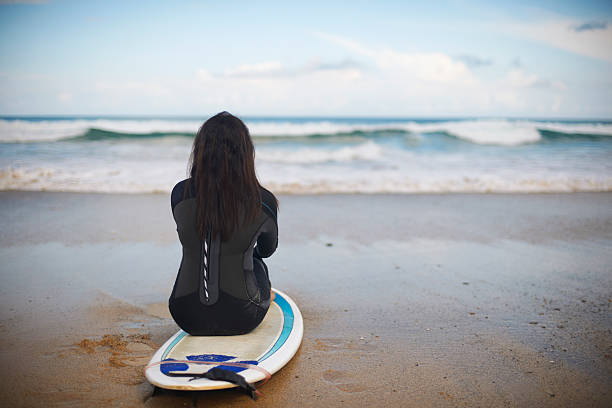
There’s a moment every surfer knows, whether you’ve been at it for one season or thirty. You’re sitting out in the lineup, maybe at your home break or some unfamiliar peak you paddled out to after a long drive. The swell is pulsing, sets march in every ten minutes, and the handful of other surfers bobbing around you are all eyeing the same horizon line. That’s when the real test begins—not of your pop-up or your bottom turn, but of your ability to read the room. The lineup is a living, breathing social ecosystem, and respecting it means understanding when to paddle, when to wait, and where you fit in the dance of the peak.
It all starts with positioning. You don’t just paddle out to the spot that looks best from the beach. You watch. You watch who’s catching waves, where they’re sitting, and which side of the peak is producing the cleanest sections. The surfer deepest on the peak—closest to where the wave first pitches—has priority. That’s the golden rule of surf etiquette, the one that keeps the lineup from turning into a free-for-all. If you paddle straight into that spot without earning it, you’re not just being a kook; you’re disrupting a rhythm that took years to establish. The locals didn’t invent that rule to be mean. They learned it the hard way, after too many collisions, too many banged rails, too many waves lost to a snake.
Snaking, by the way, is when you paddle around someone who’s clearly deeper and waiting, then try to take off on the inside. It’s the fastest way to earn a bad reputation and a verbal thrashing. A true surfer respects the hierarchy of the takeoff zone. If you’re new to a break, sit on the shoulder, watch the sets, and wait for the scraps. That’s not humility; that’s intelligence. You’ll learn more about wave mechanics in one session of patient observation than in ten sessions of hucking yourself at the peak and burning everyone.
But reading the lineup goes deeper than just knowing who’s next. It’s about understanding the subtler cues. The guy sitting a little farther out, scanning the horizon with a focus that says he’s been here since dawn—he’s probably got a sense for the channel currents and the sneaker sets. The woman paddling back out after a long ride, breathing hard, smiling—she just got her wave, so you can offer a nod and let her slide back into position without feeling threatened. The kid on the foamie who keeps paddling for closeouts and missing? Cut them some slack. They’re learning, and the only way they’ll stop paddling over your shoulder is if you give them space to figure out the lineup too.
Timing is everything. When a set looms on the horizon, everyone starts moving. The surfer with priority will start paddling early, angling toward the peak, maybe even turning to look over their shoulder. That’s your signal to ease up, sit deep, or paddle wide toward the channel. If you keep charging forward, you’re going to end up in the wrong spot at the wrong time—either dropping in on someone or forcing them to pull off. Neither feels good. A smooth lineup is one where people read each other’s intentions without words. You paddle, then you hold. You let the wave come to you, not the other way around.
Then there’s the unspoken rule of the inside section. After you catch a wave and kick out, you don’t just paddle straight back to the peak. You paddle to the channel, wide and away from the lineup, before circling back out. Nobody likes the surfer who takes a wave, kicks out right in front of the next surfer, then starts paddling back through the takeoff zone like they own the place. It’s called “the inside turn”—and it’s a rookie move. Respect the rotation. Every surfer out there is alternating with the ocean, and the lineup is a circle, not a straight line.
Of course, nobody is perfect. You’ll accidentally drop in sometimes. It happens. The test is how you handle it. If you burn someone, paddle over, apologize, and give them the next wave if you can. A simple “my bad, that one was yours” goes a long way. The guys who sit there, avoid eye contact, and paddle away muttering about “just a closeout” are the ones who get shunned—or worse, yelled at. Meanwhile, the surfer who owns their mistake and shares the stoke earns respect. The lineup remembers.
So next time you paddle out, slow down. Don’t just look at the waves. Look at the people. Feel the rhythm of who’s moving where. Learn the etiquette not as a list of rules, but as a way of reading the water and the souls floating on it. The lineup is a conversation. And the best participant knows when to paddle, when to wait, and when to just sit quiet and let the ocean do the talking.