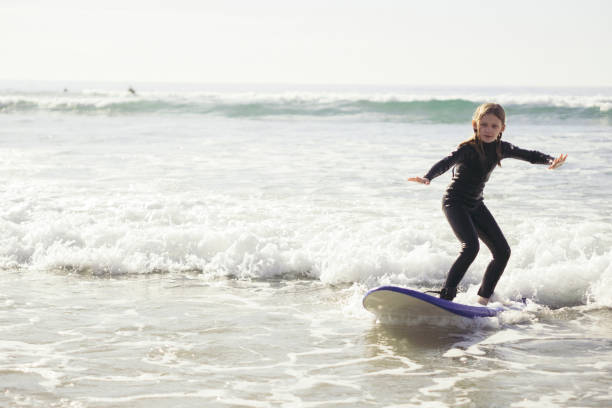
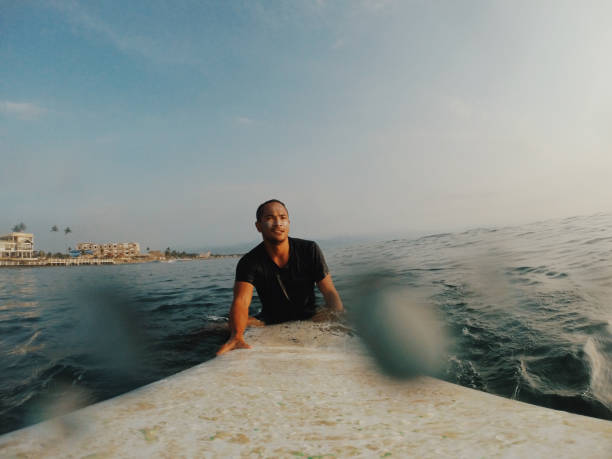
Every surfer who has ever paddled out at dawn knows that moment when you step onto the sand and the wind hits your face. Before you even see the ocean, you can feel it. That warm breath coming off the land, pushing against the incoming swell, telling you that today might be the day. Offshore wind is the unsung hero of perfect surf, the invisible hand that grooms every face, holds up every lip, and turns a mediocre swell into a masterpiece. When you are sitting out the back and the breeze is blowing straight into your face, you know you have scored. The waves stand tall, peeling smooth, the faces glassy and inviting, and the barrels hollow out like a temple. That is the magic of offshore conditions, the kind of weather that makes every local drop everything and call in sick.
But the ocean is a fickle creature, and not every day brings that sweet land breeze. Onshore wind, the villain of many a session, comes howling off the water, slapping the waves flat before they even have a chance to shape up. When the wind blows from the ocean toward the shore, it chops up the surface, destroys the clean lines, and turns a promising swell into a mushy, bumpy mess. You paddle out into onshore slop and every wave feels like it is crumbling on top of you before you can even take off. The lip is all foam and fury, the face is bumpy as a gravel road, and the barrels close out before you can even get your head inside. Onshore wind is the reason you check the forecast three times before loading up the boards.
The difference between offshore and onshore wind comes down to physics and a bit of alchemy. Offshore wind blows against the direction of the incoming wave, holding the face up as it approaches the shallows. It delays the breaking, allowing the wave to stand taller and steeper before it pitches over. That is how you get those beautiful, cavernous barrels that make photographers weep. The wind also smooths out the surface, knocking down the bumps and ripples, giving you a mirror-like face to carve on. Every good surfer knows that offshore winds are like a good friend who always has your back, pushing you into the wave and keeping it clean for your ride.
Onshore wind, on the other hand, pushes the wave over prematurely, causing it to break early and crumble into whitewater. It creates chop on the surface that rattles your teeth and makes bottom turns feel like you are riding a washing machine. The waves become lumpy and unpredictable, and the face is littered with little wind bumps that throw off your timing. If you have ever tried to rail a deep bottom turn in onshore chop, you know the feeling of getting pitched sideways by a rogue lump of water. It is frustrating, exhausting, and often leads to a short session and a long walk back to the car.
Reading the wind takes practice, but it is a skill every surfer should master. You learn to watch the flags, the trees, the grass on the dunes. You feel the direction on your cheeks and the back of your neck. A light offshore breeze of five to ten knots is the sweet spot, enough to groom the waves without making them too steep or too hard to paddle into. Anything above fifteen knots can start to blow out even the cleanest swell, making it difficult to hold your line in the barrel. And if the offshore wind is too strong, it can actually hold the wave up too long, making it pitch out into a closeout that is impossible to make. Balance is everything.
Local geography plays a massive role in how these winds affect the waves. A point break that faces the right direction can be glassy in the morning when the land cools and the breeze shifts offshore. A beach break might be clean and hollow with a light offshore, but turn into a washing machine when the wind swings onshore in the afternoon. Seasoned surfers know the hidden spots that work in every wind direction, the secret coves that trap the offshore breeze, the reefs that still hold shape even when the wind is blowing sideways. That knowledge is part of the local stoke, passed down from one generation of groms to the next.
At the end of the day, wind is the first thing you check and the last thing you respect. Offshore wind gives you those sessions you remember for a lifetime, where every wave feels like a gift and the lineups are filled with smiles and hoots. Onshore wind teaches you patience, humility, and the value of a good coffee while you sit in the car and watch the conditions improve. The endless summer of our dreams is built on a foundation of offshore breezes, chasing that feeling of being locked into a perfect barrel with the wind at your back and the world falling away. So next time you feel that land breeze on your face, paddle out hard, because the ocean is giving you something special.