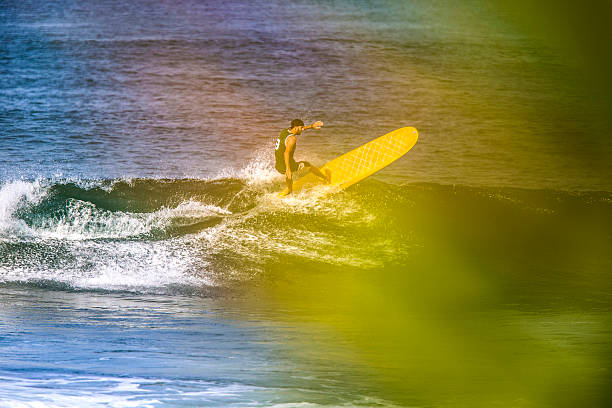
You’re paddling out at your home break, the sets are cranking, and you finally snag a right-hander that’s got some chest-to-head juice. You drop in, bottom turn, throw a fade off the top, and then—bam. The lip detonates right on your skull. Suddenly you’re in the washing machine, tumbling through a whitewater vortex that has no sense of humor. Your board leash is yanking your ankle like a angry dog, your lungs are burning, and you’ve got about three seconds to figure out which way is up before the next wave lands on your head. You just got worked. You just got rag-dolled. You just experienced a wipeout, the most universal, humbling, and strangely beautiful part of surfing.
Every surfer knows the wipeout is not a matter of if, but when. It doesn’t matter if you’re a grom on a foamie at a mushy beach break or a pro charging Pipeline on a shallow reef slab—the ocean will eventually remind you who’s in charge. But here’s the thing: not all wipeouts are created equal. Surfers have developed a whole lexicon to describe the many flavors of getting pitched, slammed, thrashed, and flushed. There’s the classic “over the falls,” which happens when you take off too deep and the lip pitches you vertically, sending you head over heels into the churning impact zone. That one’s a real pearl diver. Then you’ve got the “suck out,” where the wave suddenly spits you out backward like a watermelon seed, leaving you airborne and utterly discombobulated before the ocean smacks you flat. And let’s not forget the dreaded “situation” where you’re inside, the wave closes out, and you’re forced to bail and go through the grinder—a long, tumbling, hold-down that tests your lung capacity and your sanity.
What makes a wipeout truly gnarly is often the unpredictability. You can plan your exit strategy, try to fall flat to minimize the damage, or even tuck into a ball to protect your noggin, but the ocean has its own script. That’s why surfers talk about “respecting the ocean” and “paying your dues.” A wipeout is tuition. You pay it every time you paddle out, and if you’re lucky, you learn something from the experience. Maybe you learned to check your lineup a little longer. Maybe you learned to take that wave on the shoulder instead of the peak. Maybe you just learned that your leash is a piece of crap and you need a new one. Either way, you walk (or stumble) back to the beach, spit out a mouthful of saltwater, and laugh because that’s the only sane response.
The wipeout also has its own choreography, and locals have coined terms for the most iconic moves. There’s the “helicopter,” when your board spins wildly above you while you’re still attached. The “taco,” when your board folds over your head like a soft tortilla. The “sack lunch,” when you get held down so long you start considering a new hobby. For the heavy-tube riders, there’s the “wipeout of the year” contender—the one where you get pitched over a dry reef, the wave closes out completely, and you eat coral for breakfast. Those guys earn their scars. But even the average weekend warrior knows the “pancake” where you just splash flat on your belly from a failed air, or the “grovel wipeout” where you get tumbled in knee-high slop and still manage to lose a fin. It’s all part of the game.
Here’s a secret that grizzled surfers don’t often share: the wipeout is where the real joy hides. When you’re deep underwater, completely disoriented, and your body is just a leaf in a washing machine, you experience a pure, unfiltered moment of presence. There’s no thought, no worry about bills or relationships, just raw sensation and survival instinct. Then you pop up, gasp for air, and feel more alive than you have all day. That reset is priceless. It’s why surfers grin when they get crushed. It’s why we paddle back out, even when our shoulders are throbbing and our ears are ringing. The wipeout strips away all the pretense and connects you to something ancient and elemental. It’s the ocean saying, “Hey, I love you, but don’t forget who’s boss.” And we nod, shake out our wetsuit, and take the next set wave.
Understanding wipeout language also helps you communicate with your crew. When you’re sitting in the lineup and someone says, “Whoa, dude, you got fully shacked and then shish-kebabed,” you know exactly what happened. When a friend tells you they “got chandeliered” on the inside, you know they were held down under a frothy whitewater curtain. These words bind surfers together in a shared experience that landlubbers will never fully grasp. So next time you eat it—and you will eat it—use the right term. Tell your buddies you got “pitted then pit-bulled.” Say you “went over the falls and saw the fish from the bottom.” Embrace the wipeout. It’s not failure; it’s curriculum.
In the end, the wipeout is the great equalizer. A world champ and a kook both taste the same saltwater. The difference is how they respond. One throws a tantrum; the other laughs and paddles back out. So keep your chin up, keep your ears open underwater, and remember that every wipeout is a story waiting to be told. And the best stories always start with, “You shoulda seen it—I got completely destroyed.”