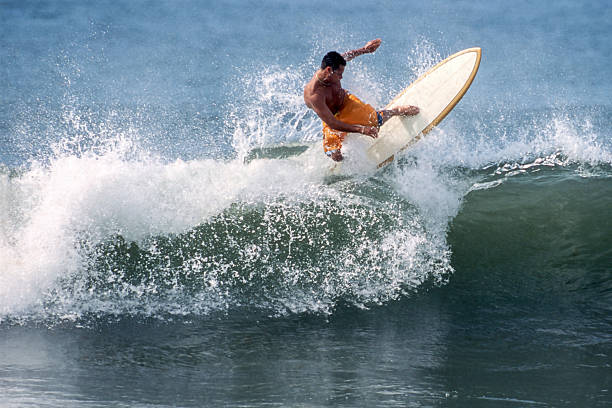
The first thing a surfer learns, right after how to paddle without drowning, is that not all waves are created equal. Some days you paddle out and the ocean is serving up perfect, peeling lines that look like they were drawn by a god with a protractor. Other days, it’s just a bunch of lumpy, confused bumps that collapse on themselves before you can even get to your feet. The difference between those sessions comes down to wave quality, and the key to unlocking better surfing is learning how to read the individual parts of a wave before you ever paddle for it. When you understand the anatomy of a wave, you stop guessing and start flowing.
Every decent wave has three main zones that a surfer needs to know: the face, the lip, and the shoulder. The face is the unbroken wall of water that you actually ride. This is where you do your turns, your carves, and your cutbacks. A clean face is smooth and glassy, free of bumps and chop, and it holds its shape as it moves through deeper water. When the face is steep but not hollow, you get that beautiful canvas for laying down long, drawn-out arcs. When the face is too fat or mushy, the wave is what we call a crumbler—it breaks all at once, leaving you with nowhere to go but straight toward the beach. The face is the soul of the wave, and reading it tells you whether you are about to have a ten-second glide or a two-second flop.
Then there is the lip. The lip is the top edge of the wave that curls over and throws itself forward. This is the part that separates the mere mortals from the adrenalin junkies. When the lip is thick and throwing out a healthy barrel, you are looking at a wave that can offer up a tube ride, the holy grail of surfing. But the lip can also be thin and weak, collapsing into a whitewash that just spits foam at you without any real power. The shape of the lip tells you how much energy the wave is carrying. A nice, rounded lip that pitches out a few feet in front of the face is the sign of a wave with punch. A lipless wave that just slumps over is a glorified bump. In the line-up, the old salts are the ones who stare at the lip as the swell approaches, because that is where the wave reveals its intentions.
The shoulder is the unbroken part of the wave that extends away from the peak. Beginners often paddle for the shoulder because it looks easier, and it is—for about one second. The shoulder is where the wave levels out, and if you take off there, you will find yourself riding a flat section with no power to push you. Seasoned surfers look for the peak, the part of the wave that is steepest and most critical. The shoulder is the escape route, the place where you fade toward if you need to bleed speed or set up for a bigger maneuver. The relationship between the shoulder and the peak defines whether a wave is a long, rippable point break or a short, dumpy beach break. When the shoulder extends for a long way, you have a wave that lets you cruise and experiment. When the shoulder is tiny or nonexistent, you are facing a wave that demands immediate commitment.
These three parts work together to create the different wave types that surfers chase. A mushy wave has a soft face, a weak lipless top, and a wide shoulder that offers no real challenge. An epic wave, the kind that makes you call in sick to work, has a steep face with a thick, pitching lip and a shoulder that holds just long enough for you to set your rail and pull into the tube. The difference between a good session and a great session is not just the size of the swell but the geometry of the individual waves. A perfect six-foot wave is far better than a sloppy eight-footer that chops up and closes out on you.
When you are sitting in the line-up, watching the sets roll in, start breaking down the waves before they even peak. Is the face smooth or bumpy? Is the lip throwing or just soggy? Where is the shoulder going? By reading these three parts, you can predict where the wave will break, how fast it will run, and whether you can get a barrel or just a trim. This kind of wave reading is what separates a surfer who is constantly catching waves from a surfer who is constantly paddling for nothing. The ocean is always talking; you just have to learn its language.