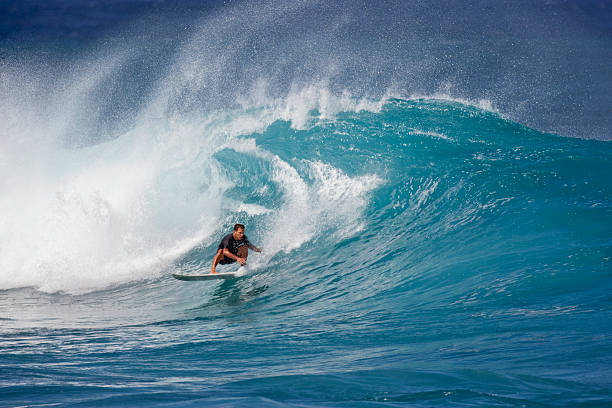
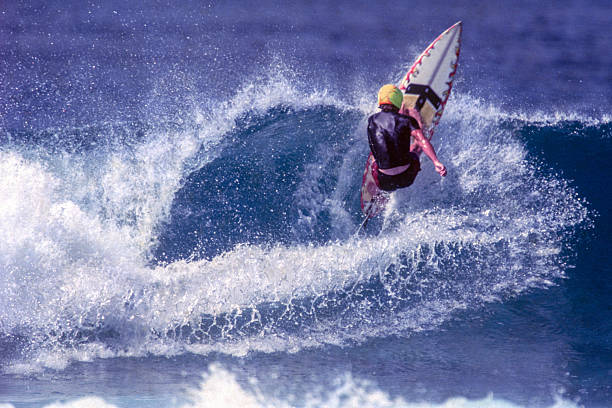
Way back in the day, long before foam, fiberglass, and the whir of a ding repair sander, there was just a man, a slab of wood, and the raw Pacific. You paddle out on a modern shortboard nowadays, all that buoyant foam and thruster fin setup, and you’ve got a machine under your feet. It’s a good machine, don’t get me wrong. It lets you shred, hit the lip, and get vertical in ways the old-timers could never dream of. But there’s a different kind of stoke, a deeper, more ancient wave of consciousness that comes from riding an alaia. It’s the heartbeat of surfing, the purest form of glide, and it brings you right back to the soul of the sport.
The alaia isn’t just a surfboard; it’s a time machine. When the early Hawaiian ali’i, the chiefs and royalty, were dropping into the waves of Waikiki and the North Shore, they weren’t riding logs. The massive olos were reserved for the kings, but the alaia was the board of the people, the commoner, the everyday waterman. Carved from a single, solid plank of koa or wiliwili wood, it had no stringer, no rocker to speak of, and absolutely no fin. Picture this: a thin, plank-like piece of native timber, maybe four to eight feet long, weighing as much as a small dog. You look at it and think, “No way. That thing sinks.” And you’d be right. It does sink. That’s the whole point.
The magic of the alaia is in the dance with the wave. You don’t just pop up and ride. You take a deep breath, drop into the face with a primal commitment, and you slide. Because the board has zero buoyancy, your only lift comes from speed and rail-to-rail trim. You have to be moving. If you stall, you sink. It sounds terrifying, but once you find that elusive slot of speed, the alaia comes alive in a way no modern board can. You feel every undulation of the ocean surface. The wood hums beneath your feet. There’s a tactile feedback, a direct conversation between your toes and the water. You are not riding on the wave; you are riding with it, a perfectly unstable balance of motion and gravity. That thin wooden plank becomes a razor’s edge of pure connection.
For the ancient Hawaiians, this wasn’t a sport; it was a spiritual practice. The act of riding a wave, of being so intimately involved with the ocean’s energy, was a form of worship. It was a display of mana, or spiritual power and authority. The he‘e nalu, or wave sliding, was a celebration of life, a way to commune with the gods and the aina, the land. They carved the boards with chants and rituals, selecting the tree with prayer, believing the spirit of the wood would guide them on the water. The alaia was an extension of the self, a tool for harmony, not conquest.
Fast forward a few hundred years, through the missionary era when surfing was almost snuffed out, and into the Sponge-Rez revolution of the 1950s, and the alaia became a ghost story. It was a legend whispered about in surf shops. Then, a few soulful shapers like Tom Blake (who actually did his own paddleboard research back in the 30s) and later, modern craftsmen like Donald Takayama and a handful of revivalists in California and Hawaii, started looking back. They started getting wood chips under their fingernails. They realized that in our quest for the perfect, high-performance wave, we might have lost something essential.
Riding an alaia today is a radical act of rebellion against the slick, mass-produced culture of modern surfing. It’s rejecting the buoyancy of the floaty for the honesty of the sinker. You drop in on a chest-high wall, and you have to position your weight perfectly. You can’t be lazy. There is no rail grabbing. You use your hands to trim, to steer, to feel the water. The turns are wide, flowing, and drawn out. It’s not about snapping a maneuver; it’s about drawing a line in the water with your whole body. It’s the closest you can get to that old photograph of Duke Kahanamoku, that patient smile, that deep, ancient peace.
So next time you see a surfer riding what looks like an old fence post, don’t laugh. Watch them. See the stillness in their stance, the clean line of their glide. They aren’t just surfing. They are paying homage. They are riding the same ocean that carried the chiefs of Hawaii, feeling the same vibration in a living material from the earth. The alaia is a reminder that style is timeless, that spirit trumps performance, and that the best way to honor the future of surfing is to never, ever forget where it came from. It’s just you, a plank, and the endless glide.