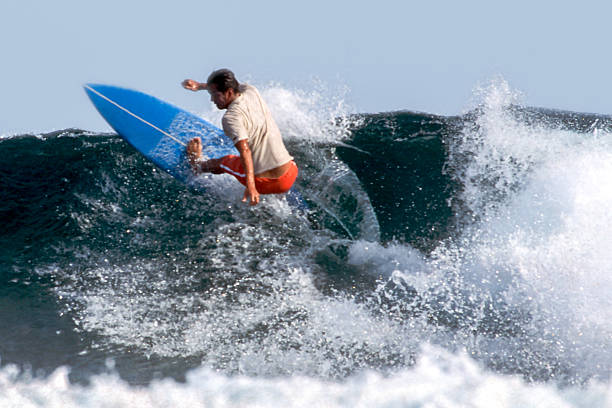
Most folks hear the word “surfing” and their minds drift straight to salt spray, tropical reefs, and the endless blue of the Pacific. But for a devoted crew of wave chasers in the heart of America, the real stoke lives inland, where the coastline is measured in sand dunes and the water tastes like adventure with a side of iron. We’re talking, of course, about the Great Lakes. Yeah, you heard that right. The same lakes that host cargo ships and summer kayakers turn into legitimate surf destinations when the wind gods get cranked up and the fetch gets long. It’s a whole different animal out here, and once you paddle into a glassy Lake Superior peak on a crisp October dawn, you’ll never look at a map the same way again.
The story of freshwater surfing goes back further than you might think. Back in the 1960s, a few salty souls in the Midwest started messing around with old longboards in Lake Michigan, just to see what would happen. They discovered that these inland seas could produce breakable waves, thanks to the magic of wind fetch. When a strong system blows across hundreds of miles of open water, it stacks up energy into rideable swells, sometimes even hollow enough for a barrel. That realization sparked a quiet revolution. Today, riders from Sheboygan to Marquette, from Cleveland to Duluth, have built a scene that mirrors the ocean community in every way except the salt content. These are the disciples of the sweetwater stoke, and their dedication is nothing short of gnarly.
The character of Great Lakes waves is totally unique. They’re shorter period than ocean swells, more wind-driven, and they can turn on a dime. One day you’re sliding down a sectiony shoulder-high roller, and the next you’re scratching into a hollow dredging peak that throws like a Puerto Escondido wave, but with freshwater spray and a frosty bite in the air. The key ingredient is wind direction and speed. A strong, sustained west wind across Lake Michigan can produce world-class waves along the eastern shores, while a northeast blow lights up the west side. There are no tides to worry about, which simplifies things, but the lake bottom is fickle, full of sandbars that shift with every storm. You’ve got to earn your waves by reading the beach and moving around with the sand. It’s a constant puzzle, and that’s part of the fun.
Winter is when the Big Lakes truly go off. The water gets impossibly cold, the air forties to negatives, but the storms roll through with extra gusto. That’s when you see the hardcore crew suiting up in 6/5 hooded wetsuits, booties, gloves, and hoods, looking less like surfers and more like arctic explorers. Ice balls form on the leash, the wetsuit zipper freezes, and paddle outs become a battle against hypothermia and frozen eyelashes. But those who brave it are rewarded with some of the cleanest, most powerful waves of the year. It’s not uncommon to paddle out at an empty break on a weekday morning and score flawless chest-to-head-high lines all to yourself. You won’t find any crowds here, just the wind, the snow squalls, and the pure joy of riding a wave that came from a thousand miles away, across land, into a fresh water sea.
What really sets the Great Lakes surf culture apart is the community. Because the waves are so intermittent and forecast-dependent, surfers here are like a secret society that shares intelligence through text chains and local weather apps. When the charts light up for a strong fetch, the word spreads fast, and suddenly the parking lots at spots like Second Reef in Sheboygan or Stony Point in Michigan fill up with sticker-covered vans and tailgate surf sessions. There’s a deep respect for the water, because it’s colder, more unpredictable, and often more dangerous than ocean surf. Rip currents, sudden storms, and shifting sandbars demand awareness. But the trade-off is a camaraderie that feels like family. You help each other dial in the waves, share extra hoods, and cheer when someone gets a long left that runs forever parallel to the shore.
For the traveling surfer looking to explore the full American coast-to-coast experience, a Great Lakes road trip is the ultimate off-the-beaten-path adventure. You can chase wind and waves all the way from the dunes of Indiana to the rocky shores of Lake Superior’s Apostle Islands, where the water is so clear you can see the bottom from fifteen feet up. You’ll pack your boards between camping gear and cold brew, sleep in the van, and chase forecast models like a storm-chasing meteorologist. And you’ll rarely see another soul in the water. That’s the beauty of it. This isn’t the crowded beach break glamour of Huntington or the touristy vibe of Waikiki. This is raw, real, DIY surfing that rewards patience and grit. When that magic day hits, you’ll be standing waist-deep in crystal clear freshwater, watching a perfectly lined-up wall of green roll toward you from the horizon, completely empty, and you’ll know that the stoke knows no salt. So next time someone says the best waves in America are all on the coasts, just smile, shake your head, and paddle into the sweetwater.