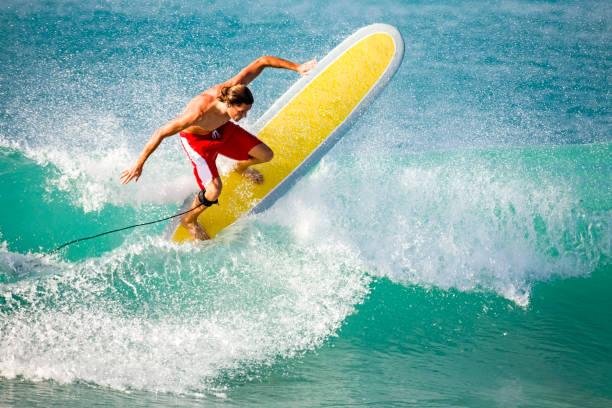
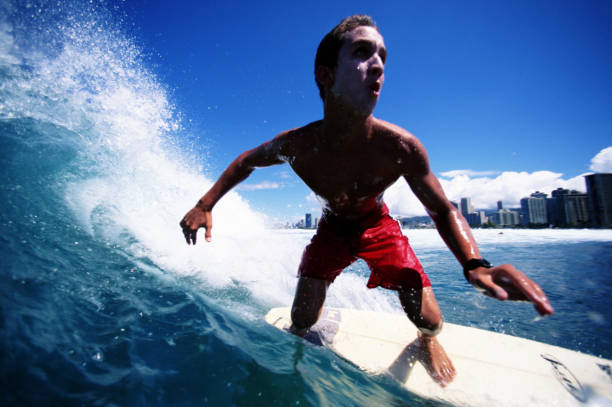
There comes a day in every surfer’s journey when you stop just looking at the waves and start really seeing them. You begin to notice how the wind licks across the surface, how the swell bends around a reef, how a left-hand point break offers a whole different flavor from a right-hand beach break. And right around that moment, you realize something subtle but profound: your stance—whether you ride goofy-foot or regular-foot—isn’t just about which foot goes where on the wax. It is the lens through which you read the entire lineup.
I remember the first time I paddled out at a spot I had only ever surfed on a south swell. I was a goofy-footer that day, feet planted with the right forward, carving backside into a long, roping left. It felt like the wave was made for me. But when the swell shifted and the sets started peeling right, I suddenly became hyperaware of how the wind was actually influencing my approach. The offshore breeze was grooming the face, sure, but it was also pushing the lip just a little more vertical on the rights, making them steeper, faster, and far more critical for a goofy-foot riding frontside. Meanwhile, the lefts were holding their shape longer, offering a kinder face for my backside turns. That moment of awareness changed everything.
The truth is, the wind does not play favorites. But it does speak a different language to each stance. A regular-footer, with their left foot forward, naturally feels more comfortable on a right-hand wave. Their frontside is open, their shoulders rotate easily, and they can drive off the bottom with the torque of their hips. When the wind is side-off on a right, that regular-footer can lay into a cutback with the spray flying off their rail, because the wind is actually helping the wave stand up and hold its shape. But put that same regular-footer on a left-hand wave in a gusty side-shore wind, and suddenly the wave feels awkward. Their backhand becomes the primary turning side, and the wind that was their friend on the right is now pushing the face into a lumpy, unpredictable mess. They have to adjust their entry angle, their bottom turn timing, and their rail engagement to find the same flow.
For the goofy-foot, it is the mirror image. A left-hander with a light offshore wind is a gift from Poseidon. You can wrap your turns on the open face, use the wind to hold your line through the pocket, and enjoy that feeling of the wave bending around your backside in a smooth, controlled carve. But when the swell flips to rights, especially under a strong side-off wind, the goofy-footer has to work harder. The backhand becomes the dominant tool, and instead of driving off the bottom with power, you find yourself pivoting off the top, using the wind as a counterweight to keep your board from sliding out. It is not worse or better—it is just a different dance.
This is where the true deep dive begins. Because the wind does not just affect how the wave breaks; it affects how you see the wave before it even breaks. A seasoned regular-footer paddling for a right-hander in a side-off breeze knows to sit a little deeper, because the wind is going to push the peak farther down the line. They anticipate a longer, faster ride and adjust their paddle power accordingly. A goofy-footer on that same right, paddling for a backside wave, might sit wider and prioritize positioning over speed, knowing they will need to generate their own momentum off the bottom. And when the wind is onshore and choppy, the differences become even more stark. A regular-foot on a backside left in bumpy conditions has to rely on quick, choppy footwork to stay balanced, while a goofy-foot on a frontside left can use the wind as a cushion, absorbing the chop through their knees and flowing through sections that would trip up a less adapted rider.
This understanding is not just for the groms or the weekend warriors. It is the kind of knowledge that separates a surfer who simply rides waves from a surfer who truly rides the ocean. When you start chasing the endless summer like those guys in the Bruce Brown film, you are not just following clean swell. You are following a specific relationship between wind direction, swell direction, and your own stance. A trip to a place like Bali might offer perfect left-hand barrels at Uluwatu for the goofy-foot crew, while a regular-footer finds their bliss on the rights at Keramas. And when the trade winds shift, you learn to move with them, shifting your home break according to the season and your footing.
Ultimately, the wind does not care if you are goofy or regular. But the surfer who listens to it—who lets the wind and the swell dictate how they read a wave, not just where they paddle—will always find the deepest groove. So next time you paddle out, take a moment to feel the breeze on your back. Let it tell you which side of the peak to sit on. Because the ocean is always speaking, and your stance gives you the ears to hear it.