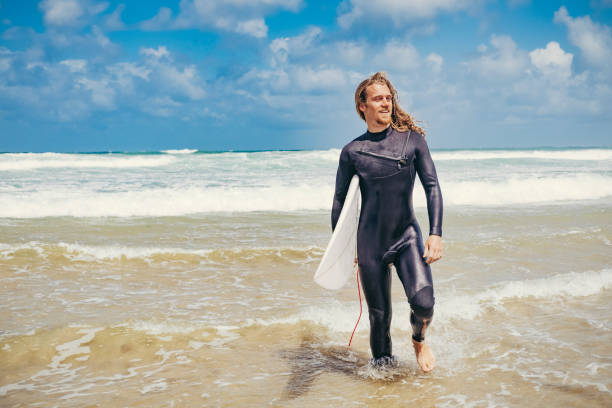
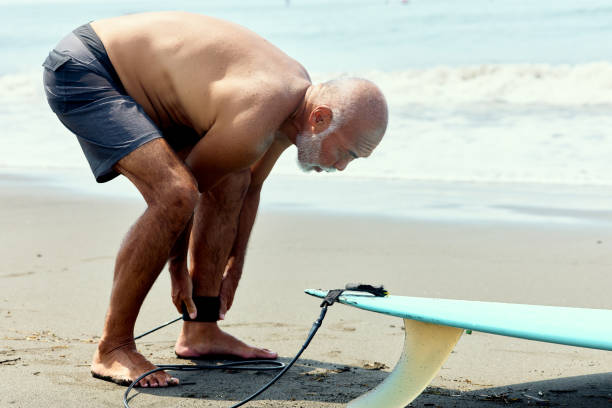
You ever hear a surfer talk about Half Moon Bay and they just get this look in their eye, a mix of stoke and straight-up fear? It ain’t the town or the fog they’re thinking about. It’s that spot they call Mavericks. But here’s the thing about Mavericks that the drone shots and the highlight reels never really capture. The wave itself is a monster, sure, a heaving slab of cold Pacific water that can jack up to sixty feet and throw a lip that sounds like a freight train wrecking a cathedral. But the real test, the thing that separates the legends from the guys who just show up with a gun, isn’t even the wave. It’s getting out there. It’s the paddle through the Pillar Point channel, what the local crew calls the conveyor belt.
To understand the channel, you gotta understand the geography. Half Moon Bay is this big, beautiful crescent of sand and cliffs, but the big wave zone isn’t just off the main beach. It’s out past the jetty, around the point of Pillar Point itself. The only safe way in and out of that lineup, when the swell is cranking at twenty-five feet and the whole ocean looks like a washing machine full of glass and anger, is through that channel. It’s a deep water trench, a highway that funnels the raw energy of the North Pacific right into the reef. For a paddler, it’s both the gateway and the gauntlet.
You drop in at the harbor launch, usually in the dark, the air smelling of salt and diesel from the fishing boats. The tow crews are already firing up their skis, the growl of the engines cutting through the pre-dawn chill. If you’re paddling, you’re a different breed. You push your twelve-foot board through the calm harbor water, feeling the anxiety build as you round the corner of the breakwall. That’s where the world changes. The moment you clear that concrete barrier, the ocean remembers it’s a beast. The groundswell wraps around the point and suddenly you’re not in a harbor anymore. You’re in the maw.
The channel itself is a weird, deceptive beast. It looks like a path to safety, but it’s a living thing. The water churns and boils, not from the big sets that break further out, but from the backwash and the current that gets squeezed between the reef and the cliffs. You paddle hard, trying to keep your board pointed straight, but the grip of the water is insane. It pulls you sideways, tries to spin you, tries to drag you into the impact zone where the waves are jacking up and detonating on water that’s only ten feet deep. You see a set coming, these dark mountains marching out of the grey, and your heart drops into your stomach. But the channel is deep. The biggest waves usually jack up on the inside, closer to the reef. So you watch these thirty-foot bombs roll through the channel right underneath you, lifting you up on a smooth, terrifying elevator of water, then dropping you into a trough so deep you feel like you’re looking up at the sky from a basement.
The real danger isn’t just the size of the waves rolling through the channel, it’s the rogue ones. The sneaker sets that jack up right on the edge of the deep water, catching you off guard. You get caught inside there, in the channel when a bomb decides to stand up and break right on your head, and you’re in for a world of hurt. That’s the no-fall zone. That’s where you get rag-dolled across the reef, held down for a sixty-second hold-down that feels like sixty hours, praying your leash holds and your lungs don’t give out. The local crew, the guys like Ken “Skindog” Collins and the countless other chargers who’ve earned their place out there, they treat the channel with a deep, profound respect. They know the timing. They know the tide. They know when to sprint and when to drift. They know the paddle battle through the conveyor belt is the price of admission. You don’t just show up and ride Mavericks. You earn the paddle out.
And once you’re in the lineup, the channel becomes your lifeline. You’re sitting out there with a crew of maybe a dozen paddlers and a handful of skis, staring at the horizon, waiting for the set of the day. Every eye is on that channel. You see a truck load of whitewater coming from the outside, you know a beast is moving in. You have to be positioned perfectly, deep enough to take off, but far enough from the rock that you don’t get pounded. When you catch a wave, the channel is the escape hatch. You pull into the barrel, if you’re that skilled, or you just try to survive the drop and the wall, and then you kick out into the channel. That deep, safe water is where you catch your breath, where you watch the next guy drop in, where you paddle back to the peak. It’s the living artery of the whole break.
Half Moon Bay, the town itself, is quiet. Foggy. A little bit sleepy. But that channel is the sound of the place. It’s the roar of the water and the hoot of a surfer after he survives a sixty-foot drop. It’s the purr of the ski as it drags a beat-up charger back to the harbor. The channel is the story of Mavericks. It’s the journey, not the destination. It’s the paddle out that builds the legend. It’s the cold, raw, terrifying essence of chasing the sun in a place where the sun barely breaks through the marine layer. It’s the conveyor belt to the deepest, most gnarly stoke the ocean has to offer, and every time you slide into it, you know you’re in for the ride of your life.