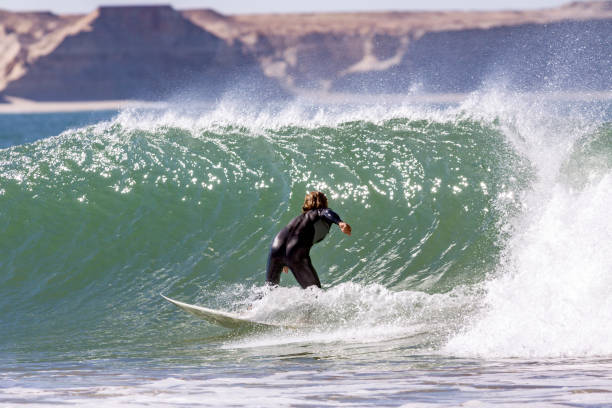
Out in the lineup, when a late-afternoon offshore wind is grooming a shoulder-high set and you’re sitting way outside, the one piece of gear that truly separates stoke from disaster ain’t your board or your wetsuit. It’s that humble, often overlooked cord connecting your ankle to your stick. The surfboard leash. Sure, it’s not as flashy as a new set of fins or a freshly glassed thruster, but this simple polyurethane cord is the unsung hero of modern surfing—the essential extra that keeps you connected to your ride, to the wave, and to the purest form of the endless summer.
Back in the day, before leashes were a thing, losing your board meant a long, cold swim to the beach and a whole lot of humility. The original big-wave pioneers and the soul surfers of the sixties would paddle out knowing that if they ditched their board, they’d be chasing it through the whitewash for a quarter mile. It built character, sure, but it also meant a lot of missed waves. Then came the innovation, born from necessity and a touch of pure surfer ingenuity. The first leashes were basically surgical tubing tied to the board’s stringer, and they worked. They were clunky, they snapped, and they sometimes ripped the tail right off your board, but they changed the game. These days, a good leash is engineered with the same precision as the hydrodynamics of a modern shortboard.
A leash does more than just prevent you from swimming after your board. It keeps everyone in the water safer. Flying boards are dangerous, man. A loose piece of foam and fiberglass being thrashed around by a broken wave can hurt someone, and a good leash stops that. It’s your self-respect in the lineup. When you take off on a steep drop and your feet slip, that leash is your only lifeline back to the party. And when you’re paddling back out after a long ride, you don’t have to worry about your board getting swept away by a sneaker set while you’re catching your breath.
Choosing the right leash is all about matching it to your shredding style. For a shortboard, you want something light and thin, maybe five or six feet long with a swivel that doesn’t bind up and a cuff that sits comfortably over your ankle without cutting off circulation after a two-hour session. A coiled leash is the go-to for performance surfing because it stays out of the water and reduces drag when you’re doing turns and snaps. Let me tell you, nothing kills a flow faster than a leash that’s dragging through the face of a wave like a sea anchor. For logs and longboards, you want a thicker, longer cord that can handle the extra weight and the potential for the board to bang around during a wipeout in the shore break. A straight, heavy-duty leash with a strong rail saver at the plug connection is king for the longboarders and the noseriders.
You also gotta look at the components. The rail saver, that little padded piece right at the leash plug, is critical. It prevents the cord from chafing and cutting into your board’s rails during a heavy spin cycle in the whitewater. A flimsy rail saver is a recipe for a snapped leash and a board heading for the rocks. The shackle, usually plastic or metal, needs to be rust-proof and strong. And the swivel is the secret sauce. A good swivel stops your leash from getting tangled up into a giant knot that feels like a monkey’s fist around your ankle. Believe me, trying to untangle a twisted leash while a set looms on the horizon is a pure act of desperation.
Whether you’re chasing a morning buzz at a mellow point break or paddling into a double-overhead reef slab, your leash is the silent partner in your session. It’s the gear that lets you take risks, push your limits, and truly chase the sun without the constant fear of losing your board. So next time you snap that cuff around your ankle, give it a little respect. It’s the essential extra that makes the endless summer truly endless.