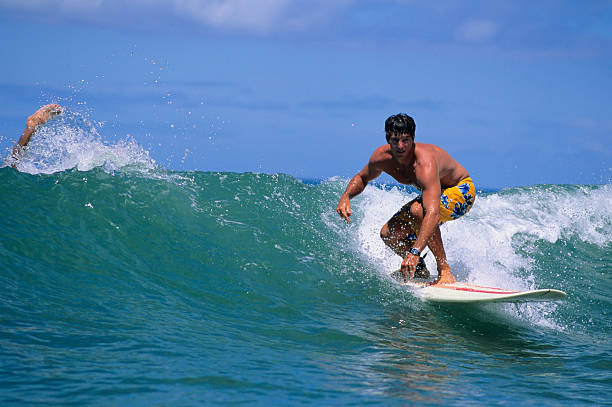
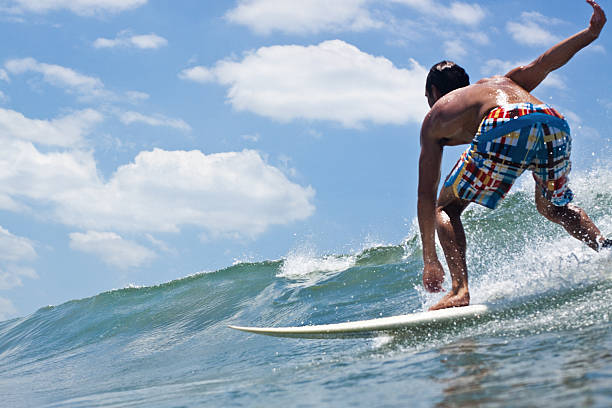
There comes a moment in every surfer’s journey when you paddle for a wave that feels too fast, too steep, too perfect, and instead of pulling back, you commit. That feeling of dropping into a barrel or racing down a thick, hollow face is the kind of stoke that keeps you in the water long after your arms have turned to jelly. But catching those waves—the ones that pitch out and offer a tube ride or a critical drop—requires a whole different level of paddling power. It’s not about muscling through whitewater or floating over the shoulder on a mellow beach break. It’s about timing, burst strength, and reading the ocean in a way that lets you slip into the pit before the wave closes its door.
Late takeoffs are the bread and butter of hollow wave surfing. Whether you’re at a reef pass in Indo, a sandbar on the North Shore, or a fast-breaking point in your local lineup, the ability to paddle into a wave when it’s already standing up and pitching means you’re not just catching waves—you’re earning them. And the secret sauce isn’t just arm power. It’s paddle positioning, body mechanics, and mental rhythm that together unlock the kind of entry that makes even a heavy barrel feel like a controlled slide.
First, let’s talk about where you sit. When you’re paddling for a hollow wave, your usual “takeoff zone” might be too deep. Most surfers wait too far inside, hoping the wave will jack up gently, but that’s how you end up on the shoulder or getting smashed by the lip. For late drops, you want to be slightly deeper than you think, but not so deep that you’re under the peak. The goal is to be in the spot where the wave just starts to feather—that instant before the lip throws out. You need to read the set from a hundred yards out, watching the swell’s shape, speed, and the way it refracts off the bottom. If you see a wave that’s going to bowl up and throw, you paddle for it earlier than you normally would, giving yourself a longer run-up, but then you slow your paddle rate as the wave approaches so you’re not over-paddling into a closeout. That’s the head game.
Now, the physical part. Paddling power for late takeoffs is all about explosive acceleration. You don’t want a steady, endurance-based cadence. You want three or four brutal, full-arm strokes that yank you forward like a jet engine spooling up. Your hands should be cupped, fingers spread slightly, and you should pull all the way past your hips, finishing with a snap that transfers energy from your lats through your core. As the wave lifts your tail, you shift your weight forward, keeping your chest down and your head up. Don’t look at your board. Look at the wave face, the lip, the line you’re about to thread. That split second when the wave starts to pitch is when you need to pop up, but you can’t do that unless your paddle stroke has already positioned your board at the right speed and angle.
A huge mistake beginners make on hollow waves is trying to angle their paddle too early. They crank their shoulders and point the nose toward the channel, hoping to skip the drop. That’s how you pear and eat a pit. Instead, you want to paddle straight toward the peak—or even slightly into the wave—until the very last stroke, then you pivot your shoulders and hips into a bottom turn that’s already initiated from your paddle stroke. This is called the “pedal turn” or “steering with your stroke.” On your final paddle, you dig your outside hand deep and pull your nose around, simultaneously using your inside leg to weight the rail. If you do it right, you never actually pause between paddling and riding. The transition is smooth. Your board goes from planing on your chest to planing on your feet in one fluid motion.
Conditioning matters too. Hollow waves demand stronger triceps and deltoids than typical paddling because you’re often fighting not just the water but also the suction of the wave pulling you backward. That’s why you see pros doing resistance band pulls, prone paddling on land, and swimming with hand paddles. If your arms give out halfway into the set, you’ll be stuck on the inside getting worked. So commit to sprint paddling intervals in your training: twenty strokes as hard as you can, rest ten seconds, repeat. That mimics the burst you need when a set wave stands up and you’ve got one chance to get in.
Finally, there’s the mental side. Late takeoffs require a certain kind of bravery—not recklessness, but trust in your ability to read the wave and commit when every instinct says pull out. The best surfers treat each late drop like a negotiation with the ocean. They know that if they hesitate, the wave will punish them. So they breathe, set their line, and paddle with absolute conviction. And when that first drop feels like falling into a green cave, they don’t tense up. They stay loose, look where they want to go, and let their paddling power carry them into the pit.
So next time you see a hollow peak jacking up outside, don’t sit and watch. Paddle deeper, stroke harder, and trust that you’ve got the juice to make the drop. The wave will close out on those who hesitate. But you? You’re paddling into the pit, and that ride is yours.