The first time you see a perfect left peeling down an empty reef pass, you understand why surfers trade car keys for boat schedules and island living. The Mentawai Islands off West Sumatra are not just a map dot; they are a state of mind, a saltwater ritual that turns every session into a pilgrimage. This is where the endless summer stops being a slogan and becomes your personal reality. The air smells of salt and frangipani, and the horizon is a line of unbroken swell that promises perfection. You feel a stoke so deep it vibrates through your bones.
Flying into Padang, the humidity hits like a warm wall, and the motorbike ride to the harbor chokes you with exhaust and clove cigarettes. But then the ferry pushes off, and mainland Indonesia fades into a green and blue smear. Twelve hours later you’re anchored off a palm island with no roads, no bars, no signal—just a local paddling a homemade board with a smile that says welcome to the jungle. The boat rocks, and you realize you’ve left everything behind except your board and the swell report. Your heart pounds with anticipation as the anchor drops. Pure stoke.
The breaks here are legendary. Rifles is a hollow left that spits like a firecracker. HT’s is a freight train right that’ll have you screaming inside the tube. And Macaronis, the crown jewel, reels for two hundred yards over shallow reef. When a southwest swell arrives, the ocean becomes a conveyor belt of perfect peaks—you’d swear the surf gods put this island chain here just to test how much stoke a body can handle. The coral is sharp as razors, and every takeoff is a commitment. But that’s why you came. Fear and stoke dance together in your chest.
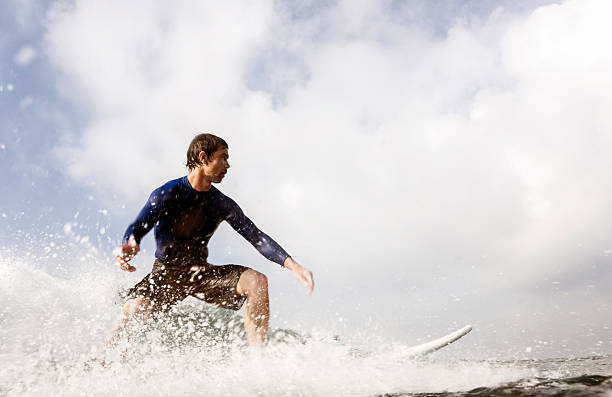
Beyond the waves, the Mentawais teach simplicity. Dawn starts with coffee and diesel as the captain motors toward the next break. You paddle out on glassy water so clear you see coral heads and turtles below. The lineup becomes a quiet tribe—Aussies, Brazilians, a few Californians—sharing an unspoken code: take turns, respect locals, never snake a mate on a set. There’s no need for words when you’re all chasing the same green room. Each surfer knows the rhythm, the ebb and flow of patience and adrenaline. When someone paddles for a bomb, the lineup drops into silent focus.
Traveling the Mentawais isn’t a vacation; it’s a surf expedition, a jungle boot camp for the soul. You pack light—two boards, three pairs of boardshorts, a rash guard smelling of salt and campfire. You read swell charts, sniff for offshore wind, trust the captain’s call on dawn patrol. And you learn to let go. The wave you wanted may never come, but the wave you need always shows up. Patience becomes your religion, and the lineup your church. Every session is a prayer answered or a lesson learned. Now you stop fighting the ocean and start listening to it.
For anyone chasing the endless summer, this chain is the proving ground. It’s not about wave count—it’s about the quality of the ones you remember. A late-afternoon session at Lance’s Left turned the water gold, each wave a crystal barrel that slowed time. Kicking out, I saw three other surfers hooting and clapping, knowing we’d witnessed something sacred. In that moment, the rest of the world vanished, and nothing mattered but the next set on the horizon. That’s the kind of stoke that changes a person. And it lingers in your muscle memory, pulling you back year after year.
The Mentawais will humble you. The reef delivers sharp kisses if you misread the takeoff. Locals, whose families have lived here for centuries, show you that surf culture isn’t about owning the newest quiver—it’s about sharing the ocean’s gifts. When you finally head home, sunburned and ears ringing with endless barrels, you’re already planning the next trip back. And every time you close your eyes, you see that perfect left spitting into the sunset. The salt in your hair is a constant reminder of where you belong. Yeah, you’ve left a piece of your heart on that reef forever.