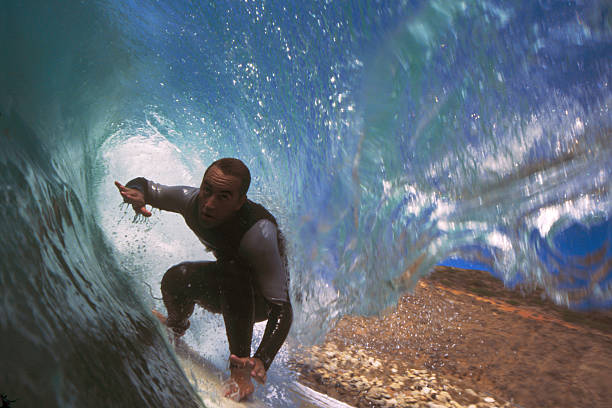
There you are, chest-deep in a lineup that’s been cranking all morning, peeling down the sandbar with a nice, predictable shoulder. You’ve got your rhythm locked, your bottom turn is buttery, and you’re milking every lump of foam for all it’s worth. Then the swell charts light up. A new groundswell rolls in from a distant storm, and suddenly the same break is a completely different animal. The takeoff gets steeper, the wave jacks up like a wall of doubt, and your usual drop-in point feels like you’re stepping off a cliff into a washing machine. Welcome to the hollow side of the lineup. This is where the real learning happens.
The first thing that goes out the window when you shift from soft rollers to fast, hollower waves is your timing. On a mushy wave, you can paddle in early, stall, reset your feet, and still make the section. But on a pitching reef or a dredging beach barrel, that luxury is gone. You have to commit to the wave a half-second earlier than instinct tells you. Your pop-up has to be explosive, not casual. And here’s the kicker: most surfers don’t realize that the bottom turn in a hollow wave is less about carving and more about timing the release. You want to stay high on the face, almost skim the lip on your bottom turn, then let the wave’s energy pull you down the line. Rushing that turn means you’ll hit the flats and lose all your speed. Delaying it means you’ll be airborne over the falls before you know what hit you.
Positioning is the other half of the puzzle. On a slow day, you can sit a little deeper and rely on your paddle speed to get you into position. But when the waves are sucking dry off a shallow reef, you need to be exactly where the peak is going to hit, not where it’s hitting right now. That means watching the horizon, reading the swell sets, and moving laterally along the reef ten or twenty meters before the wave even arrives. The locals who make it look easy are doing this constantly. They’re not paddling harder; they’re paddling smarter, using the current and the eddies behind the reef to stay in the slot. If you find yourself constantly scratched out of the takeoff, you’re too deep. If you’re getting pitched over the back, you’re too wide. Adjust your spot by one board length at a time, and you’ll feel the difference.
Speed generation becomes a different beast on a hollow wave. Usually you learn to pump down the line, generating your own speed with aggressive rail-to-rail transitions. But on a fast barrel, the wave itself provides the speed. Your job is to ride that razor’s edge without letting your board stall under your front foot. Keep your weight centered, back foot a little heavier for control, and look down the line, past the section, to where you want to exit. Staring at the foam ball in front of you is a surefire way to get swallowed. Instead, let your eyes lead you to daylight. That’s the secret of tube riding: you’re always looking for the exit, even when it’s not visible yet.
There’s also a mental shift. Soft rollers forgive your mistakes. They let you stand up, wobble, readjust, and still catch the shoulder. But a hollow wave demands a kind of zen-like surrender. You have to accept that you’re going to get worked sometimes. The wipeouts are harder, the hold-downs are longer, and that’s just the tuition you pay for the school of hard barrels. The trick is to stay loose, stay calm, and never stiffen up. When you get pitched, you go limp and let the foam just push you around until you pop back up. Fighting the ocean only wastes your oxygen and your energy.
Finally, remember that the same principles apply whether the wave is a sucky beach slab or a perfect, barreling point break. The key is reading the water’s pulse. Watch how the foam line moves, track the dark spots that indicate deeper water, feel the tug of the rip against your legs. The ocean is constantly talking to you. In hollow waves, it’s shouting. But if you tune your ear, your timing, and your stance, you’ll find that shift—from soft rollers to screaming tubes—isn’t just a challenge. It’s the purest stoke you’ll ever know.