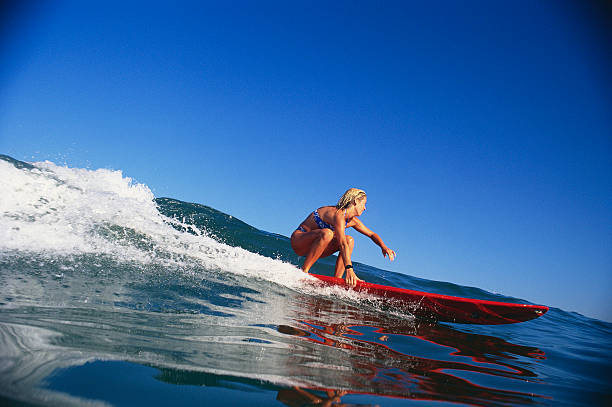
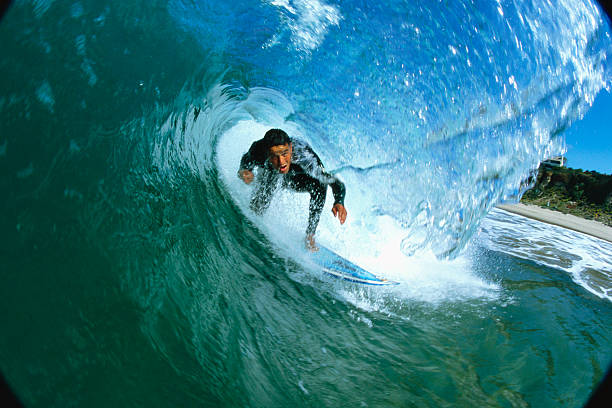
There’s a moment every surfer knows—the wave walls up, the pocket sucks hard, and you feel that split-second invitation to throw your board back toward the foam. You plant your back foot, you twist your shoulders, you carve with everything you’ve got. But then it falls apart. The fins slip, the tail washes, and you end up buried in whitewater like a washed-up kelp. What went wrong? Chances are, you were looking at the wrong thing. The biggest secret to a smooth, stylish cutback ain’t in your legs or your rail work. It’s in your eyeballs.
Think about it. When you drive a car and want to make a sharp turn, you don’t stare at the hood ornament. You look down the road, through the corner, to the point where you want to exit. Same deal on a wave. If you’re staring at the lip in front of you, or worse, looking down at your board to see if your toes are hanging off, your body follows your eyes. And that’s a one-way ticket to a stall, a bog, or a straight-up donut in the pit. Your head acts like the steering wheel of your entire surfing body. Move it first, and everything else snaps into line. Ignore it, and you’re just hoping the wave bails you out.
Here’s how it works in a real cutback scenario. You’re coming off a bottom turn, already feeling the speed build. The real key is that you should have turned your head before you even left the bottom. Pick your exit point—that foamy whitewater section on the shoulder, or maybe that little rebound spot where the wave fans back open. Lock your eyes on that spot like it’s the last burrito in the fridge. Then, as you drive up the face, your shoulders will naturally rotate, your hips will follow, and your back foot will feel the rail bite without you having to think about it. The cutback becomes less of a muscular throw and more of a guided fall. You’re not forcing the turn. You’re just letting your body chase your eyes, and the board does the rest.
The surfers who make cutbacks look effortless—the Kelly Slaters, the John John Florences, the local ripper at your beach who never seems to miss—they all have this same trait. Their heads are always swiveling, always scanning, always a split-second ahead of the actual movement. They’ll look behind them, over their shoulder, before the board even changes direction. That’s not just for style points. That’s the physics of it. When you rotate your head first, you preload your core. The tension you generate from that twist is what snaps the tail around with authority. Without that, your upper body stays square to the wave, and you end up doing a weak little fade that loses all the speed you worked to generate.
Another crucial piece is what you do with your eyes after you’ve made the initial turn. A lot of surfers slam that cutback, complete the turn, and then suddenly lose their flow because they’re staring at the lip or the foam ball they just kicked off. No, no, no. The cutback isn’t the end. It’s a link. So after you feel the board start to arc back, your eyes should already be firing down the line, searching for the next section, the next pump, the next opportunity to hit something else. You look all the way through the cutback and out the other side. That’s what creates that seamless, continuous flow that makes a cutback look like one fluid stroke of a brush rather than a jerky stop-and-go maneuver.
And here’s a little trick that the old pros use. Once you get comfortable with the head-first approach, start playing with your dead eye. In the middle of a cutback, your head is turned so far that one eye is basically looking through your armpit. That’s your leading eye. The other eye is just along for the ride. But if you consciously soften your focus, open your peripheral vision, and take in the whole wave while your leading eye guides the turn, something magical happens. You get this loose, relaxed feel. Your body doesn’t tense up. The board feels like it’s underneath you rather than tied to you. You’re surfing the turn, not fighting it.
So next time you paddle out and you feel that section suck up heavy, don’t just think about stomping your back foot. Think about where you’re looking. Turn that head early. Pick your exit. Let your eyes draw the downslope of the wave, carve a line through the air that your board will follow. You’ll find that your cutbacks get sharper, your speed becomes more consistent, and your whole style gets this lazy, confident feel that’s impossible to fake. Remember, the wave’s a canvas. Your eyes are the paintbrush. Make a masterpiece.