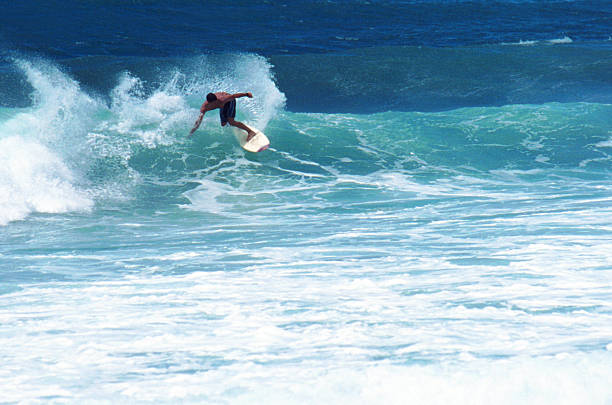
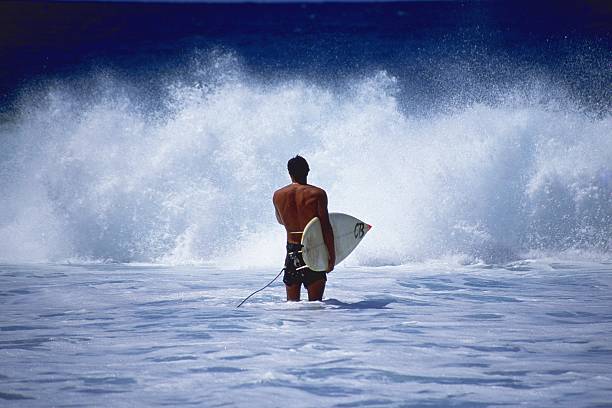
There is a quiet moment that every surfer comes to know, usually after they’ve been out long enough to forget about the screaming in their thighs and the sting of salt in their eyes. It is the moment when the ocean stops being a thing you’re fighting and starts being a thing you’re listening to. Respecting the ocean, in the truest sense of the term, isn’t just about knowing when to paddle for a wave and when to pull back. It’s about learning the language of the water itself, a dialect written in shifting currents, subtle color changes, and the rhythm of the swell. If you want to be a good surfer, you have to be a good student of the sea.
The first lesson any salty dog will tell you is to watch before you paddle out. There is a reason the old heads sit on the bluff, sipping lukewarm coffee and staring for twenty minutes before they even unzip their board bag. They aren’t just wasting time. They are reading the pulse of the ocean. They are watching the sets roll through, counting the lulls, and noting where the sandbars have shifted since the last swell. The ocean is never the same place twice. A wave that breaks perfectly at dawn can be a dumping closeout by noon if the tide pushes in too high. The water’s surface tells you everything: a glassy sheen with light ripples suggests a steady offshore wind, while bumpy, textured water is a sign of choppy conditions that make for a bumpy ride. This is the basic vocabulary of the surf zone, and ignoring it is the first sign of disrespect.
When you finally do step off the sand and into the soup, your connection to the ocean deepens. You feel the push and pull of the rip. The current is not an enemy. It is a highway, a tool used by wise surfers to get outside fast without wasting all their energy paddling. Feeling that tug beneath your feet is like hearing the ocean speak in a low hum. If you fight it, you get tired. If you ignore it, you drift into the rocks. But if you surrender to it, using its own power to carry you to the lineup, you are moving in harmony with something much bigger than yourself. This is where etiquette becomes more than just not dropping in on someone. It becomes a conversation between you and the water.
The lineup is a church, and the ocean is the preacher. Real respect means understanding that the ocean will take anything you give it, including your ego. The surfer who drops in on a set wave without looking, the one who snakes the inside position, is not just being rude to the locals. They are being arrogant about the ocean. They are assuming they know best. But the ocean has a way of humbling the arrogant. It will put you in the washing machine on a double overhead day. It will hold you under for a long, quiet, terrifying count of ten. That is not the ocean’s anger. That is the ocean’s language of consequence. It is saying, “You are a guest here. Act like one.”
Part of the conversation is knowing when to say thank you. After a good session, when you stumble up the sand, legs like rubber, let yourself sit for a moment. Look back at the water. There is a certain gratitude that the best surfers carry, a quiet acknowledgment that every wave is a loan, not a possession. The ocean gives you speed, power, and glide, but it asks for your full attention in return. It asks for you to be present. When you are sitting alone in the lineup between sets, the sun warming your back, the only sounds the hiss of foam and the cry of a gull, you are engaged in the highest form of respect. You are listening.
The true surfer knows that every session is a lesson in patience. You cannot demand a wave. You can only position yourself, wait, and hope that the swell lines up with your intentions. Some days the ocean is silent, refusing to give you a single clean ride. Those are days for meditation, for watching the horizon, for feeling the cold water on your skin. That is the ocean telling you to slow down, to be humble. To disrespect that is to miss the whole point of being out there. The ocean is not a machine built for your entertainment. It is a living, breathing entity with moods and cycles. You learn to read its moods like a seasoned sailor reads the sky.
When you finally catch that one wave, the one that stands up tall and gives you a long, green wall, you are speaking the ocean’s language fluently. The drop, the bottom turn, the trim across the face... it’s a dance of trust. You are trusting that the wave will hold its shape. You are trusting that the power beneath your feet is a friend, not a foe. And when you kick out and paddle back, you do so with a deep, soul-level understanding that you are part of a community of water. Not just the surfers around you, but the tides, the reefs, the sand, and the wind.
So the next time you wax up and walk to the water’s edge, stop. Breathe. Look. Listen. The ocean is always talking. Are you paying attention? The soul of surfing is not in the ride. It is in the quiet, humble, reverent time spent learning how to understand the sea.