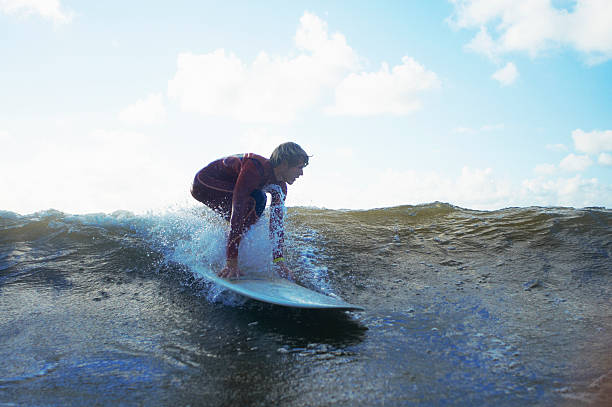
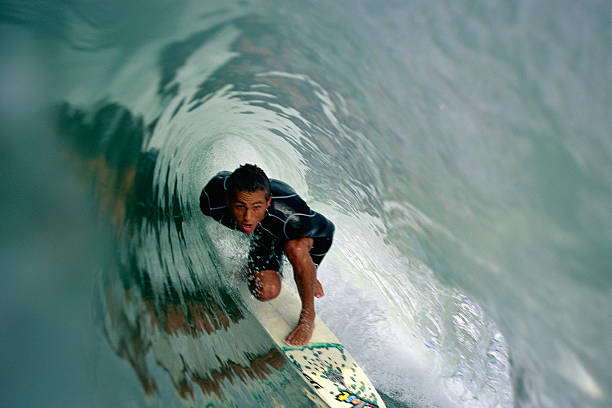
There’s a moment every surfer knows, whether you’re a grom just finding your feet on a foamie or a gnarled old salt who’s been charging reefs since before the dawn of the shortboard revolution. It hits you when you’re sitting in the lineup, the horizon empty, the swell temporarily flat. The ocean breathes. You feel it in your core, that pulse that’s been rolling for thousands of miles. And if you’re honest, you know you are nothing in that moment. Nothing but a speck on a vast, living skin. That’s the first lesson of surf etiquette, the one no one writes on a chalkboard at the beach break: respect the ocean, or it’ll humble you quick.
Too many newcomers think surf etiquette is just about who’s deeper on the peak, who has the right of way on a wave, which surfer gets the drop. Sure, those are important, but they’re just surface ripples. Real surf etiquette runs deeper than the sandbar. It’s about understanding that the ocean isn’t your playground—it’s your teacher, your host, and occasionally your judge and jury. When you paddle out, you’re entering a living system that doesn’t give a rip about your ego, your new board, or your social media clout. The ocean does what it wants, when it wants. And the surfer who forgets that is the surfer who gets served a slice of humble pie, usually with a side of reef rash.
Think about the times you’ve seen it go wrong. The kook who paddles straight through the lineup on a six-foot day, arms flailing like a windmill, dropping in on a set wave that was clearly another surfer’s. That’s not just bad manners—it’s a sign that the surfer hasn’t read the room, hasn’t listened to the ocean’s rhythm. A true surfer, one who respects the ocean, knows that every wave is a gift. You don’t steal gifts. You wait your turn, you acknowledge the local who’s been putting in the dawn patrol hours, and you give thanks for the opportunity to glide across something that mighty.
Respecting the ocean also means understanding that the ocean is alive, not just a resource to be used. It’s a fragile ecosystem. That plastic bottle you thought was harmless? It might wash back out and end up in the belly of a turtle, the same turtle whose ancestors rode the same currents you now paddle through. The wax from your board, the sunscreen sloughing off your skin—it all goes into the water. Real surf etiquette means treading lightly, leaving nothing but a wake of spray and taking nothing but memories of that perfect runner. It means picking up trash you didn’t drop, because the ocean doesn’t care who left it. It’s all the same mess.
Then there’s the subtle layer of etiquette that involves your own safety and the safety of others. Respecting the ocean means knowing when to say no. Maybe the swell is too big for your skill set, the rip too gnarly, the sandbars shifting like a bad mood. The ocean will push you, but it won’t wait for you to catch up. I’ve seen too many surfers get caught inside because they thought they could muscle the ocean into submission. But the ocean has no muscle memory of your pride. It’s a cold, beautiful force that’s been shaping coastlines since before dinosaurs walked. You can’t argue with it. You can only listen.
Listening is the heart of respect. When you sit in the lineup, you learn to read the pulse of the sea. You feel the sets coming, the lulls between, the wind shift that changes everything. That’s not just—technique, it’s communion. The surfer who respects the ocean doesn’t just paddle out and wait for a wave to show up. They become part of the wave’s story. They surrender to the rhythm, let the water carry them, and in that surrender, they find a deeper connection not only to the ocean but to every other surfer who has ever sat in that same lineup, in that same silent understanding.
So next time you paddle out, don’t just think about who snags the peak. Think about the ocean itself. Say a silent thank you. Pick up a piece of plastic if you see it. Give a nod to the surfer who’s been out since dawn. And if you blow a takeoff or get cleaned up by a set, laugh. That’s the ocean reminding you who’s boss. Humility isn’t weakness—it’s the foundation of true surf etiquette. Because when you respect the ocean, the ocean gives you its best waves.