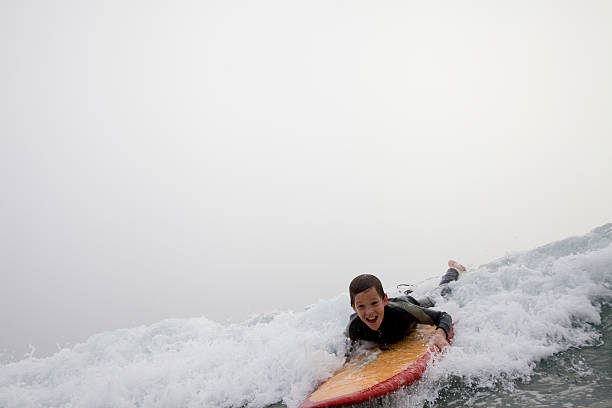
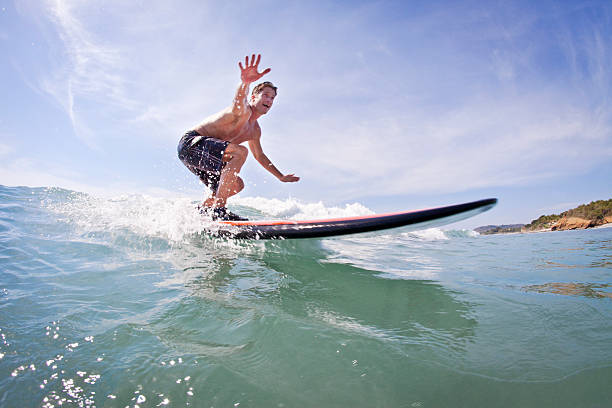
Every surfer was one once, whether they admit it or not. The term “kook” is as fundamental to surfing culture as wax on a board, and understanding it is your first step from the parking lot to the lineup. It’s not just an insult; it’s a rite of passage, a warning, and a state of mind. So let’s paddle out and break down what it really means to be a kook.
At its core, a kook is a beginner who doesn’t yet know the rules of the road. We’re not talking about just wiping out—everyone does that, even the pros. A kook is the guy who paddles out directly into the path of a surfer on a wave, oblivious to the right-of-way. It’s the person who tries to stand up on their soft-top while it’s still hurtling toward the beach in the whitewater, flailing like a wounded seagull. It’s wearing your leash on the wrong ankle, or worse, wearing it like a bracelet because you haven’t figured out the Velcro strap yet. The kook is defined by a lack of awareness, both of the ocean’s power and the unspoken etiquette that keeps surfers safe and stoked.
The kook uniform is legendary. Think brand-new, matching neon board shorts and rash guard, bought yesterday. The board is often a giant, unsinkable foamie—which is totally fine for learning—but it’s carried under the arm with the fins pointing outward, ready to take out a kneecap in the shore break. You might see them attempting to duck dive that same 9-foot log, pushing it straight to the bottom while they pop up like a cork ten feet behind it. In the water, the kook’s paddle technique is more frantic dog-paddle than smooth, powerful stroke, and their pop-up is a chaotic, knee-first explosion of limbs.
But here’s the crucial point: being a beginner does not automatically make you a kook. The true kook is defined by attitude. It’s the beginner who paddles straight to the peak at a localized break, dropping in on locals without a nod or a smile. It’s the person who buys a high-performance shortboard as their first stick because it looks cool, then spends the next six months getting pitched over the falls without ever making a drop. The kook lacks respect—for the sport, for the locals, and for the learning process itself. They think surfing is just about standing up, missing the deeper currents of wave knowledge, patience, and humility.
The beautiful thing about surfing is that this phase is temporary. Shedding the kook label is the real initiation. It happens when you start to watch the horizon instead of your feet. When you learn to apologize for a snake or a drop-in. When you spend more time watching the sets roll in from the beach than you do futilely paddling against the current. You stop fighting the ocean and start working with it. Your gear gets salt-stained and sun-bleached, your pop-up gets quieter, and you start to feel the rhythm of the swell instead of just reacting to it.
So, if you’re just starting out, don’t fear the label. Embrace the learning curve. Ask questions in the shop. Watch from the channel. Start at the mellow breaks. Respect the lineup hierarchy. Every legendary surfer you see today once turtled their board through whitewater, once wore the leash wrong, once had that wide-eyed, kooky stoke. The key is to channel that stoke into respect and awareness. Do that, and you’re not a kook—you’re just a surfer, paying your dues and earning your stripes one wave at a time. Now get out there, be cool, and for the love of all that is hollow and peeling, look before you drop in.