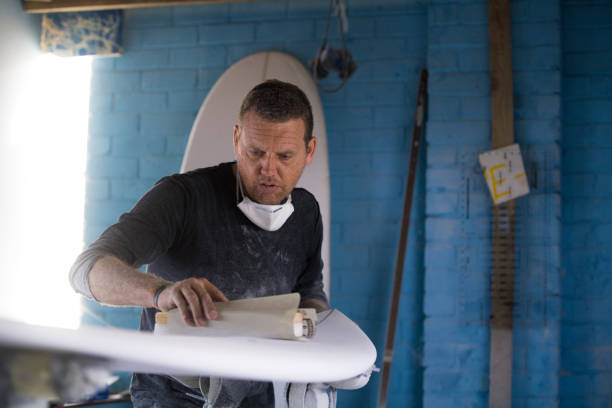
Back in the day, before any of us were even a glimmer in the lineup, surfboards were heavy slabs of redwood and balsa. You’d see a guy like Duke Kahanamoku paddling out on a plank that weighed as much as a small car, and you’d tip your hat to the sheer strength it took to ride that thing. But the sport didn’t stay that way for long. Somewhere along the line, the shapers of the world looked at that massive log and said, “Bro, there’s gotta be a lighter way.” And that’s when the game changed. The evolution of surfboard materials—specifically foam, fiberglass, and epoxy—is the story of how we went from hulking wooden monsters to the light, responsive sticks we paddle today. It’s a tale of chemistry, luck, and a whole lot of trial and error, all in the name of catching more waves.
Let’s start with the foam. Before the mid-1950s, surfboards were wood, plain and simple. Balsa was the go-to because it was light, but it was also soft and brittle and soaked up water like a sponge. Then along came polyurethane foam, and the whole scene shifted. This stuff was a game-changer. Shapers could carve a blank into any shape they could dream up, stringers could be added for strength, and suddenly the modern shortboard was born. The real hero of the foam story was Clark Foam, a company that cranked out most of the polyurethane blanks for decades. Their stuff was consistent, easy to shape, and gave that perfect blend of flex and durability. Every shaper worth their salt had a stack of Clark blanks in the corner. When Clark suddenly shut its doors in 2005, it sent shockwaves through the industry. Shapers scrambled for alternatives, and it kicked off a massive shift toward other foam types, including expanded polystyrene (EPS) and even recycled options. But polyurethane still holds a special place in the heart of traditionalists. It’s the foam that built the shortboard revolution.
Now, you can’t talk about foam without talking about what wraps around it: fiberglass. That thin, woven cloth is what gives a surfboard its strength and keeps the foam from turning into a waterlogged sponge on your first session. The process is pure art. The shaper lays the glass cloth over the shaped foam blank, then mixes polyester resin with a catalyst and soaks it all into the weave. The smell is unmistakable—that chemical tang that says a fresh board is in the works. Fiberglass comes in different weights, usually four-ounce, six-ounce, or a combo, depending on how light or beefy you want the ride. A single layer of four-ounce on top and bottom gives you a super light board that rides like a dream but dings if you look at it wrong. Heavier glass jobs with multiple layers and a thicker glass deck make for a tank that can take a beating, perfect for rocky shores or heavy-footed surfers. The magic of fiberglass is that it lets the board flex and respond to the wave, giving you that live, snappy feel that makes a cutback or a bottom turn so satisfying.
Then there’s epoxy. Epoxy resin is the new kid on the block, and it’s been shaking things up for the last couple decades. Unlike the polyester resin that’s been the standard since the sixties, epoxy uses a different chemical reaction. It’s stronger, more flexible, and way more resistant to dings and yellowing from the sun. The big deal with epoxy is that it bonds incredibly well with EPS foam, which is lighter and more buoyant than polyurethane. That combo—EPS foam core with an epoxy glass job—makes for a board that floats like a cork and stays lively even after a hundred sessions. Epoxy boards are also less toxic to the environment during production, which is a huge plus in this era of eco-conscious surfing. But they’re not perfect. Some surfers swear epoxy feels too stiff or too bouncy, especially in cold water where the resin can get brittle. And repairing an epoxy ding is a whole different animal—you need special resin and usually a UV light to cure it, so you can’t just slap on some Sun-Cure and call it a day.
So where does that leave us, the everyday wave-chaser? The choice between foam, fiberglass, and epoxy isn’t really a choice at all—they’re a package deal. Every modern surfboard is a dance between the core foam, the fiberglass cloth, and the resin that holds it all together. Polyurethane foam with polyester resin and standard fiberglass is the classic recipe. It gives you that tried-and-true feel, the kind of board that has flex, memory, and a soul that only comes from traditional hand-shaped blanks. EPS foam with epoxy resin and lighter glass is the performance upgrade. It floats higher, paddles faster, and lasts longer against the elements. But it’s a different ride—some say it’s a bit dead, others say it’s alive in a way polyester can’t touch.
The real beauty of this trinity is that it lets shapers dial in the exact feel they want. Want a boat that floats through mush? Go EPS and epoxy with a voluminous outline. Want a rail-to-rail carving machine that bites into hollow walls? Pick a polyurethane blank, a light four-ounce glass job top and bottom, and a polyester resin hot coat that cures to a perfect gloss. The materials aren’t just ingredients; they’re the language board builders speak to the ocean. Every combination has its own personality, and every surfer has their own favorite recipe.
At the end of the day, whether you’re riding a classic polyurethane shortboard or a space-age epoxy thruster, you’re riding the legacy of all those shapers who experimented with foam, fiberglass, and resin decades ago. They took the guesswork out and left us with a craft that feels like an extension of ourselves. So next time you paddle out, take a second to appreciate the foam under your chest, the glass that keeps the water out, and the chemistry that makes it all possible. It’s a holy trinity, and it’s been blessing waves for generations.