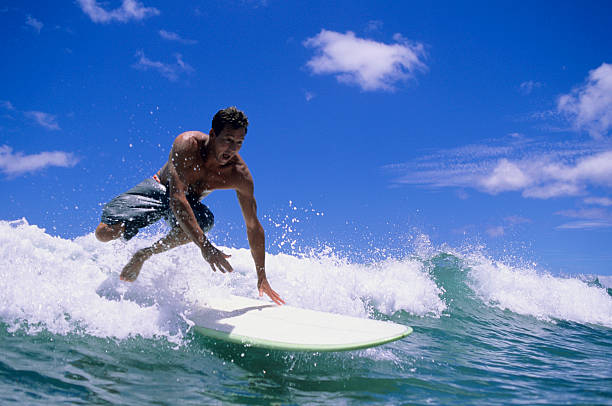
Forget the rack. Forget the mass-produced pop-outs that every other kook in the lineup is wobbling on. We’re talking about the real deal: a custom surfboard. This isn’t just a piece of foam and fiberglass; it’s a conversation, a collaboration, and ultimately, an extension of you in the water. It’s your dream board, made real.
The journey of the surfboard, from the heavy wooden olo of ancient Hawaiians to the lightweight rockets of today, is a story of relentless innovation driven by pure stoke. We went from redwood planks to balsa, then stumbled upon the game-changer: polyurethane foam and fiberglass. The shortboard revolution of the late ’60s shattered limits, and since then, it’s been a wild ride of experimentation—thrusters, quads, fishes, eggs, hybrids, and everything in between. But this evolution has a beautiful endpoint: the custom order. It’s where the collective knowledge of decades gets focused through the lens of your local shaper to create something uniquely yours.
So, how does it go down? You don’t just walk in and point at a picture. You start a dialogue. You paddle out to your local shaper’s bay, a place that smells of resin and creativity. You talk. You tell them where you surf: the punchy beach breaks, the mushy points, the hollow reef passes. You talk about your style: are you a powerhouse carver, a flowy soul-archer, or a frothing grom trying to boost airs? You get honest about your ability. This isn’t about ego; it’s about giving the shaper the blueprint to build you a board that will work, not just look cool on your wall.
This is where the magic of terminology turns into tangible design. You’ll discuss dimensions—the holy trinity of length, width, and thickness that forms the foundation. But then you dive deeper. You talk rocker: the board’s nose-to-tail curve. More rocker for steep, pitching waves; less for glide and speed in softer surf. You specify the foil: how the thickness flows from the nose to the tail. You debate rails: hard, down-edged rails for biting into the face, or softer, rounded rails for forgiveness and hold. You choose the tail shape: a pin for drive, a squash for snap, a swallow for speed. You even pick the fin setup: the trusty thruster, the loose quad, or a versatile 2+1.
Every choice is a tuning fork, adjusting the board’s performance to sing in harmony with your local waves and your approach. A good shaper listens, translates your stoke and frustrations into design elements, and sketches out your vision. They’re part engineer, part artist, and full-time wave junkie.
Then, you wait. But this wait is part of the stoke. Knowing your board is being hand-shaped, glassed, and sanded, with each layer applied with intention, is a ritual. When you finally get the call, it’s like Christmas. You see the blank transformed. The colors, the pinline, the gloss—it’s yours. But the real moment of truth is that first paddle out. That’s when the conversation completes. The board talks back. It might feel instantly familiar, like it was always meant to be under your feet. Or it might take a few sessions to dial in, a new relationship you’re learning about.
In a world of instant everything, a custom surfboard is a beautiful antithesis. It’s slow, personal, and deeply connected to the soul of surfing. It’s a rejection of the “one-size-fits-none” mentality. It’s the ultimate tool for chasing that endless summer, a perfect partner crafted not for the masses, but for you, your waves, and your dream of the perfect ride. So support your local shaper, start the chat, and get ready to feel something different. Your dream board is waiting to be shaped.