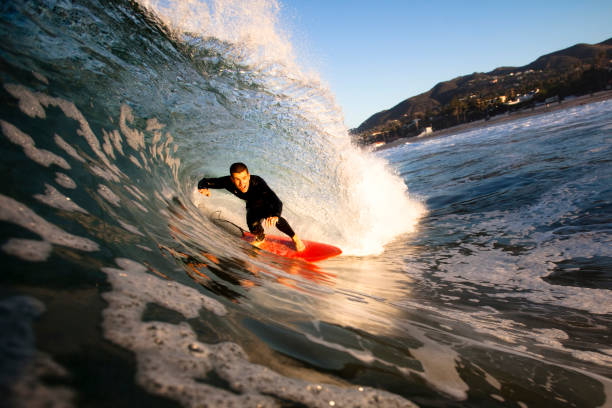
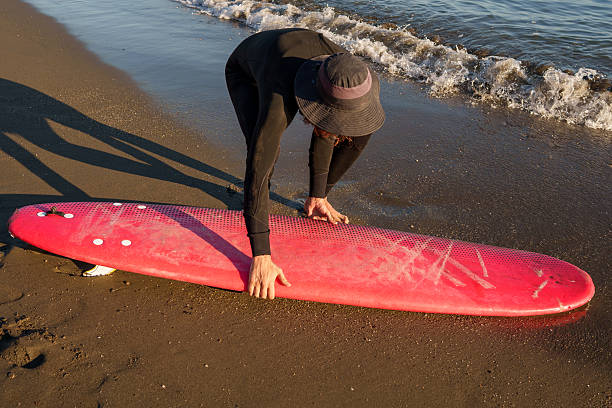
The stoke of a surf trip ain’t just about paddling out at a postcard-perfect break. It’s about the whole journey—the anticipation, the open road, the salt in your hair, and that deep-down feeling of chasing the endless summer. But here’s the hard truth: a dream trip can turn into a flat, frustrating slog if you don’t know how to read the forecast. You can have the raddest board under your arm and a quiver full of glassy expectations, but if Mother Nature ain’t cooperating, you’re just a tourist with a waxed-up plank. So let’s get you dialed in. The key to surfing the world is learning to speak the language of the ocean and the sky before you even pack your bag.
First off, forget the five-foot forecast you see on a generic weather app. That number is a liar half the time, because it’s telling you the face height of an average wave, but it ain’t telling you the soul of the swell. You need to dig deeper. The real juice is in the swell period. A long-period swell, say anything over fourteen seconds, has traveled thousands of miles across the open ocean, building power and organization. That energy barrels onto a reef with authority. A short-period swell, under ten seconds, is usually local wind slop. It’s mushy, messy, and will have you fighting for scraps. When you’re planning a trip to a fickle spot like Bali, or the North Shore, or even a remote point break in Costa Rica, look for those long-period lines on the map. That’s the groundswell you’re chasing. That’s the pulse of the planet talking.
Then you gotta look at the swell direction. A northwest swell hits a south-facing beach like a whisper. You need the angle to wrap into the break. Spend an hour studying the bathymetry of your target surf spot. Does it need a west swell? A southwest? Will a north pulse just blow straight by, leaving you scratching your head on a flat beach? Local knowledge is the ultimate cheat code, but you can get a solid read from swell models if you understand the compass. Draw an invisible line from the swell source to the coastline. If that line points straight at the break, you’re in business. If it’s a glancing blow, you’ll get weaker, smaller waves. This is the difference between scoring an empty peak and sitting in a crowded, chop-infested lineup.
Wind is the other big player. Look at a spot like Jeffrey’s Bay. That place is a long, mechanical masterpiece on its day, but a stiff onshore wind turns it into a washing machine. You want that offshore breeze—wind blowing from the land out to sea. It holds the face of the wave up, makes it peel clean, and creates that glassy, velvety wall we all dream about. Before you book a rental house or a surf camp, study the predominant wind patterns for that specific month. Some places, like the Mentawais, get reliable trades. Others, like the California coast, have a classic afternoon onshore shift that kills the surf. The surf travel pro wakes up at dawn, when the wind is usually glassy, and gets in the water before the cappuccino crowds. He checks the wind graphs not just for speed, but for direction change. A slight swing from SSE to SSW can be the difference between a session you tell stories about and a session you scrub from your memory.
Tide is the final piece of the puzzle, and it’s often the most overlooked by the grommet on a budget. Every break has a magic tide. Some reef passes in the Maldives only work on a high tide, when the water pushes up and over the shallow coral, creating a perfect hollow tube. Others, like a beach break, can be fat and unmakeable on a high tide, needing the push of a dropping tide to create that critical pinch. You absolutely must research the tide windows for the spot you intend to surf. A full moon or new moon creates spring tides—bigger swings from low to high. A quarter moon produces neap tides—smaller, weaker swings. A spot that works perfect on a three-foot low tide might be completely sanded in and closed out on a five-foot high tide. Don’t learn this the hard way on your first day of a two-week trip. Do your homework.
Above all, respect the ocean’s mood. Forecasts are a guide, not a gospel. The best surfer out there is the one having the most fun, and that comes from being prepared, not from being obsessive. Pack a good book. Bring a skateboard or a yoga mat. Surf travel is about the whole experience. When the waves are firing, you’re in the lineup, feeling that perfect pulse. When they’re flat, you’re exploring a new culture, eating something fresh, and waiting for the next swell to tick up on the buoy data. That’s the endless summer lifestyle. You don’t just chase waves. You chase the feeling of being alive, tuned in to the rhythms of the planet. So study the charts, listen to the local crew, paddle out with respect, and let the ocean teach you the rest.